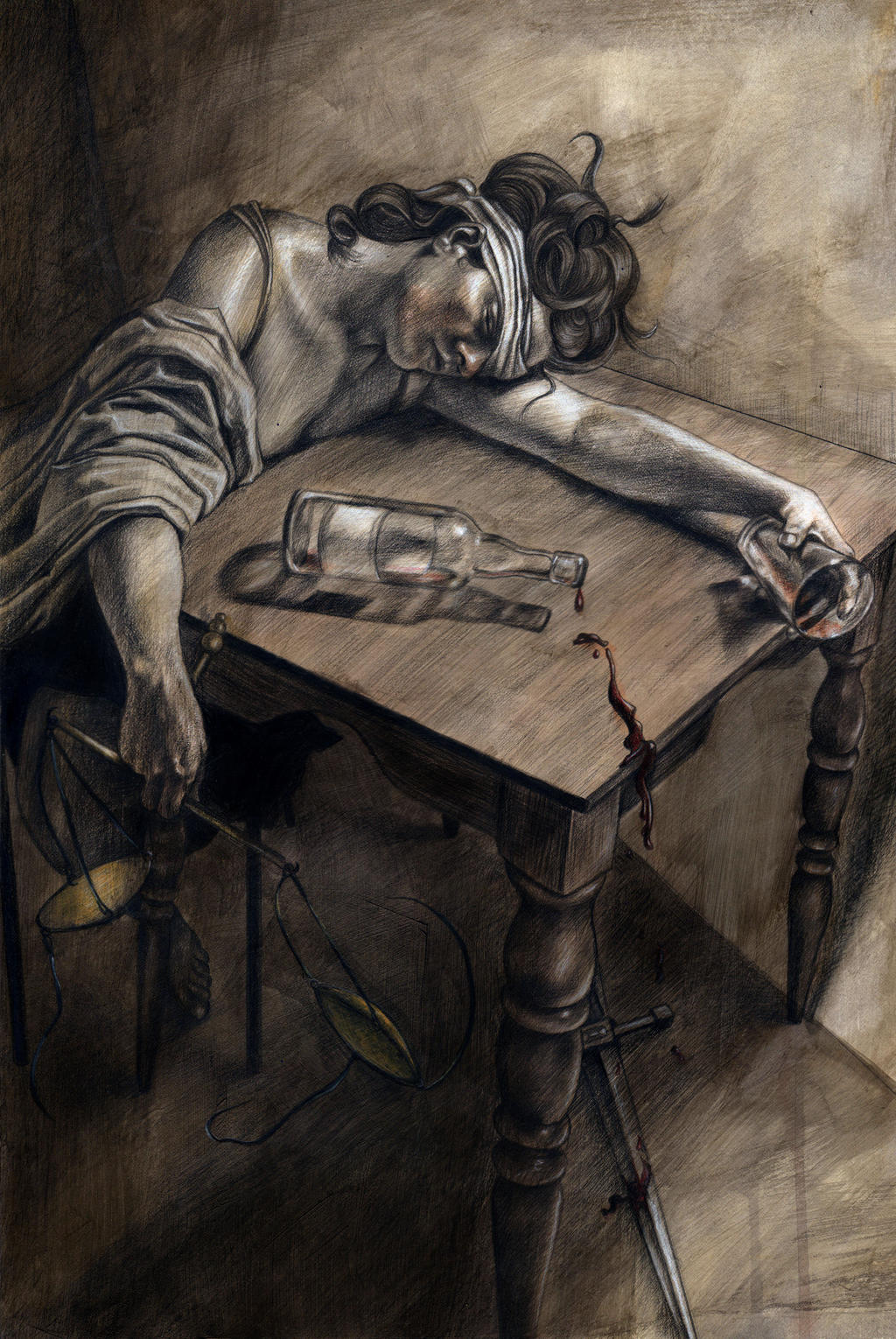
The Rant's mission is to offer information that is useful in business administration, economics, finance, accounting, and everyday life. The mission of the People of God is to be salt of the earth and light of the world. This people is "a most sure seed of unity, hope, and salvation for the whole human race." Its destiny "is the Kingdom of God which has been begun by God himself on earth and which must be further extended until it has been brought to perfection by him at the end of time."
When writing a will, any words that convey the intention of the testator (a person who has made a will or given a legacy) suffice. No matter how rough and ungrammatical the language may be, if the intention of the testator can be ascertained, the court will order that the provisions of the will be carried out. Since the court will order the terms of a will to be carried out exactly, the wording of the will should express the exact wishes of the testator.
Revocation
A will may be revoked at any time prior to the death of the testator. The revocation may take any one of several forms.
Codicils
A codicil is a separate writing that modifies a will. Except for the part modified, the original will remains the same. A codicil must be executed with all the formalities of the original will.
Destruction or Alteration
If the testator deliberately destroys a will, this constitutes a revocation. If the testator merely alters the will, this may or may not revoke it, depending upon the nature and the extent of the alteration. If the testator merely obliterates a part of the will, in most states this does not revoke the will.
Marriage and Divorce
If a single person makes a will and later marries, the marriage may revoke the will in whole or in part, or the will may be presumed to be revoked unless made in contemplation of the marriage or unless it made provision for a future spouse. In some states a marriage will not revoke a will completely, but only if so that the spouse will get the estate that would have been received in the absence of a will. A divorce automatically revokes a will to the extent of the property left to the divorced spouse if the court orders a division of property; otherwise, a divorce usually in no way affects the will.
Execution of a Later Will
The execution of a later will automatically revokes a prior will if the terms of the second conflict with the first will. If the second will merely changes a few provisions in the first will and leaves the bulk of it intact, then a second revokes the first will only to the extent of such inconsistency.
After-Born Child
A child may be born or adopted after a person makes a will. If the original will does not provide for subsequent children or the testator makes no codicil to provide for the child, this revokes or partially revokes the will.
Abatement and Ademption
A legatee in the law of wills is any individual or organization bequeathed any portion of a testator's estate. An abatement occurs when a testator makes bequests of money in the will and the estate does not have enough money to pay the bequests. The legatees will receive a proportionate share of the bequests.
An ademption occurs when a testator makes a bequest of specific property and the estate does not have the property at death. In this case, the legatee gets nothing.
If a testator leaves $20,000 to his son John, $10,000 to his sister Mary, and a painting to his brother Adam, there could be both an abatement and an ademption. If the estate has only $15,000 in cash left after paying all debts, the cash gifts to John and Mary will abate. Each will receive a proportionate share, in this case 50%, or $10,000 and $5,000, respectively. If the testator had sold the painting, given it away, or someone had stolen, destroyed, or lost the painting before the death of the testator, Adam would get nothing. The bequest to him is adeemed since the property was not in the estate at the testator's death. He has no right to his cash value or any other substitute item of property.
Probate of a Will
When a testator dies leaving a will, the will must be probated. Probate is the court procedure that determines the validity of a will. The will normally names an executor to preserve and handle the estate during probate and distribute it to the rightful individuals. An executor has liability to legatees, creditors, and to the rightful individuals. An executor has liability to legatees, creditors, and heirs for loss to the estate as a result of a negligent, bad faith, or breach of trust and must comply with any instructions in the will. A will may expressly direct the executor to continue a business owned by the deceased. If the will does not so provide, an executor frequently can obtain permission of the appropriate court to continue the business. With but few exceptions, anyone may be appointed executor. The testator may excuse the executor from furnishing a bond that would be an expense to the estate. If the will does not name an executor, then upon petition of one of the beneficiaries the court will appoint an administrator.
If a person contests the will, the court must hear the contest to determine the validity of the will. A contest of the will differs from litigation over the meaning or interpretation to be given the will. If the contest alleges and proves fraud, undue influence, improper witnessing, mental incapacity of the testator, revocation of the will, or any other infirmity in the will affecting its legality, the court will find the will nullified. It will then distribute the property of the testator according to the law of descent described in the next post and conclusion of this discussion on business law (part 66). Until then, stay tuned...
*SOURCE: LAW FOR BUSINESS, 15TH ED., 2005, JANET E. ASHCROFT, J.D., PGS. 546-549*
Title to all property, both real and personal, may be transferred by a will. A will is an instrument prepared in the form prescribed by law that provides for the disposition of a person's property and takes effect after death. The property left by a person who has died is called the estate.
The person making the will is called a testator (testatrix if a woman). Testators do not have to meet as high a standard of capacity to make a will as a person does in order to make a contract. They must have the mental capability at the time of making the will to know the natural objects of their bounty, understand the nature and extent of their property, understand that they are making a will, and have the ability to dispose of their property by means of a plan they have formulated. Even if they do not have the mental capacity to carry on a business or if they make usual provisions in the will, this does not necessarily mean that they do not have the capacity to make a will. An insane person lacks sufficient capacity; however, an insane person who has intervals of sanity has capacity during sane intervals to make a will. Any person, other than a minor, of sound mind ordinarily has the competence to make a will. In a few states minors can, under limited circumstances, make a will.
Limitations on Disposition of Property
The law places few restrictions on the right to dispose of property by will. However, some restrictions include:
A spouse may elect to take that share of property that would have been received had the deceased died without leaving a will, or the share provided by statute, if the spouse's will does not leave as large a share, called the right to take against the will. Most state laws now provide that when an individual dies without leaving a will, a spouse has the right to a set portion of all the property the deceased spouse owned at the time of death. The spouse's portion varies depending on the number of children or other heirs who survive. The surviving spouse in some states may also claim an interest in property conveyed by the deceased spouse during the marriage without consent of the surviving spouse. The right to take against the will can be barred by actions of the surviving spouse. If the surviving spouse commits acts that would have justified the deceased in securing a divorce, the surviving spouse generally cannot elect to take against the will. Except for the cases of a surviving spouse collecting to take against the will and in some cases of a subsequent marriage, birth, or adoption, the testator may exclude or disinherit any person from receiving any portion of the estate. If the testator gives the entire estate to someone else, all persons who would inherit in the absence of a will are excluded. The testator does not even have to mention in a will those persons disinherited except for disinherited children who must be mentioned to prove the testator did not forget them. A nominal sum does not have to be left to those disinherited.
One cannot control by will the distribution of property in perpetuity (for all time). The common law rule against perpetuities requires that an interest in property must vest, if at all, within 21 years after the death of persons living on the date the owner of the property creates the interest. When the interest is created by will, the date of death of the owner constitutes the date of creation.
Terms Common to Wills
A number of terms may refer to individuals named or gifts given in a will. The one receiving a gift of real estate (the beneficiary) is called the devisee; the beneficiary of personal property is a legatee. A device is real property given by will. A bequest, or a legacy, is a gift by will of personal property. The person named in a will as the one to administer the estate is an executor or personal representative. One who dies without having made a will is said to die intestate. A person appointed by a court to settle the affairs of an intestate is an administrator (man) or an administratrix (woman).
Distinguishing Characteristics of a Will
A will has the following outstanding characteristics that distinguish it from many other legal instruments:
The courts construe a will with less technical strictness than a deed or any other kind of written document.
A will devising real property must be executed in conformity with the law of the state in which the property is situated. The law of the state in which the testator was domiciled (had permanent residence) at the time of death governs a will bequeathing personal property.
A will may be revoked at any time during the life of the testator.
Formalities
All states prescribe formalities for wills. These formalities must be strictly followed. A will almost always must be in writing and signed by the testator.
A will written in the testator's own handwriting and dated need not be witnessed in a number of states. In almost all states the will must be witnessed by at least two, and in some states three, disinterested witnesses regardless of how it is written. Usually, the witnesses and the testator must sign in the presence of each other. Many states also require the testator to inform the witnesses that the instrument being signed is the testator's will. This is called a publication.
When the law requires subscribing witnesses, they must be available at the time of probate of the will to identify their signatures and the signature of the testator and to state but they were present when the testator signed the will. If the witnesses cannot be found, two persons must normally identify the signature upon their experience through prior correspondence or business records involving the testator's signature. A will executed in another jurisdiction is valid if correctly executed in the other jurisdiction. If a person's will is not drawn according to the legal requirements, the court may disregard it and the testator's estate may be disposed of in a manner entirely foreign to the testator's wishes.
Special Types of Wills
Under special circumstances, testators can make valid wills that are less formal than usual. Three special types of wills include:
Holographic wills
Nuncupative wills
Soldiers' and Sailors' Wills
Holographic Wills
Holographic wills are written entirely in longhand by the testator. Some states make no distinction between holographic and other Wills. In other states variations of the general law of Wills exist for holographic Wills. In still other states holographic Wills may not be recognized.
Nuncupative Wills
Nuncupative wills are oral wills declared by the testator in the presence of witnesses. Usually such a will can only be made during the testator's last illness. A nuncupative will only applies to personal property, and sometimes only a limited value of personal property may be so disposed. The witnesses frequently must reduce the will to writing within a specified number of days and they must agree as to how the deceased disposed of the property.
Soldiers & Sailors Wills
Most states make special provision for members of the armed forces. They are allowed to make oral or written wills of personal property without complying with the formalities required of other wills. These wills are enforced even after the testator returns to civilian life. They must be revoked in the same manner as other wills.
*SOURCE: LAW FOR BUSINESS, 15TH ED., 2005, JANET E. ASHCROFT, J.D., PGS. 542-546*
The tenant's primary duty is to pay the rent. This payment must be made in money unless the contract provides otherwise, such as a share of the crops. The rent is not do until the end of the term, but leases almost universally provide for rent in advance.
Landlords commonly appoint an agent for the purpose of collecting the rent. The death of the principal automatically terminates such a principal-agent relationship. Any rent paid to the agent after this termination and not remitted to the proper party must be paid again.
If the tenant fails to pay rent on time, the landlord may terminate the lease and order the tenant to vacate, or the landlord may permit the tenant to continue occupancy and sue for the rent. However, even if the landlord forces the tenant to vacate the property the tenant is still liable for the agreed rent. Under the common law the landlord could cease and hold any personal property found on the premises. This right has been either curtailed or abolished by statute.
To Protect and Preserve the Premises
Traditionally, a tenant had to make repairs on the premises. This was because a tenant had a duty to keep the leased property in as good condition as the landlord had it when the lease began. some states have enacted statutes requiring the landlord to make repairs. Other states had a warranty of habitability, which makes the landlord responsible for keeping the premises livable. Some statutes even give tenants a form of self-help. The tenant must notify the landlord of needed repairs. If the landlord does not make the repairs, the tenant may fix things and deduct the cost from the rent. Tenants, however, must repair damage caused by their negligence. In some states in which statues have not altered the traditional responsibility, tenants must repair damage except reasonable wear and tear and damage by the elements.
Rights of the Landlord
The landlord has three definite rights under the lease:
To regain possession
To enter upon the property to preserve it
To assign rights
To Regain Possession
Upon termination of the lease, the landlord has the right to regain peaceable possession of the premises. If the tenant refuses this possession, the most common remedy is to bring an action of ejectment in a court of law. Upon the successful completion of this suit, the sheriff will forcibly remove the tenant and any property.
When the landlord repossess leased property, all permanent improvements and fixtures may be retained. Courts determine whether or not the improvements have become a part of the real estate. If they have, they cannot be removed.
To Enter Upon the Property to Preserve It
The landlord has the right to enter upon the property to preserve it. Extensive renovations that interfere with the tenants peaceable occupancy cannot be made. If the roof blows off or becomes leaky, the landlord may repair it or put on a new roof. This occasion cannot be used to add another story. A landlord who enters the property without permission may be treated as a stranger. A landlord has no right to enter the premises to show the property to prospective purchasers or tenants unless the lease reserves this right.
To Assign Rights
The landlord has the right to assign the rights under the lease to a third party. The tenant cannot avoid any duties and obligations by reason of the assignment of the lease. Like all other assignments, the assignment does not release the assignor from the contract without the consent of the tenant. If, for example, the tenant suffers injury because of a concealed but defective water main cover and the landlord knew of this condition, the landlord has liability even though rights under the lease were assigned before the injury.
Duties of the Landlord
The lease imposes certain duties upon the landlord:
To pay taxes and assessments
To protect the tenant from concealed defects
To mitigate damages upon abandonment by the tenant
To Pay Taxes and Assessments
Although the tenant occupies and uses the premises, the landlord must pay all taxes and special assessments. Sometimes the lease provides that the tenant shall pay the taxes. In such event, the tenant has no liability for special assessments for sidewalks, street paving, and other improvements.
To Protect the Tenant from Concealed Defects
The landlord has liability to the tenant if the tenant suffers injury by concealed defects that were known or should have been reasonably known to the landlord at the time of giving the tenant possession of the premises. Such defects might be contamination from contagious germs; concealed, unfilled wells and rotten timbers in the dwelling. The tenant bears the risk of injury caused by apparent defect or defects reasonably discoverable upon inspection at the time that the tenant enters into possession. Most cities and many states have tenement laws that require the landlord to keep all rental property habitable and provided with adequate fire escapes. The question of the habitability of the property relates to major defects in the structure. Any damage due to a failure to observe these laws may subject the landlord to liability for damages.
To Mitigate Damages Upon Abandonment by the Tenant
Unless the landlord accepts the abandonment, a tenant who abandons leased property before the end of the lease term still has an obligation to pay the rent due through the end of the term. Under the common law the landlord could do nothing and sue the tenant for the unpaid rent. However, in most states the landlord now has a duty to take reasonable steps to mitigate the tenant's damages by attempting to secure a new tenant. If a new a tenant occupies the premises, the landlord's damage from the first tenant abandoning the property equals the difference between the rent the original tenant had to pay and the rent the new tenant pays. In this way, the original tenant's obligation amounts to less than the original rent called for by the lease and the new tenant's payments mitigate the landlords damage due from the original tenant.
Termination of the Lease
A lease for a fixed time automatically terminates upon the expiration of that period. The death of either party does not ordinarily affect the lease. If the leased property consists of rooms or apartments in a building and fire or any other accidental cause destroys them, the lease terminates without liability on the part of the tenant. In the case of leases of entire buildings, serious problems arise if fire, tornado, or any other cause destroys the property. Under the common law the tenant had to continue to pay rent even though the property was destroyed. Some states retain this rule; other states have modified it. A landlord who has a 10-year lease on a $100,000 building destroyed by fire one year after signing the lease would not be inclined to rebuild if fully covered by fire insurance. The landlord would find it more profitable to invest the $100,000 and continue to collect the rent. To prevent this, statutes may provide that if the landlord refuses to restore the property, the lease terminates. The lease itself may contain a cancellation clause. If it does not, the tenant can carry fire insurance for the amount of possible loss. Even when the lease will thus terminate, the tenant will probably wish to carry fire insurance for personal property and, if the premises are used for a business purpose, may carry Insurance to indemnify for business interruption or loss of business income.
The landlord may agree to the voluntary surrender of the possession of the premises before the lease expires. This terminates the lease. However, an abandonment of the premises without the consent of the landlord does not constitute a termination of the lease, but a breach of contract.
If the lease runs from year to year or from month to month, the party wishing to terminate it must generally give the other party a written notice of this intention. Statutes prescribe the time and the manner of giving notice; they may also specify other particulars, such as the grounds for a termination of the tenancy.
If either party fails to give proper notice, the other party may continue the tenancy for another period.
Eviction
Tenants sometimes refuse to give up possession of the property after the expiration of the lease or fail to comply with requirements of the lease or laws. In such a case, a landlord may seek an eviction of the tenant. eviction is the expulsion of the tenant from the lease property. The laws of the states vary, but all have some form of summary eviction law. The summary action brought by the landlord is called a forcible entry and detainer action. The tenant has a right to written notice and a court hearing. However, the court will set an early right to written notice and a court hearing. However, the court will set an early date, usually 7 to 15 days after notification of the tenant, for the trial. If the landlord wins, law enforcement officers may enforce the eviction in a few days. The proceedings permit quick recovery of real property by the one legally entitled to it.
Improvements
Tenants frequently make improvements during the life of the lease. Many disputes arise as to the tenant's right to take these improvements after the lease is terminated. Courts must determine whether an improvement has become a fixture, which must be left on the land, or whether it remains personal property. If the improvements are trade fixtures, or fixtures used in business, and can be removed without substantial injury to the leased property, the tenant may remove them. If a farm tenant builds a fence in the normal way, the fence is a fixture, and the tenant has no right to remove it upon leaving. A poultry house built in the usual way is a fixture and cannot be removed. In a similar case a tenant built the poultry house on sledlike runners. When ready to leave, the tenant had the poultry house hauled away and took it when vacating. The court held the shed had not become a fixture but remained personal property.
Unless prohibited by law, one may freely contract away rights or may waive them, so the parties may agree as to how to treat fixtures. In one case a tenant built a permanent frame house on leased property with the landlord agreement that the house could be moved at the end of the lease. The landlord was bound by this contract.
Discrimination
Federal law prohibits landlords from discriminating against tenants or proposed tenants because of race, color, religion, sex, familial status, or national origin. The term familial status refers to whether the tenant has children. Additionally, some states and even municipalities prohibit discrimination based on such aspects as physical or mental handicaps, age, or marital status.
INTERNET RESOURCES FOR BUSINESS LAW
Name
Resources
Links
Legal Information Institute (LII)---Landlord Tenant Law Materials
LII, maintained by Cornell Law School, provides an overview of landlord-tenant law, links to statutes, federal and state judicial court decisions, and other materials.