Mission Statement

The Rant's mission is to offer information that is useful in business administration, economics, finance, accounting, and everyday life. The mission of the People of God is to be salt of the earth and light of the world. This people is "a most sure seed of unity, hope, and salvation for the whole human race." Its destiny "is the Kingdom of God which has been begun by God himself on earth and which must be further extended until it has been brought to perfection by him at the end of time."

Saturday, May 30, 2020

Sociological Imagination: How to Gain Wisdom about the Society in which We All Participate and for Whose Future We Are All Responsible (Part 3)


I was a sociology major. And it had nothing to do necessarily with law, which is ultimately - I went to law school. But what I tried to do was choose something that I was passionate about or something that I cared about.


Sociology: An Introduction
(Part C)
by
 Charles Lamson

 From Social Thought to Social Science

Like all sciences, sociology developed out of pre-scientific longings to understand and predict. Essential questions of sociology have been pondered by the world's great thinkers since the earliest periods of recorded history. The ancient Greek philosophers believed that human societies inevitably arose, flourished, and declined. They tended to perceive the past as better than the present looking back to a "golden age" in which social conditions were presumed to have been better than those of the degraded present. Before the scientific revolution of the seventeenth century, the theologians and philosophers of medieval Europe and the Islamic world also believed that human misery and strife were inevitable. As the Bible put it, "The poor always ye have with you." Mere mortals could do little to correct social conditions, which were viewed as the work of divine Providence.

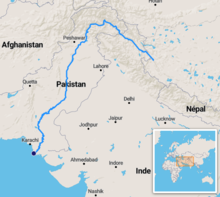
What Is the Source of the Indus River? - WorldAtlas.com

The Age of Enlightenment

The roots of modern sociology can be found in the work of the philosophers and scientists of the Great Enlightenment, which had its origins in the scientific discoveries of the 17th century. That pivotal century began with Galileo's heretical proof that the Earth was not the center of the universe; it ended with the publication of Isaac Newton's Principia Mathematica. Newton is often credited with the founding of modern science. He not only discovered the laws of gravity and motion but, in developing the calculus, also provided later generations with the mathematical tools whereby further discoveries in all the sciences could be made. 

Hard on the heels a both of this unprecedented progress in science and mathematics came a theory of human progress that paved the way for a science of humanity. Francis Bacon in England, Rene Descartes and Blaise Pascal in France, and Gottfried Wilhelm Leibniz in Germany were among the philosophers who recognized the social importance of scientific discoveries. Their writings emphasized the idea of progress guided by human reason and opposed the dominant action notion that the human condition was ordained by God and could not be improved through human actions.

Today we are used to inventions crowding one upon another. Between the childhood of our grandparents and our own adulthood, society has undergone some major transformations: from agrarian to industrial production; from rural settlements and small towns to large cities and expanding metropolitan regions; from reliance on wood and coal as energy sources to dependence on electricity and nuclear power; from typewriters to computers. But in the 17th century people were used to far more stability. Ways of life that had existed since the Middle Ages were not expected to change in a generation.

The rise of science transformed the social order. New methods of navigation made it possible to explore and chart the world's oceans and continents. Applied to warfare, scientific knowledge enabled Europeans to conquer the people of Africa, Asia, and the Western Hemisphere. In Europe, those conquests opened up new markets and stimulated new patterns of trade that hastened the growth of some regions and cities and the decline of others. The entire human world had entered a period of rapid social change that continues today and shows no signs of ending.

A village along Indus River, Pakistan : Photos, Diagrams & Topos ...

The Age of Revolution

The vehicle of social change was not science itself since relatively few people at any level of society were practicing scientists. Rather, the modern era of rapid social change is a product of the many new ideas that captured people's imagination during the 18th century. The series of revolutions that took place in the American colonies, and France, and in England all resulted in part from social movements unleashed by the Triumph of science and reason. The idea of human rights (that is, the rights of all humans, not just the elite), of democracy versus rule by an absolute monarch, of self-government for colonial peoples, and of applying reason and science to human affairs in general---all are currents of thought that arose during this period. 

The revolutions of the 18th century loosed a torrent of questions that could not even have been imagined before. The old order of society was breaking down as secular knowledge replaced sacred traditions. The study of laws and lawmaking and debates about justice and society began to replace the idea that kings and other leaders had a divine right to rule. Communities were breaking apart; courts and palaces and great estates were crumbling as people struggled to be free. What would replace them? Would the rule of the mob replaced the rule of the monarch? Would greed and envy replace piety and faith? Would there be enough opportunities in the New World for all the people who were being driven off the land in the old world? Would the factory system become the new order of society, and if so, what did that imply for the future of society?

No longer could the scriptures or the classics of ancient Greece and Rome be consulted for easy answers to such questions. Rather, it was becoming evident that new answers could be discovered through the scientific method: repeated observation, careful description, the formulation of theories based on possible explanations, and the gathering of additional data about questions arising from those theories. Why not use the same methods to create a science of human society? This ambitious idea led to the birth of sociology. It is little wonder that the French philosopher Auguste Comte thought of sociology, even in its infancy, as the "queen of sciences," one that would soon take its rightful place beside the reigning science of physics. It was he who coined the term sociology to designate the scientific study of society. Comte believed that the study of social stability and social change was the most important subject for sociology to tackle. He made some of the earliest attempts to apply scientific methods to the study of social life. 

India could use Indus River water treaty to pressure Pakistan over ...

The Founders of Sociology

In the 19th century an increasing number of philosophers and historians began to see themselves as specializing in the study of social conditions and social change. They attempted to develop global theories of social change based on the essential qualities of societies at different stages of human history, and they devoted much of their attention to comparing existing societies and civilizations, both past and present.

The early sociologists tend to think in macro sociological terms. Their writing dealt with whole societies and how their special characteristics influence human behavior and social change. Most sociologists would agree that the 19th century social theorists who had the greatest and most lasting influence on the field were Karl Marx, Emile Durkheim, and Max Weber. All three applied the new concepts of sociology to gain an understanding of the immense changes occurring around them.

German-born Karl Marx (1818-1883) became a radical philosopher as a young man and was embroiled in numerous insurrections and attempts at Revolution in Germany and France. Forced to flee Germany after the abortive European revolution of 1848, he lived work and worked in England for the rest of his life. Often penniless, Marx worked for hours on end in the library of the British museum, there he developed the social and economic theories that would have a major influence on sociological thought. His famous treatise Capital is a detailed study of the rise of capitalism as the dominant system of production. In this work and elsewhere, Marx set forth an extremely powerful theory to explain the transformations taking place as societies became more industrialized and urbanized. He argued that those transformations would inevitably end in a revolution in which the workers would overthrow capitalism, but he also believed that revolution could be hastened through political action.

Karl Marx - Wikipedia
Karl Marx.

In Pakistan, Arsenic-Laced Groundwater Puts 60 Million People at ...

Emile Durkheim (1858-1917) was the founder of scientific sociology in France. His books, among which the best known are The Division of Labor in Society, Rules of the Sociological Method, and Suicide were pioneering examples of the use of comparative data to assess the directions and consequences of social change. The first university professor with a chair in the social sciences, Durkheim was soon surrounded by a brilliant group of academic disciples who were deeply interested in understanding the vast changes that occurred in societies as they became more populous, more urbanized, and more technologically complex. in 1898 Durkheim and his colleagues established the first scientific journal in sociology, The Sociological Year. This journal and much of Durkheim's own writing were among the first examples of the application of statistics to social issues.

Emile Durkheim -The Book of Life
Emile Durkheim.

Max Weber (1864-1920) was a German historian, economist, and sociologist. Weber's life, like Durkheim's spanned much of the second half of the 19th century and the early decades of the twentieth. Like the other early sociologists, therefore, Weber witnessed the tumultuous changes that were bringing down the old order. He saw a monarchies tottering in the face of demands for democratic rule. He observed new industries and markets spanning the globe and linking formerly isolated peoples. He saw and described the rise of modern science and jurisprudence and modern ways of doing business. The growing tendency to apply rational decision-making procedures, rather than merely relying on traditions, was for Weber a dramatic departure from the older ways of feudal societies and mercantile aristocracies. Weber compared many different societies to show a How new forms of government and administration were evolving.

Max Weber | Biography, Theory, & Books | Britannica
Max Weber.

All three of these pioneers in sociology were scholars of great genius. They were also political activists. Marx, of course, was the most revolutionary of the time and devoted much of his energy to the international socialist movement. Durkheim was a lifelong socialist but was more moderate than Marx. Although he took stands on more political issues, he did not devote himself to political activities. As a young man, Weber had been involved in the movement to create a unified German nation, but as a mature scholar he developed a belief in "value-free" social science. A social scientist might draw research questions from personal political beliefs, but the research itself must apply scientific methods. This view, which Durkheim also shared, did much to advance sociology to the level of a social science rather than just a branch of philosophy.

A Familiar Dispute in the Indus River Valley

To become a science, sociology had to build on the research of its founders. The 20th century brought changes of such magnitude at every level of society that sociologists where in increasing demand. That mission was to gain new information about the scope and meaning of social change. 

*SOURCE: SOCIOLOGY IN A CHANGING WORLD, 6TH ED., 2003, WILLIAM KORNBLUM, PP. 7-10*

end

Friday, May 29, 2020

Sociological Imagination: How to Gain Wisdom about the Society in which We All Participate and for Whose Future We Are All Responsible (Part 2)


The function of sociology, as of every science, is to reveal that which is hidden.


Sociology: an Introduction (Part B)
by
 Charles Lamson

 Sociology, the Human Science

Sociology is the scientific study of human societies and human behavior and the many groups that make up a society. Sociologists must ask difficult, sometimes embarrassing questions about human life in order to explore the consequences of cataclysmic events such as those that shut down factories or enslave an entire people. To understand the possible futures of people who confront such drastic changes, sociologists are continually seeking knowledge about what holds societies together and what makes them bend under the impact of major forces such as war and migration.

Indus River | Definition, Length, Map, History, & Facts | Britannica

The Social Environment

The knowledge sociologists gather covers a vast range. Sociologists study religious behavior; conduct in the military; the behavior of workers and managers in industry; the activities of voluntary associations such as parent-teacher groups and political parties; the changing relationships between men and women or between aging individuals and their elderly parents; the behavior of groups in cities and neighborhoods; the activities of gangs, criminals, and judges; differences in the behavior of entire social classes---the rich, the middle classes, the poor, the down-and-out; the way cities grow and change; the fate of entire societies during and after revolutions and a host of other subjects. But how to make sure the information gathered is reliable and precise, how to use it to build theories of social cohesion and social change---that is the challenge faced by the young science of sociology. 

As in any science, there are many debates in sociology about the appropriate ways to study social life and about which theories or types of theories best explain social phenomena. Most sociologists, however, would agree with the following position:
  • Human actions are limited or determined by "environment." Human beings become what they are at any given moment not by their own free decisions, taken rationally and in full knowledge of the conditions, but under the pressure of circumstances which delimit their range of choice and which also fix their objectives and the standards by which they make choices.
This statement expresses a core idea of sociology: individual choice is never entirely free but is always determined to some extent by a person's environment. In sociology, environment refers to all the expectations and incentives established by other people in a person's social world. For the sociologist, therefore, the environment within which an individual's biography unfolds is a set of people and groups and organizations, all with their own ways of thinking and acting. Certainly each individual has unique choices to make in life, but the social world into which that person was born---be it a Native American reservation, and urban ghetto, a comfortable suburb, or an immigrant enclave in a strange city determines to varying degrees what those choices will be.

Indus River - Wikiwand

Levels of Social Reality

In their studies of social environments, sociologists look at behaviors ranging from the intimate glances of lovers to the complex coordination of a space shuttle launch. Thus, for purposes of analysis we often speak of social behavior as occurring at three different levels of complexity micro, middle, and macro.

The micro level of sociological observation is concerned with the behaviors of the individual and his or her immediate others---that is, with patterns of interaction among a few people. One example is Erving Goffman's studies of the routine behaviors of everyday life. Goffman's research showed how seemingly insignificant ways of acting in public actually carry significant meanings. Thus, in a study titled "Territories of the Self" (1972), Goffman categorized some of the ways in which we use objects as "markers" to claim a personal space.
Markers are of various kinds. There are "central markers." being objects that announce a territorial claim, the territory radiating outward from it, as when sunglasses and lotion claim a beach chair, or a purse a seat in an airliner, or a drink on a bar the stool in front of it. . . . there are "boundary markers," objects that mark the line between two adjacent territories. The bar used in a supermarket checkout counter to separate one customer's batch of articles from the next is an example. (pp. 41-42) 
The last time you placed your sweater or book on the empty seat next to you on a bus, you told yourself that when someone came for the seat you would take up your things. But you hoped that the stranger who was coming along the aisle would get your message and choose another seat; you could claim your extra space as long as possible. You communicated all this by the manner in which you placed your marker and the persistence with which, by your body language, you defended your space.

Some sociologists deal almost exclusively with a much larger-scale, or macro, level of analysis. The macro level of social life refers to whole societies and the ways in which they are changing---that is, to revolutions, wars, major changes in the production of goods and services, and similar social phenomena that involve very large numbers of people. One example of macro sociological analysis is the study of how the shift from heavy manufacturing to high-tech Industries has affected the way workers earn a living. Another example is the study of how the invasion and settlement of the American West in the nineteenth and early twentieth centuries gave rise to the beliefs and actions that drove Native Americans onto reservations.

Middle-level social phenomena are those that occur in communities or in organizations such as businesses and voluntary associations. Middle-level social forms are smaller than entire societies but are larger and involve more people than micro level social forms, such as the family or the peer group, in which everyone involved knows everyone else or is in close proximity to the others as on a bus or in a classroom. The drama that surrounds the firing of a coach on a sports team, and the reorganization of personnel that often follows, is an example of social change in the middle level of social analysis. 

These three levels of sociological analysis can be helpful in understanding the experience of the immigrants from Asia, Africa, or Latin America who may be appearing in your town or community or in one nearby. Macro level social forces such as war or overpopulation may account for the influx of immigrants. Middle level social forces such as the availability of work at low-wage and skill levels, or the presence of earlier arrivals from other nations, may help explain why certain immigrant groups become concentrated in particular communities within the United States. And at the micro level of analysis there will be, especially at first, important differences in the way immigrants and native-born people interact on a daily basis.

Indus River: Indus Valley with Stock Footage Video (100% Royalty ...

Note that the three levels of social reality are not defined according to fixed or standard measures. Instead, they are used in relative fashion. The social impact of a global corporation such as General Electric, for example, can be analyzed at the macro level of the entire corporation and its dealings on the world stage. In that case, its component factories, and the trade unions they often battle against, are middle-level forms, and specific groups within these factories operate at the micro level within the global Corporation. How one uses and defines these levels of social reality often depends on the type of sociological analysis one is performing.

*SOURCE: SOCIOLOGY IN A CHANGING WORLD, 6TH ED., 2003, WILLIAM KORNBLUM, PP. 5-7*

end

Monday, May 25, 2020

Sociological Imagination: How to Gain Wisdom about the Society in which We All Participate and for Whose Future We Are All Responsible (Part 1)


The next time some academics tell you how important diversity is, ask how many Republicans there are in their sociology department.


Sociology: An Introduction
(part A)
 by
 Charles Lamson

 Throughout the world, significant social occasions are marked by parades. People walking or marching in the parade enjoy dressing in the appropriate uniforms or costumes and showing off before an admiring public. Spectators enjoy the pageantry, the excitement, the bands, the costumes, and much more. To sociologists and other keen observers, most parades are an occasion to observe people displaying many of the attributes of their societies that they value and enjoy.

Indus River - Wikipedia


Mardi Gras parades (see Exhibit 1) are among the world's most joyous and exciting public displays. In New Orleans, where Mardi Gras parades are a famous feature of the city's culture, the colorful floats and often raucous masked "krews," or clubs, dancing through different parts of the city and its suburbs are a major tourist attraction. Mardi Gras, or Carnival as it is often called, expresses the society of New Orleans. An insightful and knowledgeable observer can watch how people from different social backgrounds---rich, poor, black, white, women, men, and so on---interact in the parades. And the way the parades and other Mardi Gras celebrations, especially the famous masked balls, have changed over the last few decades tells us a great deal about how New Orleans society is changing. The city's population is now more than 60 percent African American, so it is no wonder that elected officials have recently passed ordinances denying parade permits to krews like Comus and Rex, two of the oldest and most elite clubs, that exclude people of color. Or is it surprising that as visitors and tourists from all over the United States flock to New Orleans for Mardi Gras, some of the parade include krews and floats representing other communities. 

These larger forces of social change are visibly transforming the nature of the Mardi Gras parades. A sociologist can use observations of Mardi Gras to study the way the local society of New Orleans functions---for example, who presents a float and which members of the city's elite still participate in the parade. Such observations can also reveal the way conflict is affecting New Orleans society, perhaps resulting in more integrated parades in the center of the city and more segregated ones in the suburbs. The observant sociologist can also watch how interactions among parade participants and bystanders reflect issues of gender and sexuality. Some masked revelers cross-dress in order to try on different identities. All of these subjects will come up in later parts of this analysis. The point here is that sociologists love parades for what they can reveal about underlying social relations.

Indus River: Definition, Location & Facts - Video & Lesson ...

The Sociological Imagination

It may take some thought to see why various kinds of parades tell us a great deal about our own and other societies. After all, one might argue that a parade is a special event. It is not meant to be read for its deeper social meanings. And no doubt most of the people who watch Mardi Gras parades are caught up in the fun of the event---by the creativity of the costumes, the flirtations that go on, the music and dance, and perhaps the drinking. They might be offended if someone asked them to look more analytically at the larger significance of their behavior. But a sophisticated understanding of social life requires some imagination. Although some participants in an event like a parade may be entirely caught up in the moment, others may also have fun while simultaneously thinking about what is going on at a deeper level.

One of the main goals of this analysis is to help you develop the ability to both participate in social life and step back and analyze the broader meanings of what is going on. This ability is often called the sociological imagination. In this analysis, I hope to help you develop this special insight, which will equip you to use sociological knowledge in your daily life. Most of all, I hope to enable you to use your sociological imagination to gain wisdom about the society in which we all participate and for whose future we are all responsible. 

Most people need some help in developing a sociological imagination. This is especially true when it comes to understanding their own place in what might be thought of as the "parade" of social life. People with a limited sociological imagination often fail to distinguish between social forces and personal troubles. If they are excluded from the "parade" because they are unemployed, they blame themselves for failing to do better; if they divorce, they blame each other. When they see crime, they blame “human nature”; when they see success, they praise individual achievement. But this this tendency to think of life as a series of individual mistakes or successes blinds them to the fact that social conditions also shape their lives, often in ways for which they can hardly be held accountable. And the habit of seeing events mainly in terms of how they affect individuals blinds people to the possibility of improving the way their society is organized.

Pakistan news: India seeks deferment of annual Indus meeting with ...

Sociologists are concerned with how social conditions influence our lives as individuals. Social conditions are the realities of the life we create together as social beings. Conditions such as poverty or wealth or crime and drug use, for example, differ from biological facts (facts concerning our behavior and needs as animals) and psychological facts (facts about our patterns of behavior as individuals). Sociologists do not deny that psychological facts are important. Differences among individuals help some people cope with stress better than others, seize opportunities that others allow to slip by, or fail where others succeed. But before saying that the success or failure of an individual or group is the result of psychological causes, the sociologist tries to look at how social conditions such as poverty or wealth, war, or changes in the availability of jobs affect the individual's chances of success. 

According to sociologist C. Wright Mills, who made famous the term sociological imagination, people often believe that their private lives can be explained mainly in terms of their personal successes and failures. They are critical of themselves but not of their societies. They fail to see the links between their own individual biographies and the course of human history. Often they blame themselves for their troubles without grasping the effects of social change on their lives. "The facts of contemporary history," Mills points out, "are also facts about the success and the failure of individual men and women." Mills further states:

When a society is industrialized, a peasant becomes a worker, a feudal lord is liquidated or becomes a businessman. When classes rise or fall, a man is employed or unemployed; when the rate of investment goes up or down, a man takes new heart or goes broke. When wars happen, an insurance salesman becomes a rocket launcher; a store clerk, a radar man; a wife lives alone; a child grows up without a father. (The Sociological Imagination (C. Wright Mills; Oxford University Press, 1959, p. 3))

According to Mills, neither a person's biography nor the history of a society can be understood unless we consider the influence of each on the other. The social forces of history---war, depression or recession, increases in population, changes in production and consumption, and many other social conditions---become the forces that influence individuals to behave in new ways. But those new ways of behavior themselves become social forces and, in turn, shape history.

Indus River - Wikipedia

To take just one example, the not-so-distant ancestors of many African Americans were brought to the Western Hemisphere in slave ships. African Americans have experienced slavery, war, emancipation, segregation, and rural and urban poverty. In reaction to the historical forces that deprived them of full citizenship in the United States, they developed a variety of behaviors, from the spirituals that express their deep feelings of religious faith and protest to boycotts and demonstrations against segregation. These protests and demonstrations, which often took the form of a special kind of parade, became powerful social forces that continue to shape the history of the American people.

By applying the sociological imagination to events such as war-time rapes, suicide bombings, or to stock market "bubbles" and subsequent crashes, one can begin to "grasp history and biography and relations between the two within society" (Mills, 1959, page 6). A woman who has been raped by invading soldiers, for example, may be dishonored in her own village as if she were the guilty person. But if she understands that she has been caught in a conflict of historic proportions, she may be able to take on new courage and join others in combating violence against women.

One of the main objectives of this analysis is to help you apply your sociological imagination to an understanding of the social forces that are shaping your own place in the parade---that is, the forces that are shaping your life and those of the people you care about. The sociological imagination can help us avoid blaming ourselves needlessly for the trouble we encounter in life. It can help us understand, for example, why some people are rich and powerful but many others are not; why the benefits of good health care or enriching education are available to some but not to others; or why women may find themselves resenting the men in their lives. Sociological imagination helps us sort out which facts about ourselves are explained by our place in society and which ones are results of our own actions. Above all, the sociological imagination can suggest ways in which we can realistically affect change in our lives and society itself. 

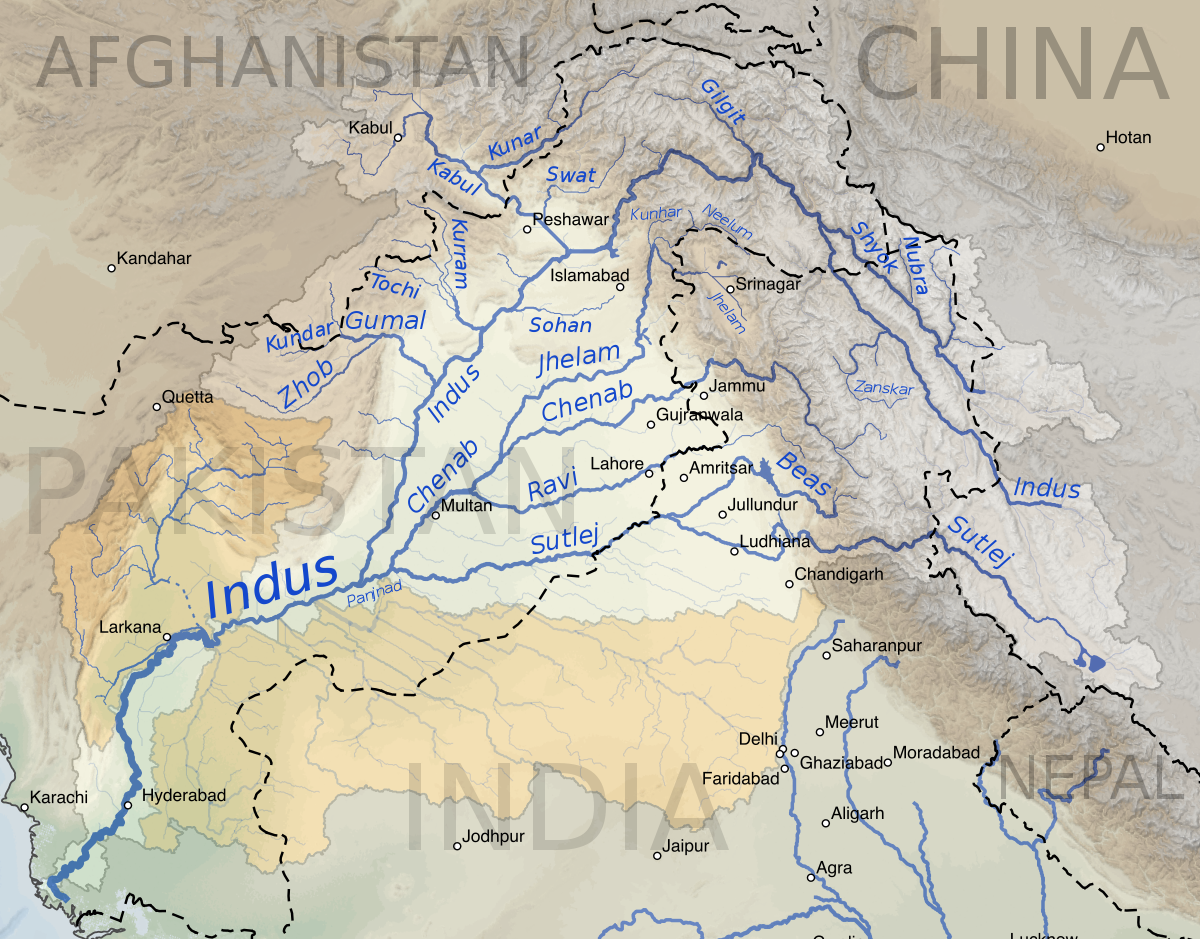
File:Indus River basin map.svg - Wikimedia Commons

*SOURCE: SOCIOLOGY IN A CHANGING WORLD, 6TH ED., 2003, WILLIAM KORNBLUM, PGS. 4-5*

end

Monday, May 11, 2020

Conclusion to Business Law (Part 66 - Grand Finale; The Final Showdown)


Occult Significance of the Number Sixty-Six


Number 66 is a powerful number of unconditional love, healing and faith and trust in
the Divine. ... Give any fears or anxieties about your monetary and material issues to
the angels for healing and transmutation, and trust that as you live your spiritual
truths all of your needs will be provided for
(http://sacredscribesangelnumbers.blogspot.com/2011/07/angel-number-66.html).

Make crime pay. Become a lawyer.

Wills, Inheritances, and Trusts
(part C)
 by
 Charles Lamson

 When Administration Is Unnecessary

 If an individual owns no property at the time of death, no need for administration exists. Also, all property jointly owned with someone else who acquires the interest by right of survivorship does not require administration.

Justice - Tarot arcane by ~Val-eithel on deviantART | Esoteric ...


Some states have special statutes allowing the administration procedures to be shortened for very small estates. In many states all the persons interested in the estate, relatives and creditors, can agree on the share each one is to receive and can divide the estate without formal court proceedings.

Title by Descent

When a person dies intestate (not having made a will before one dies), the property is distributed in accordance with the state law of descent. every state has such a law. Although these laws vary slightly, on the whole they provide as follows: The property of the intestate goes to any children subject to the rights of the surviving spouse. If no spouse, children, or grandchildren survive, the father and mother, as the next of kin, receive the property. If no parents survive, the brothers and sisters become the next of kin, followed by grandparents, aunts and uncles, and so on. Some statues permit any person related by blood to inherit when no nearer relative exists. Other statutes do not permit those beyond first cousins to inherit. In any case, if no proper person to inherit survives, the property passes on to the state. 

The administrator conveys title to real estate by means of an administrator's deed. When approved by the court, the grantee obtains good title to the property.

Per Capita and Per Stirpes Distribution

The lineal descendants of a descendant include the children and grandchildren. If all the children were living at the time of an intestate death, and the spouse was dead, the property would be distributed per capita, meaning per head, or equally to the children (see Illustration 1). If one child predeceased the intestate and left two surviving children, then the property would be divided into equal parts on the basis of the number of children the intestate had. The dead child's part would then be divided into two equal parts with one of these parts going to each of the grandchildren. This divides the property per stirpes (see illustration 2.) If the child left no children or other lineal descendants, then the surviving Children of the interstate with the deceased child share.

ILLUSTRATION 1 Per Capita Distribution

ILLUSTRATION 2 Per Stirpes Distribution

Justice Tarot card, Fyodor Pavlov (With images) | Tarot tattoo ...

Administrators

For the most part the duties and responsibilities of administrators resemble those of executors, with two significant differences. First, in the appointment all of an administrator, some states have a clear order of priority. The surviving spouse has first priority, followed by children, grandchildren, parents, and brothers or sisters. Second, an administrator must in all cases execute a bond guaranteeing the faithful performance of the duties.

The prime duty of administrators is the same as that of executors---to preserve the estate and distribute it to the rightful parties. Administrators must act in good faith, with prudence, and within the powers conferred on them by law. If any part of the estate is a going business, with only a few exceptions the business must be liquidated. However, the administrator may obtain leave of court to continue the business for either a limited time or an indefinite time, depending largely upon the wishes of those entitled to receive the estate. Third parties dealing with administrators, as well as executors, must know of limitations upon their authority. 

Trusts

A trust is a form of contract by which one person or entity agrees to hold property for the benefit of another. In an earlier post where we discussed the nature of real property, we examined one way in which ownership of property may be divided between two owners. That post discussed the difference between a life estate, or income interest, and remainder interest in property. This division in ownership separates the total ownership, or the fee simple estate, over time. The life tenant is the first owner, and the holder of the reversion or remainder is the second after the death of the life tenant.
Ownership of property in trust can be described as a division at the same time of two ownership interests---the legal ownership and the beneficial ownership. The legal owner of trust property is the person or entity who holds title to the property and who has the authority to control, or administer, the way in which the property is used. The legal owner of trust property is usually referred to as the trustee. If no trustee is specified, a court will appoint a trustee because there must be a person with title to the property.

Tarot Card Justice Icons PNG - Free PNG and Icons Downloads

The beneficial owner of trust property is entitled to the income, enjoyment, or benefits of the trust property. The beneficial owner is usually referred to as the trust beneficiary. The benefits of the property usually include income generated by property and the right to inhabit or use the property. In older documents, you might encounter the Latin words cestui que trust, meaning beneficiary. Both the trustee and the beneficiary have ownership interests in the property at the same time.
Creation of a Trust 

Because a trust is a specific form of contract, the law of contracts generally applies to trusts. Since a contract may be oral or written, a trust may also be oral or written, subject to the Statute of Frauds. Of course, the more valuable the property subject to the trust contract, the more important it is that the trust be written. It is easier both to remember and to enforce the terms of a written trust than those of an oral trust.

The person who creates a trust is known as the grantor. Other words used to describe the grantor include settlor and trustor. A grantor must have the legal capacity to enter into a contract in order to create a trust. Normally, the grand tour gives the trust property to the trustee and instructs the trustee how the property is to be used to benefit the beneficiary.

It is not necessary that the grantor, trustee, and beneficiary all be different persons or entities. However, they cannot all be the same person. That is, property may be given to the grantor, as trustee, to hold for another beneficiary. Or a grantor may give property to another, as trustee, to hold for the benefit of the grantor. The legal and beneficial ownership must be separate; therefore, the trustee and beneficiary must be separate and distinct entities. Otherwise, the grantor has simply given the property to the trustee/beneficiary in fee simple (a permanent and absolute tenure of an estate in land with freedom to dispose of it at will, especially in full fee simple absolute a freehold tenure, which is the main type of land ownership).

Exhibitions - Woodland Pattern

Because the trust is a creature of the law of contracts, the grantor has almost limitless ability to place restrictions on or grant options to the trustee and beneficiary as to the use of the trust property. Nonetheless, the trustee must have some identifiable purpose for administering the trust. 

Specific Types of Trusts

Several types of trusts are frequently used. These include:
  1. Express trust
  2. Resulting trust
  3. Constructive trust
  4. Blind trust
  5. Testamentary trust 
Express Trust
A trust that is created by a grantor clearly establishing a trust, whether oral or written, is sometimes referred to as as an express trust. This designation helps distinguish express trusts from other types of trusts, some of which may be implied. However, no specific words are required to create an express trust. It must just be clear that the grantor intended to create a trust.

Resulting Trust

A resulting trust occurs when one person supplies the purchase price for property, but has title issued in another person's name. This is sometimes called a purchase money trust. The theory of this type of trust is that unless the purchaser intended to make a gift, the one who pays for property should be the one to enjoy it and receive the benefits from it. 

Constructive Trust

A constructive trust arises by operation of law when one acquires title to property to which he or she cannot in good conscience retain the beneficial interest. A constructive trust is most often declared by a court in cases of fraud, but also arises in cases of bad faith, duress, coercion, undue influence, mistake, wrongdoing, or any other form of unconscionable conduct. Under these circumstances, a court will declare a constructive trust to prevent a wrongdoer from continuing to take advantage of the other party.

Blind Trust

A blind trust is most commonly used when the grantor, for some reason, does not want to know exactly what is in the trust, but wants to retain the benefit of the property. An example is when a government official with authority to regulate a certain industry gives management of property to a trustee, so that there will be no conflict between the official's personal financial interest and official government duties. Wealthy members of Congress frequently use blind trusts so they will not know exactly what securities they own. Then when they vote on legislation they cannot know whether their vote helps the companies in which they have a personal financial interest. 

Testamentary Trust

A testamentary trust is a special form of express trust created by the will of a testator. Even though the trust will not actually be created until the death of the testator, it will become a valid trust at that time. The trustee may, but need not, be the same person or entity as the executor of the will. A trust created by a will is subject to the same rules as other trusts.

Consider, as an example, the will of Heinrich Heine, the famous 19th century German poet. His will included the following provisions for his wife: "I leave all my estate to my wife on the express condition that she remarry. I want at least one person to sincerely grieve my death." Does this language have the effect of placing the entire estate into a trust? Heine died in France, but if his will still had been probated in the present day United States, it is highly unlikely a court would enforce this provision because of the requirement that Heine's widow remarry. Instead, the property would most likely be distributed directly to Heine's widow, outright and free from trust. 

Justice - Tarot Cards - Major Arcana" Metal Print by ...

*SOURCE: LAW FOR BUSINESS, 15TH ED., 2005, JANET E. ASHCROFT, J.D., PGS. 55-555, 558*

end

Rosary from Lourdes - 02/12/2025