Monday, August 24, 2020
Sociological Imagination: How to Gain Wisdom about the Society in which We All Participate and for Whose Future We Are All Responsible (part 41)
Sociology is really in trouble as a field. I can tell you, because I've known young people who have wanted to go into it, and they have been uniformly advised, if you are a free thinker, stay away from sociology.
Education (Part B)
by
Charles Lamson
Who Goes to School?
The idea that all children should be educated is the product of the American and French Revolutions of the late eighteenth century. In the European monarchies the suggestion that the children of peasants and workers should be educated would have been considered laughable. In those societies children went to work with adults at an early age, and adolescence was not recognized as a distinct stage of development. Formal schooling, which was generally reserved for the children of the elite, typically lasted three or four years, after which the young person entered a profession.
 |
Even after the creation of republics in France and the United States and the beginning of a movement for universal education, the development of a comprehensive system of schools took many generations. In the early history of the United States, the children of slaves, Native Americans, the poor, and many immigrant groups, as well as almost all female children, were excluded from educational institutions. The norm of segregated education for racial minorities persisted into the 20th century and was not overturned until 1954 in the Supreme Court's famous ruling in Brown's Board of Education of Topeka. Even after that decision it took years of civil rights activism to ensure that African Americans could attend public schools with whites. Thus, although the idea of universal education in a democracy arose early, it took many generations of conflict and struggle to transform it into a strong social norm (Cremin, 1980, American Education; Krueger, 1998). The idea of mass education based on the model created in the United States and other Western nations has spread throughout the world. Mass education differs from elite education, which is designed to prepare a small number of privileged individuals (generally sons of upper-class families) to run the institutions of society (e.g., the military, the clergy, the law). Mass education focuses instead on the socialization of all young people for membership in the society. It is seen as a way for young people to become citizens of a modern nation-state. Mass education establishes an increasingly standardized curriculum and tries to link mastery of that curriculum with personal and national development (Benavot, 1991, Knowledge for the Masses. American Sociological Review, 56, 85-91; Meyer, Ramirez, Soysal, 1992, World Expansion of Mass Education, 1870-1980. Sociology of Education, 65, 128-149).
In the more affluent industrial nations, extremely high proportions of students who complete secondary school go on to universities and colleges or some kind of professional or occupational training. The demand for greater access to higher education was pioneered in the United States and Canada. An extension of mass education in the United States was the expansion of public institutions of post-secondary education and the parallel expansion of private colleges and universities, often with federal aid and research funding. This expansion was fueled by the post World War II baby boom and the massive increase in the college-age population in the 1960s. During those years there was a parallel boom in employment for elementary school teachers and then for high school teachers and college professors. But after the boom came the bust: The birth rate fell sharply beginning in the late 1950s, and by the mid-1970s college enrollments also began to decline. These changes had dramatic effect on primary schools but at the college level they were partially offset by an unprecedented countertrend: the immense increase in the number of older students seeking higher education. Today large numbers of adults are returning to college. Unlike the typical student of earlier years, adult students are in the labor force, are married and living with their spouses, are going to school part-time, and are seeking skills and knowledge to enhance their careers (Mulkey, 1993, Sociology of Education; Torres & Mitchell, 1998, Sociology of Education). The return of so many adults to educational institutions has led many social scientists to describe a future in which education will be a lifelong process in which people of all ages will move in and out of educational institutions. Nevertheless, the most rapidly growing area of education is preschool programs, an important trend that is discussed in a later post. Schools and Adolescent Society A key feature of education is the fact that schools structure the lives of children and adolescents. This is particularly true at the high school level. A famous study of the effect of schools on adolescents and youth, The Adolescent Society, was published by James Coleman in 1961. Its main point was that schools help create a social world for adolescents that is separate from adult society. According to Coleman, this is an almost inevitable result of the growing complexity of industrial societies, in which, as we saw in the last post, functions that were formerly performed by the family are increasingly shifted to other institutions, especially educational institutions. Yet schools cannot provide the same kind of support and individual attention that the family can. As a result, according to Coleman, the student is pushed into associations primarily with others of the same age. These small groups of age mates come to constitute a small society, one that has most of its important interaction within itself, and maintains only a few threads of connection with the outside adult society (1961, p. 3).
Coleman's research was not unique. Other social scientists have analyzed what has come to be known as the "youth culture" in terms of changes in the structure of American society. Briefly, what has happened is that the rising level of expectations regarding educational attainment has placed more and more demands on the student. This pressure often is not matched with a clear means of meeting the new demands. This mismatch between ends and means can lead to the emergence of deviant individuals and groups. The resulting frustration often leads teenage peer groups to become extremely ambivalent and even cynical about adult expectations. They develop fierce loyalty and conformity to the peer group, strictly observing group norms and not tolerating any deviance from those norms, which themselves may deviate from those of their teachers and parents. The risk for society in the development of isolated adolescent cultures is that teenagers will fail to learn how they can become involved in shaping their own society. Great cultural gaps between youth and their parents are often a signal that the older generation has not offered young people enough opportunities to work with adults for constructive social change (Gilligan, cited in Norman, 1997, From Carol Gilligan's Chair. New York Times Magazine, p. 50; Moscos, 1988, Call to Civic Service). Education and Citizenship Another important aspect of education in the United States is the relationship between education and citizenship. Throughout its history this nation has emphasized public education as a means of transmitting democratic values, creating a quality of opportunity, and preparing new generations of citizens to function in society. In addition, the schools have been expected to help shape society itself. During the 1950's, for example, efforts to combat racial segregation focused on the schools. Later, when the Soviet Union launched the first orbiting satellite, American schools and colleges came under intense pressure and were offered many incentives to improve their science and mathematics programs so that the nation would not fall behind the Soviet Union in scientific and technological capabilities (Kornblum, 2003, p. 562). Education is often viewed as a tool for solving social problems, especially social inequality. The schools, it is thought, can transform young people from vastly different backgrounds into competent, upwardly mobile adults. Yet these goals seem almost impossible to attain (Cahill, 1992, The Sociology of Childhood at and in an Uncertain Age. Contemporary Sociology, 21, 699-672). In recent years, in fact, public education has been at the center of numerous controversies arising from the gap between the ideal and the reality. Part of the problem is that different groups in society have different expectations. Some believe their students need better preparation for careers and a technologically advanced society, others that children should be taught basic job-related skills, still others that education should not only prepare children to compete in this society but also help them maintain their cultural identity and, in the case of Hispanic children, their language. On the other hand, policymakers concerned with education emphasize the need to increase the level of student achievement and to involve parents in their children's education (Wilson, 1993, Mandating Academic Excellence).
Some reformers and critics have called attention to the need to link formal schooling with programs designed to address social problems. Sociologist Charles Moscos, for example, is a leader in the movement to create a system of voluntary national service. National service, as Moscos defines it, would entail "the full-time undertaking of public duties by young people---whether as citizen soldiers or civilian servers who are paid subsistence wages" and serve for at least a year (1988, p. 1). In return for this period of service, the volunteers would receive assistance in paying for college or other educational expenses. Advocates of national service and school-to-work programs believe that education does not have to be confined to formal schooling. In devising strategies to provide opportunities for young people to serve their society, they emphasize the educational value of citizenship experiences gained outside the classroom. Americorps and Teach for America are examples of such programs. *MAIN SOURCE: KORNBLUM, W., 2003, SOCIOLOGY IN A CHANGING WORLD, 6TH ED., PP. 556-562* end |


Sunday, August 23, 2020
Saturday, August 22, 2020
Sociological Imagination: How to Gain Wisdom about the Society in which We All Participate and for Whose Future We Are All Responsible (part 40)
I think that's the most important part of doing this job, is learning different personality types. I mean, it's kind of like sociology or psychology in a sense. With that, and with every project I do, I think I'm able to pull something away that further makes me understand humanity in a way I didn't before.
Education
by
Charles Lamson
Education for a Changing World
In the poorer regions of the world, there is a dire need for universal access to schools; in the more developed regions, serious issues of educational equity need to be addressed. And amid the clamor for school reform in the United States, there is also concern that new standards and new pressures for higher performance will not be matched by the necessary resources of money and talent. Although critics of public schooling abound, there is little consensus about how to achieve better student performance (Torres & Mitchell, 1998, Sociology of Education). But why are schools and education so often at the center of controversy and debate? To begin answering this question, we turn to basic concepts in educational sociology.
 |
Efforts to change the goals and methods of education are not new. One of the most famous trials in history took place in ancient Greece when Socrates was accused of corrupting the morals of Athenian youth with his innovative ideas and educational methods. Today, the fact that proposals for educational reforms are receiving so much hopeful attention is evidence of the importance of education in modern societies. There is great concern with the need to improve education in order to train new generations of workers. We will see at many points in the next few posts that there is a widespread desire to reform schools without significantly increasing school funding. However, although critics of the public schools abound, there is little consensus about how to achieve better student performance (Torres & Mitchell, 1998). Education may be defined as the process by which a society transmits knowledge, values, norms, and ideologies and in so doing prepares young people for adult roles and adults for new roles; in other words, it transmits the society's culture to the next generation. Education thus is a form of socialization that is carried out by institutions outside the family, such as schools, colleges, preschools, and adult education centers. Each of these is an educational institution because it encompasses a set of statuses and roles designed to carry out specific educational functions---it is devoted to transmitting a specific body of knowledge, values, and norms of behavior. A particular school or college may be referred to as an institution in everyday language, but in sociological terms it is an organization that exemplifies an educational institution. Thus, El Centro College in Dallas, Texas, is an organization that exemplifies the institution of higher education. The high school you attended was also an organization, but its curriculum and norms of conduct were those of the institution known as secondary education. Educational institutions have a huge effect on communities in the United States and other modern societies. Upwardly mobile couples often base their choice of a place to live on the quality of the public schools in the neighborhood. Every neighborhood has at least an elementary school and every large city has one or more high schools and at least one community college or four-year college. Cities usually also have a variety of school administrations---public and private---and some owe their existence, growth, and development to the presence of a college or university (Ballantine, 1997, The Sociology of Education).
The Nature of Schools Educational institutions affect not only the surroundings but also the daily lives of millions of American children and their parents, college and university students, teachers, and professors. Hence, education is a major focus of social scientific research. And because it affects so many lives and deals so directly with values, it is often an arena of conflict among people with conflicting values. To the sociologist, the most common educational institution, the school, is a specialized structure with a special function: preparing children for active participation in adult activities. Schools are sometimes compared with total institutions, in which a large group of involuntary "clients" is serviced by a smaller group of staff members. The staffs of such institutions tend to emphasize the maintenance of order and control, and this tendency often leads to the development of elaborate sets of rules and monitoring systems. This comparison should not be taken too literally; schools are not prisons, although some of the inmates may think of them as such, but the typical school does tend to be characterized by a clearly defined authority system and set of rules. In fact, sociologists often cite schools as examples of bureaucratic organizations (Ballantine, 1997; Mulkey, 1993, Sociology of Education). A more interactionist viewpoint sees the school as a set of behaviors; that is, the central feature of the school is not its bureaucratic structure but the kinds of interactions and patterns of socialization that occur there. From this perspective, we need to examine all the rules involved and see how they interact---how they mesh or failed to mesh. For example, homework is assigned, but who besides the student is involved in completing the assignment? Are the parents involved? In what ways---as helpers or merely as disciplinarians? Do the parents ever ask what the teacher did with a homework assignment? The interactionist perspective thus insists on examining all the factors involved in learning, often in an effort to determine how they may be strengthened or challenged so as to create more effective learning environments (Torres & Mitchell, 1998).
Conflict theorists, by contrast, view education in modern societies as serving to justify and maintain the status quo (Arrow, Bowles, & Durlauf, 2000, Meritocracy and Economic Inequality; Bowles and Gintis, 1976, Schooling in Capitalist America; Castells et al., 1998, Critical Education in the New Information Age). This critical perspective challenges the more popular view that education is the main route to social mobility and that it can offset inequalities in family background (Bell, 1973, The Coming of Post Industrial Society). When sociologists analyze the impact of educational institutions on society, they generally conclude that the benefits of education are unequally distributed and tend to reproduce the existing stratification system (Aronowitz & Giroux, 1985, Education Under Siege; Fullan, 1993, Change Forces). If we think of education from a global perspective, and if we focus primarily on the schools, the major theoretical perspectives in sociology tend to pose different, but overlapping, questions for research. The functionalist perspective leads to questions about how schools work to reach as many of the nation's children as possible, how well students actually learn in those schools, and how the schools function with regard to other major social institutions. Are the schools secular or religious institutions, or both? In more formal terms, how differentiated are the schools from the society's other social institutions? This question is the familiar one of separation of church and school, or of political party and school. Even in relatively secular nations such as the United States, where separation of church and school is the law, there are continual battles over issues like prayer in school and the teachings of "creationism" or "intelligent design" (the idea that God set in motion the mechanisms of evolution). In less secular societies, such as many Islamic nations, religious institutions are entirely responsible for running the schools, in which case little value may be placed on scientific objectivity or freedom of inquiry. As noted earlier, sociologists with a conflict perspective on social research often ask whether schools are actually involved in creating equal opportunities for social and group advancement or whether they are in fact working to justify and reproduce existing patterns of inequality. Are they preparing all students, regardless of class, race, ethnicity, or gender to rise in the social class hierarchy, for example, or are they preparing students to accept their positions in society, especially when those positions are less advantaged? Interactionist sociologists ask questions about what actually goes on in the daily life of schools and classrooms. Their research focuses on the interactions among students, between students and their teachers, or among teachers and administrators. Their research on these questions usually helps answer questions asked by those with other sociological perspectives as well. For example, observation of classroom interactions might reveal that without knowing it, teachers are following the what is sometimes called a "hidden curriculum" that communicates different expectations for girls and boys, with boys expected to do better at math and science and girls expected to do better at analyzing characters and emotions, typical gender stereotypical roles (Lynch, 1990, The Hidden Curriculum).
The different perspectives generate many specific questions and diverse research projects. This is especially true when one takes a global perspective because educational issues vary widely across different regions of the world. *MAIN SOURCE: WILLIAM KORNBLUM, 2003, SOCIOLOGY IN A CHANGING WORLD, 6TH ED., PP. 554-556* end |



Friday, August 21, 2020
Sociological Imagination: How to Gain Wisdom about the Society in which We All Participate and for Whose Future We Are All Responsible (part 39)
Although, from the point of view of sociology, the overt ambition of 'American Pastoral' - to imagine the impact on a good man of America's fall from the family decencies of the '30s and '40s to the self-centred violence of the '60s - outstrips anything Sabbath's Theater attempts, the writing is no less fervid an excurse into the writer's mind.
Religion (Part D): Cults, Sects, and Structural Change in Modern Religion
by
Religion today is a highly structured institution, with numerous statuses and roles within a variety of organizations as well as many kinds of smaller, less bureaucratic groups. This was not always so. The religions of tribal peoples were not highly institutionalized; that is, there were no separate organizations like churches or interfaith councils or youth fellowships. It is true that the occupational status of a holy person or a priest might exist.
 |
Thus most Native American peoples had spiritual leaders who specialized in the rituals and symbols through which the members of the tribe could address the great spirit and the sacred spirits of their ancestors. But even in societies that had spiritual leaders or priests, religious practice was intertwined with tribal and family life. There was no concept of the church as a separate institution specializing in religious rituals. Religion as a fully differentiated institution developed in agrarian societies, and formal religious organizations first appeared in such societies. Agrarian societies produce enough surplus food to support a class of priests and other specialists in religious rituals. In those less complex societies, religion was incorporated into village and family life; it had not yet become differentiated into a recognized, separate institution with its own statuses and roles (Warner, 1998, Work in Progress Toward a New Paradigm for the Sociological Study of Religion in the United States. American Journal of Sociology, 98, 1044-1093). Over time, however, the development of religious institutions resulted in a wide variety of organizations devoted to religious practice. Today those organizations include the church, the sect, and the denomination. Forms of Religious Organization Churches and Sects A church may be defined as a religious organization that has strong ties to the larger society. Often in its history it has enjoyed the loyalty of most of the society's members; indeed, it may have been linked with the state itself (Weber, (1963/1922), The Sociology of Religion). An example is the Church of England, or Anglican Church. A sect, by contrast, is an organization that rejects the religious beliefs or practices of the established churches. Whereas the church distributes the benefits of religious participation to anyone who enters the sanctuary and stays to follow the service, the sect limits the benefits of membership (i.e., salvation, fellowship, common prayer) to those who qualify on narrower grounds of membership and belief (McGuire, 1987, Religion; Weber, 1963/1922).  Rasputin went from peasant thief in rural Russia to one of the most influential men in the country. Legend has it, he did it after getting his powers from his connection to the Khlysty sect (Maria Isabel Carrasco Cara Chards, (July 15, 2019),The Religious Sect Rasputin Supposed Got His Powers From. Culturacollectiva.com). An important difference between churches and sects is that churches draw their adherence from a large social environment (i..e, from a large pool of possible members), whereas the size of the population from which a sect draws its members tends to be small (Iannaccone, Stark, & Finke, 1988, Rationality and the "Religious Mind." Economic Inquiry, 36, 373-390). Also, churches make relatively limited demands on their members, whereas sects make heavy claims on members' time, money, and emotional commitment. As Robert Wuthnow (1988, Sociology of Religion. In N. J. Smelzer, Ed., The Handbook of Sociology) writes: "Church's attempt to regulate or fulfill a few of the activities or needs of large numbers of people; sects attempt to regulate or fulfill many of the activities or needs of small numbers of people (p. 495). Denominations A third type of religious organization is the denomination. Unlike a sect, a denomination is on good terms with the religious institution from which it developed, but it must compete with other denominations for members. An example of a denomination is the United Methodist Church, a Protestant denomination that must compete for members with other Protestant denominations such as Presbyterians, Episcopalians, and Baptists. Denominations sometimes evolve from sects. This occurs when the sect is successful in recruiting new members and grows in both size and organizational complexity (Wuthnow, 1994, God and Mammon in America).
Before a sanctuary full of parishioners photos, Father Clayton Elder rehearses his Holy Thursday service before going live on YouTube at St. Philip Episcopal Church in Frisco, Thursday, April 9, 2020. So that Elder can feel a connection with his congregation, the community life director printed the photos emailed to her and posted them in the pews. About 250 parishioners tuned into the live broadcast on YouTube.(Fox, T., (April 11, 2020), Dallas Morning News Outtakes: Photographer Tom Fox captures religious leader’s effort to stay connected with congregation. Dallasnews.com). Cults Still another type of religious body, the cult, differs in significant ways from the organizations just described. Cults are usually an entirely new religion whose members hold beliefs and engage in rituals that differ from those of existing religions. Some cults have developed out of existing religions. This occurred in the case of early Christianity, which began as a cult of Jews who believed that Jesus of Nazareth was the Messiah and who practiced rituals that were often quite different from those of Judaism. Cults may also be developed by people who were not previously involved in a church or sect, such as individuals who become active in pagan cults like those based on ancient forms of witchcraft (Barrett, 1996, Sects, "Cults," and Alternative Religions). Most major religions began as seemingly insignificant cults, but new cults are formed every day throughout the world, and few of them last long enough to become recognized religions (Kornblum, 2003, p. 529).
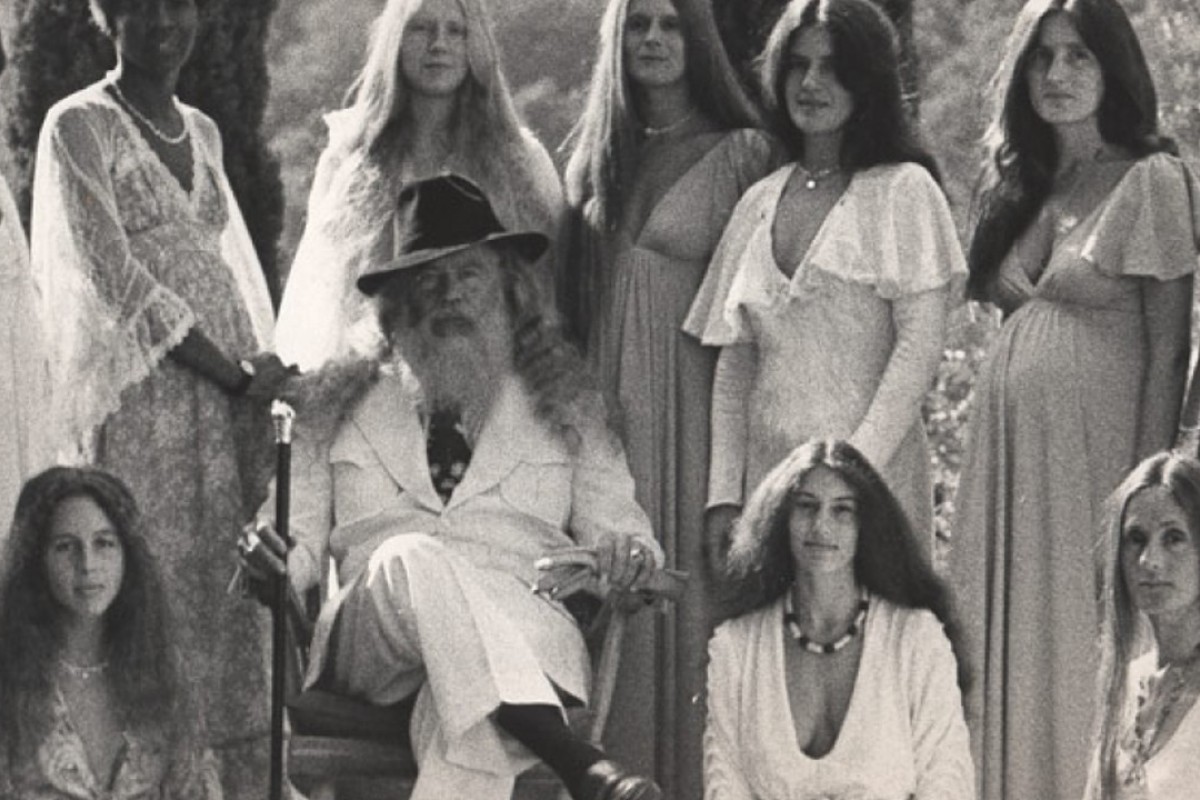
David Berg (seated) founded the Children of God cult whose members included River and Joaquin Phoenix and Rose McGowan when they were children. (Simon O'Reilly, 12 September, 2018, Brainwashing, child abuse, even bioterrorism: six sex cults that went well beyond ‘love thy neighbour’. South China Morning Post). In a study of trends in church, sect, and cult membership, sociologists Robert Finke and Rodney Stark find that, contrary to common assumptions, the rate at which cults are formed is no higher today than it was in earlier historical periods. Moreover, compared to some of the earlier cults, contemporary cults often have less success in gaining members: No cult movement of the sixties or early seventies seems ever to have attracted more than a few thousand American members, and most of even the well-publicized groups counted their true membership in the hundreds, not the thousands. (Finke and Stark, 1992, The Churching of America 1776-1992, p. 241; see also Melton, 1989, The Encyclopedia of American Religions, 3rd ed.) One reason cults and sects do not always grow in numbers or influence is that established religions often absorb them through the process known as co-optation. This term is not limited to religious institutions; it refers to any process whereby an organization that deals with potentially threatening individuals or groups by incorporating them into its organizational structure (Selznick, 1966, TVA and the Grass Roots). For example, over the centuries the Roman Catholic church has been particularly successful at co-opting regional Catholic sects by including their leaders in the panoply of lesser Saints, thereby allowing people to venerate a holy person of their own culture while remaining true to the world Church.
Religious Interaction and Change Sects and cults are a major source of change in religious organizations. People who are not satisfied with more established churches and denominations, or are otherwise alienated from society, often form or join a cult or sect (Barrett, 1996). One of the most convincing explanations of the emergence of sects was suggested by H. Richard Niebuhr (1929, The Social Sources of Denominationalism), borrowing from Max Weber's (1922, Gesamelte Aufsatze Zur Religionssoziologie) pioneering analysis of churches and sects. According to Weber, churches tend to justify the presence of inequality and stratification because they must appeal to people of all classes. Sects, on the other hand, may be led by charismatic individuals who appeal to people who have felt the sting of inequality. Niebuhr agreed with Weber that class conflict is a primary cause of sect formation. But he observed that as a sect becomes more successful and better organized, it becomes more like a church and begins to justify existing systems of stratification. This creates the conditions in which new sects may emerge. Another motivation for the formation of sects or cults is dissatisfaction with the interactions that occur in more established organizations. In church rituals, for example, prayer is often led by a priest or other religious professional and is relatively restrained, whereas in sects and cults communication between God and the individual is more direct and typically allows the individual to expressed deep emotions. The different styles of interaction in different types of religious organizations can be illustrated by the contrast between the hierarchy of statuses and roles that characterizes the Catholic church (with its pope, cardinals, bishops, priests, and other well-defined of statuses) and the seemingly greater equality and looser structure of a cult. People who are attracted to cults are often influenced by a charismatic leader who inspires them to new and very personal achievements, such as ecstatic experiences, a sense of salvation, or a release from physical or psychological a suffering. Some become cult members simply because they are lonely; others are born to cult members and are socialized into the cult. Some, but by no means all, cults are extremely authoritarian and punitive. Their leaders may demand that members cut themselves off entirely from family and friends and sacrifice everything for the sake of the cult. The leaders may also insist that they themselves are above the moral teachings to which their followers must adhere. Under these conditions of isolation and submission to a dominant authority, cult members may be driven to incredible extremes of behavior---even mass suicide, as occurred in the case of the followers of Heaven's Gate in 1997. However, not all cults are so dangerous or so easily condemned, and there is an ongoing conflict between norms that protect the right of individuals to belong to cults and efforts to protect people from the harm that can occur when cult leaders place themselves above morality and the law.
Sociological Insights into Waco and Wounded Knee The confrontation that took place in Waco Texas on February 28th, 1993, between the Branch Davidians and agents of the Bureau of Alcohol, Tobacco, and Firearms (BATF) revealed the need for greater understanding of alternative religious groups (Foster, et al., 1998, Forum: Interpreting Waco. Religion and American Culture, 8, pp. 1-30). Among sociologists who study religion and social change, there is growing consensus that the term cult can be dangerous when it is applied as a pejorative label to all religious groups that are outside the mainstream of religious organizations. Nancy Ammerman, one of the foremost authorities on Protestant religious groups in the United States, notes that one of the primary interpretive lenses through which the general public views groups such as the Branch Davidians is is the lens supplied by cult awareness groups and exit counselors. Namely most people think members of a group like the Branch Davidians must have been brainwashed into joining (Foster, et al., 1998, p. 27). Analyses of the Waco tragedy now place greater emphasis on the deep misunderstandings that existed between the government agencies, primarily the FBI and the BATF, that laid siege to the Branch Davidian community, and the members of the community---especially its leader, David koresh. These misunderstandings appear to have deep been deepened by hysterical press and television coverage during the episodes of violence and siege (Bates, 1999, The Siege at Waco. Booklist, 1050-1051). Sociologist Joel Martin observes that the Branch Davidians were not newcomers but an established alternative religious group that had lived in the Waco area since the 1930s. The group did believe in an unconventional variant of Seventh-day Adventist millenarianism and that Armageddon and the end of times were close at hand. They also had some unorthodox and disturbing sexual practices, but these charges, and the charge that they were stockpiling weapons could have been addressed by quietly apprehending the group's leader for questioning rather than engaging in the large-scale operation that resulted in an armed standoff and the eventual death of the entire group in a blaze of fire and bullets. Many sociologists point to the similarities between the Waco disaster and the tragedy at Wounded Knee, South Dakota, in 1890. In both cases, and many others like them, a new religion attracts men and women with visions of a new heaven and earth. As they seek to live in accord with these visions, they withdraw into their own community, altering their behavior in ways that may seem strange and even threatening to others. People outside the community begin to spread rumors about them. Government authorities get nervous and plan to move against the group. Journalists congregate, anticipating a big story. When a confrontation takes place, gunfire erupts and a few of the authorities are killed. In the end, the millenarian community is destroyed. After the tragedy, officials, scholars, historians, and journalists interpret what happened. Many conclude that the community's members had been caught up in a "messiah craze." Thus the dead are blamed for their own deaths. Such was the case with the Lakota Indian Ghost Dancers who were killed at Wounded Knee in 1890. In the Ghost Dance religion, some Indians began to believe they might be invulnerable to white attackers. In a sense, they courted death at the hands of white men. Many believed that if the Ghost Dance did not protect them, they would at least achieve speedy transport to a happier existence than the one they led among the conquering white people (Hackett, 1955, Religion and American Culture). The situation of the Branch Davidians killed outside Waco a century later was similar. The issue is not whether either group was right or wrong, but how people in a position to bring understanding to these tragic situations can help prevent similar events from occurring over and over again. *MAIN SOURCE: KORNBLUM, W., 2003, SOCIOLOGY IN A CHANGING WORLD, 6TH ED., PP. 527-531* end |



Thursday, August 20, 2020
Wednesday, August 19, 2020
Tuesday, August 18, 2020
Sociological Imagination: How to Gain Wisdom about the Society in which We All Participate and for Whose Future We Are All Responsible (part 38)
Religion (Part C)
by
Charles Lamson
Religion and Social Change
The role of religion in bringing about social change is an important aspect of life in those societies. Indeed, in many parts of the world, religion is one of the primary forces opposing or supporting change. However, it is not always a simple matter to predict whether religion will encourage change or hinder it.
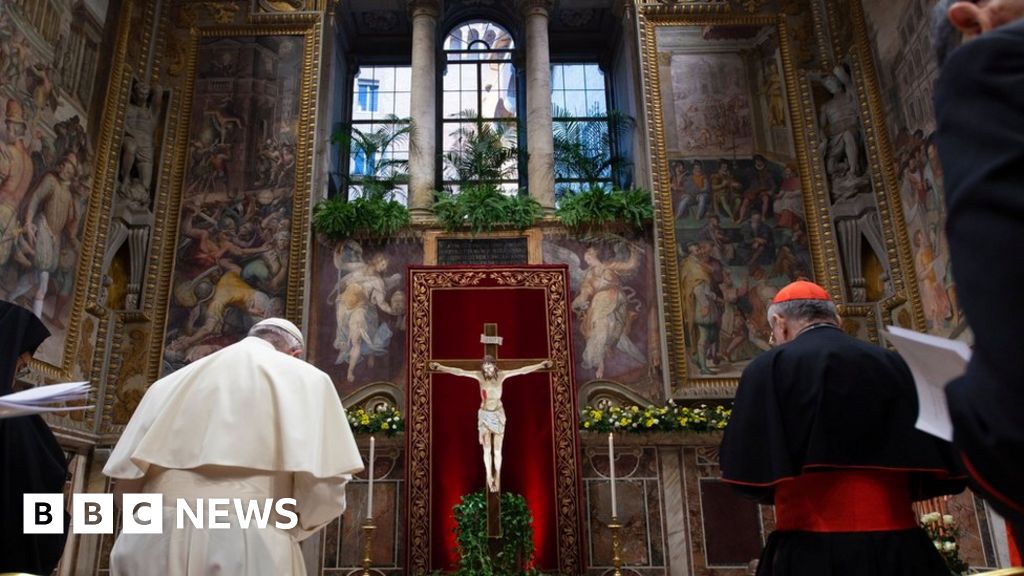 |
In the United States, the Catholic church plays an active role in seeking social change. The church strongly opposes abortion. Instead, it supports a return to the traditional view of abortion as a crime, which is based on the belief that humans must submit to the will of God and not use their technological skills to achieve power over life and death. In this instance, therefore, although the church is promoting social change, the change represents a return to an earlier standard. Throughout much of Latin America, in contrast, the Catholic church is fighting in support of the masses of urban and rural poor who seek social justice and equitable economic development. In Brazil, for example, the typical Catholic priest or nun favors the political left, which seeks a more egalitarian distribution of wealth and income and is highly critical of the rich (Kornblum, 2003, Sociology in a Changing World, 6th Ed., p. 527). We could add many other examples of the role played by a religion and religious organizations in social change. But in attempting to generalize about the relationship between religions and social change it is useful to return briefly to classic sociological theories. The pioneering European sociologists, particularly Karl Marx and Max Weber, noted he prominent role of religion and social change. But they wondered whether the influence of religious faith is a determining force in social change or whether religious sentiments and the activities of religious organizations are an outgrowth of changes in more basic economic and political institutions. Marx believed that economic institutions are fundamental to all societies and that they are the source of social change. In his view, religion and other institutions are shaped by economic and political institutions; they are a "superstructure" that simply reflects the values of those institutions of markets, firms, the government, the military, and so on. The function of cultural institutions, especially religion, is to instill in the masses the values of the dominant class. In this sense they can be said to shape the consciousness of a people, but they do so in such a way as to justify existing patterns of economic exploitation and the existing class structure. Religion, in Marx's words, is the "opium of the people" because it eases suffering through prayer and ritual and deludes the masses into accepting their situation as divinely ordained rather than organizing to change the social system.
For Weber, on the other hand, religion can be the cause of major social change rather than the outcome or reflection of changes in other institutions. Weber set forth his thesis in one of his most famous works, The Protestant Ethic and the Spirit of Capitalism (1974/1904). Noting that the rise of Protestantism in Europe had coincided with the emergence of capitalism, Weber hypothesized that the Protestant Reformation had brought about a significant change in cultural values and that this was responsible for the more successful development of capitalist economic systems in Protestant regions. As Weber explained it, Protestantism instilled in its followers certain values that were conducive to business enterprise, resulting in the accumulation of wealth. Because the early Protestants believed that wealth was not supposed to be spent on luxuries or the pleasures of the flesh, the only alternative was to invest in new or existing business enterprises---in other words, to contribute to the rapid economic growth characteristic of capitalist systems (Kurtz, 1995, Gods in the Global Village). This view was reinforced by the belief---also part of the Protestant ethic---that a person who worked hard was likely to be among those predestined for salvation. Some have questioned the validity of Weber's thesis regarding Protestantism and early capitalism, but there can be no doubt that religious institutions are capable of assuming a major role in shaping modern societies. Throughout the Islamic world there are currents of orthodoxy and reform that threaten to cause both civil and international wars. And as noted earlier, in many Latin American communities the Catholic Church leads the movement for large-scale social change. So Marx was wrong in his claim that religion functions largely to maintain the existing values of more basic social institutions. On the contrary, religion can often lead to new ways of organizing societies---to new political and economic institutions as well as whole new lifestyles. The Marxian view of religion is still relevant to those who are critical of the influence of religious institutions. These critics assert that religion, along with other cultural institutions such as education, reaffirms and perpetuates inequalities of wealth, prestige, and power. When the poor are encouraged to pray for a better life, for example, they are further oppressed by a religion that prevents them from realizing that they need to marshal their own power to challenge the status quo. Thus there is still some question about whether (and how much) religious institutions change society in any fundamental way.  To make informed judgments about this and related issues, we need to have a better understanding of the nature of religious organizations and how they function in modern societies. In the next couple of posts, therefore, we describe the main types of religious organizations. We then focus on trends in religious belief and practice in the United States. *MAIN SOURCE: KORNBLUM, W., 2003, SOCIOLOGY IN A CHANGING WORLD, 6TH ED., PP. 526-527* end |

Monday, August 17, 2020
Sociological Imagination: How to Gain Wisdom about the Society in which We All Participate and for Whose Future We Are All Responsible (part 37)
Religion (Part B)
by
Charles Lamson
Varieties of Religious Belief
Religious sentiments and behavior persist even in highly secularized societies like the United States. As sociologist Robert Wuthnow (1988, Sociology of Religion. In N. J. Smelzer (Ed.), The Handbook of Sociology) points out:
The assumption that religion in modern societies would gradually diminish in importance or else become less capable of influencing public life was once widely accepted. That assumption has now become a matter of dispute. . . . Modern religion is resilient and yet subject to cultural influences; it does not merely survive or decline, but adapts to its environment in complex ways. (p. 474)
Many of the adaptations that religions make to social change become evident when one examines the varieties of religious belief in the world today, and especially when one studies the major world religions.
 |
| FIGURE 1 Max Weber Major World Religions In a 1913 essay, Max Weber (see Figure 1) commented that "by 'world religions' we understand the five religions or religiously determined systems of life-regulation which have known how to gather multitudes of confessors around them (1958 1913, World Religion. In Gerth & Mills (Trans. and Eds.), From Max Weber, p. 267). Among these Weber included, in addition to Christianity, "the Confucian, Hinduist, Buddhist, and Islamic religious ethics." He added that despite its small population of adherents, Judaism should also be considered a world religion because of its influence on Christianity and Islam as well as on Western ethics and values even outside the religious sphere of life. In discussing religion, sociologists often refer to the Islamic world of the Middle East, the Roman Catholic World of Latin America and southern Europe, the Hindu world of the Indian subcontinent, and the Buddhist world of the Far East. The United States, Northern Europe, and Australia are among the societies in which Protestantism is strongest. There are also, of course, the nations of Eastern Europe and the former Soviet Union, where until relatively recently communism as a civil religion was the only legitimate belief system (Robertson, 1985, The Sacred and the World System. In P. Hammond (Ed.), The Sacred in a Secular Age). In many parts of the world, particularly in Asia and Africa, large numbers of people practice other religions. Many are indigenous people whose religious practices may be influenced by the major world religions but continue to be based on beliefs and ways of worship that are unique to that culture (Kornblum, 2003, Sociology in a Changing World, 6th ed.). For example, in her sociological portrait of Mama Lola, a Haitian Priestess, Karen McCarthy Brown notes that many Haitians practice Voodoo, which is derived from African religious beliefs. Some of Mama Lola's followers may worship in Catholic churches yet continue to practice the traditional use of voodoo as well (Brown, 1991, Mama Lola; 1992, April 15, Writing about "the Other." Chronicle of Higher Education, p. A56). Classification of Religious Beliefs The religions practiced throughout the world today vary from belief in magic and supernatural spirits to complicated ideas of God and saints, as well as secular religions in which there is faith but not God (Bowker, 1997, World Religions). With such a wide range of religious beliefs and practices to consider, it is useful to classify them in a systematic way. One often used system classifies religions according to their central belief. In this scheme the multiplicity of religious forms is reduced to a more manageable list consisting of five major types: simple supernaturalism, animism, theism, abstract ideals, and civil religion (2003, p. 522). In this section we describe each type briefly. Be warned, though, that not all religions fit neatly into these basic categories.
Simple Supernaturalism In less complex and rather isolated societies, people may believe in a great force (see Figure 2) or spirit, but they may not have a well-defined concept of God or a set of rituals involving God. Studies by anthropologists have found that some isolated peoples (e.g., South Pacific island cultures and Eskimo tribes) believe strongly in the power of a supernatural force but do not attempt to embody that for us in a visualized conception of God. In this form of religion called simple supernaturalism, there is no discontinuity between the world of the senses and the supernatural; all natural phenomena are part of a single force. Animism More common among hunting-and-gathering societies is a form of religion termed animism, in which all forms of life and all aspects of the Earth are inhabited by gods or supernatural powers. Most of the indigenous peoples of the Western Hemisphere were Animists, and so were many of the tribal peoples of Africa before the European conquests. Theism Religions whose central belief is theism usually conceive of gods as separate from humans and from other living things on the Earth, although these gods are in some way responsible for the creation of humans and for their fate. Many ancient religions were polytheistic, meaning that they included numerous gods, all of whom occupied themselves with some aspect of the universe and of human life. In the religion of the ancient Greeks, warfare was the concern of Ares; music, healing, and prophecy was the domain of Apollo; his sister Artemis was concerned with hunting; Poseidon was the god of seafaring; Athena was the god of handicrafts and intellectual pursuits; and so on. A similar division of concerns and attributes could be found among the gods of the Romans and, later, among the gods of the Celtic tribes of Gaul and Britain. The ancient Hebrews were among the first of the world's peoples to evolve a monotheistic religion---one centered on belief in a single all-powerful God who determines human fate and can be addressed through prayer. Its belief is expressed in the central creed of the Jews: "Hear O Israel, the Lord Our God, the Lord is one." Jewish monotheism, based on the central idea of a covenant between God and the Jewish people as represented in the written laws of the Ten Commandments, for example, helped stimulate the codification of religious law and ritual, so that the Jews became known as the people of the book. As they traveled and settled throughout the Middle East, the Jews were able to take their religion with them and hold on to the purity of their beliefs and practices (Johnson, 1987, A History of the Jews; Kurt's, 1995, Gods in the Global Village). Christianity and Islam are also monotheistic religions. The Roman Catholic version of Christianity envisions God as embodied in a Holy Trinity consisting of God the Father, Christ the Son, and the Holy Spirit of God, which has the ability to inspire the human spirit. The fundamental beliefs of Islam are similar in many respects to those of Judaism and Christianity. Islam is a monotheistic religion centering on the worship of one God, Allah, according to the teachings of the Quran as given by Allah to Muhammad, the great prophet of the Muslim faith. In his early teachings, Muhammad appears to have believed that the followers of Jesus and the believers and Judaism would recognize him as God's messenger and realize that Allah was the same as the god they worshiped. The fundamental aim of Islam is to serve God as he demands to be served and the Quran. Another basically monotheistic religion, Hinduism, is difficult to categorize. On the one hand, it incorporates the strong idea of an all-powerful God who is everywhere yet is "unsearchable;" on the other hand, it conceives of a God who can be represented variously as the Creator (Brahma), the Preserver (Vishnu), and the Destroyer (Shiva). Each of these personifications takes several forms in Hindu ritual and art. Of all the great world religions, Hinduism teaches most forcefully that all religions are roughly equal "paths to the same summit." Abstract Ideals In China, Japan, and other societies of the Far East, the dominant religions are centered not on devotion to a god or gods but an abstract ideal of spiritual and human behavior. The central belief of Buddhism, perhaps the most important of these religions, is embodied in these thoughts of Siddhartha Gautama, the Buddha (see Figure 4):  FIGURE 4 The Buddha
Like all the world's major religions, Buddhism has many branches. The ideal that unifies them all, however, is the teaching that worship is not a matter of prayer to God but a quest for the experience of godliness within oneself through meditation and awareness. Another important religion based on abstract ideals is Confucianism, which is derived from the teachings of the philosopher Confucius (551-479 B.C.). The sayings of Confucius are still revered throughout much of the Far East, especially among the Chinese, although the formal study of Confucius's thoughts has been banned since the Communist Revolution of the late 1940s and early 1950s. The central belief of Confucianism is that one must learn and practice the wisdom of the ancients. "He that is really good," Confucius taught, "can never be unhappy. He that is really wise can never be perplexed. He that is really brave can never be afraid" (quoted in McNeill, 1963, The Rise of the West, p. 231). In Confucianism the central goal of the individual is to become a good ruler or a good and loyal follower and thus to carry out the tao of his or her position. Tao is an untranslatable word that refers to the practice of virtues that make a person excellent in his or her discipline. As is evident in this brief description, Confucianism is a set of ideals and sayings that tend toward conservatism and acceptance of the status quo, although the wise ruler should be able to improve society for those in lesser positions. Little wonder that under communism this ancient and highly popular set of moral principles and teachings was banned in favor of what sociologists call a civil religion.
Civil Religion In the last several decades some social scientists, notably Robert Bellah (1970, Beyond Belief), have expanded the definition of religion to include so-called civil religions. These are collections of beliefs, and rituals for communicating those beliefs, that exist outside religious institutions (Swift, 1998, Religion and the American Experience). Often, as in the former Soviet communist societies, they are attached to the institutions of the state. Marxism-Leninism can be thought of as a civil religion (see Figure 5), symbolized by the reverence once paid to Lenin's tomb. Central to Communism as a civil religion is the idea that private property is evil. But property held in common by all members of the society (be it the work group, the community, or the entire nation) is good. The struggle against private property results in the creation of the Socialist personality, which values all human lives and devalues excessive emphasis on individual success, especially a success measured by the accumulation of property. Although the Communist regimes of the Soviet Union and Eastern Europe have fallen, there are millions of people in those nations and in China who were socialized to believe in these principles. In the United States, certain aspects of patriotic feelings are sometimes said to amount to a civil religion (see Figure 6): reverence for the flag, the Constitution, the Declaration of Independence, and other symbols of America is cited as an example. Thus most major public events, be they commencements, political rallies, or Super Bowl games, begin with civil religious rituals such as the singing of the national anthem or the recitation of the Pledge of Allegiance, in which a non-sectarian God is invoked to protect the nation's unity ("one nation under God"). Although there is no doubt that Lennin's image and the American flag may be viewed as sacred in some contexts, neither communism nor American patriotism can compete with the major world religions and the power of their Central ideals and their spirituality. In consequence, sociologists tend to concentrate on religions in the traditional sense---that is, on the enactment of rituals that represent the place of sacred beliefs in human life. In the next few posts we discuss the structure of religious institutions and the processes by which new ones arise. *MAIN SOURCE: WILLIAM KORNBLUM, 2003, SOCIOLOGY IN A CHANGING WORLD, PP. 521-526* end |



-
Radio Next to television, radio is the second most popular media source today. Ninety-nine percent of all households have a radio. There...

