The Rant's mission is to offer information that is useful in business administration, economics, finance, accounting, and everyday life. The mission of the People of God is to be salt of the earth and light of the world. This people is "a most sure seed of unity, hope, and salvation for the whole human race." Its destiny "is the Kingdom of God which has been begun by God himself on earth and which must be further extended until it has been brought to perfection by him at the end of time."
There must be possible a fiction which, leaving sociology and case histories to the scientists, can arrive at the truth about the human condition, here and now, with all the bright magic of the fairy tale.
Once the researcher has specified a question, developed hypotheses, and reviewed the literature, the next step is to decide on the method or methods to be used in conducting the actual research. Sociological research methods are the techniques an investigator uses to systematically gather information, or data, to help answer a question about some aspect of society. The variety of methods that may be used is vast, with the choice of a method depending largely on the type of question being asked. The most frequently used methods are observation, experiments, and surveys. All these will be covered in the next several posts. This post focuses on observation.
Observation
Participant Observation Much sociological research requires direct observation of the people being studied. Community studies like Hall's work on the People's Temple are based on lengthy periods spent observing a particular group. This research method is rarely successful unless the sociologist also participates in the daily life of the people he or she is observing---that is, becomes their friend and a member of their social group. Therefore the central method of community studies is known as participant observation. The sociologist attempts to be both an objective observer of events and an actual participant in the social milieu under study---not an easy task for even the most experienced researcher. In such situations the observer faithfully records his or her observations and interactions in field notes, which supply the descriptive data that will be used in the analysis and writing phases of the study.
An excellent example of a study based on participant observation Is Donna Gaines's study Teenage Wasteland (1998). Gains spent many months hanging out and speaking with teenagers in a relatively affluent suburban community adjacent to a large central city. Many of the teenagers lived lives devoted to school, family, and part-time jobs. But others became what Gains called "suburbia's dead-end kids." They experimented with drugs, where attracted to satanism and heavy metal rock music, and flirted with violence and suicide, sometimes with tragic consequences. These young people, who often thought of themselves as "burnouts," described their lives to Gains because she listened to them and showed that she could be trusted. In the beginning they tested her by giving her information and telling her not to share it with other kids. Once they saw that she did not divulge secrets, she was able to learn much more about their behavior. And by listening carefully she also learned how some kids who seem to be a dead-end are actually struggling to create a better world for themselves, often against great odds.
This kind of research describes the quality of life of the people involved; therefore it is often called qualitative research in order to distinguish it from the quantitative research methods we will consider shortly.
Another excellent example of a study based on participant observation is Douglas Harper's classic Good Company (1982). Harper spent many months riding on freight trains and living in "hobo jungles." His goal was to describe how hoboes, or tramps or bums as they are often called, actually live and how they learn to trust or distrust one another in a world considered deviant by members of "respectable society." Harper had to learn how to live the nomadic and often dangerous life of the hobo, which meant that he needed to establish a relationship with someone in that life who could serve as his mentor. The successful participant observer usually finds at least one such person. In Harper's case, a hobo named Carl made it possible for him to participate in, and therefore to understand and write about, the hobo's world.
Qualitative research carried out in the field where behavior is actually occurring is the best method for analyzing the processes of human interaction. If Donna Gaines had not spent a good deal of time with suburban teenagers, she would not have obtained nearly as many insights into their behavior. A shortcoming of this approach, however, is that it is usually based on a single community, group, or social system, which makes it difficult to generalize the findings to other social settings. Thus community studies and other types of qualitative studies are most often used for explanatory research, and the findings serve as a basis for generating hypotheses for further research.
Unobtrusive Measures Observation can employ numerous other techniques besides direct participation. Among these are unobtrusive measures, observational techniques that measure the effects of behavior but intrude as little as possible into actual social settings. Here are some examples:
The floor tiles around the hatching chick exhibit at Chicago's Museum of Science and Industry must be replaced every six weeks. Tiles in other parts of the museum need not be replaced for years. The selective erosion of tiles, indexed by the replacement rate, is a measure of the relative popularity of exhibits.
Chinese Jade dealers have used the pupil dilation of their customers as a measure of the client's interest in particular stones. .
To study changes in the diet of Americans, investigators sifted through more than 2,000 household trash collections to measure the amount of fat being trimmed from meat packages.
Observations like these can be transformed into useful measures of the variable under study. Their nature is limited only by researcher's creativity, and they intrude far less into people's lives than do interviews or participant observation. Visual Sociology An increasingly popular set of observational techniques involves the use of photography and video tape, or visual sociology. These techniques can be just as obtrusive as interviewing if not more so, but they can also be used in unobtrusive ways, depending on the questions being asked. A classic example of the use of photographic data is the work of the French anthropologist Claude Levi-Strauss. His extensive exploration in Brazil in the late 1930s provided priceless images of what life was like for the indigenous tribes of the Amazonian region before the most powerful effects of conquest and forced modernization began to be felt. Levi-Strauss created a photographic record of his interactions with the tribespeople; the results offer some glimpses of what social scientific field research in simpler societies was like during the early part of the 20th century. Many of his photos also show how rapid social change was altering the life of the Indians.
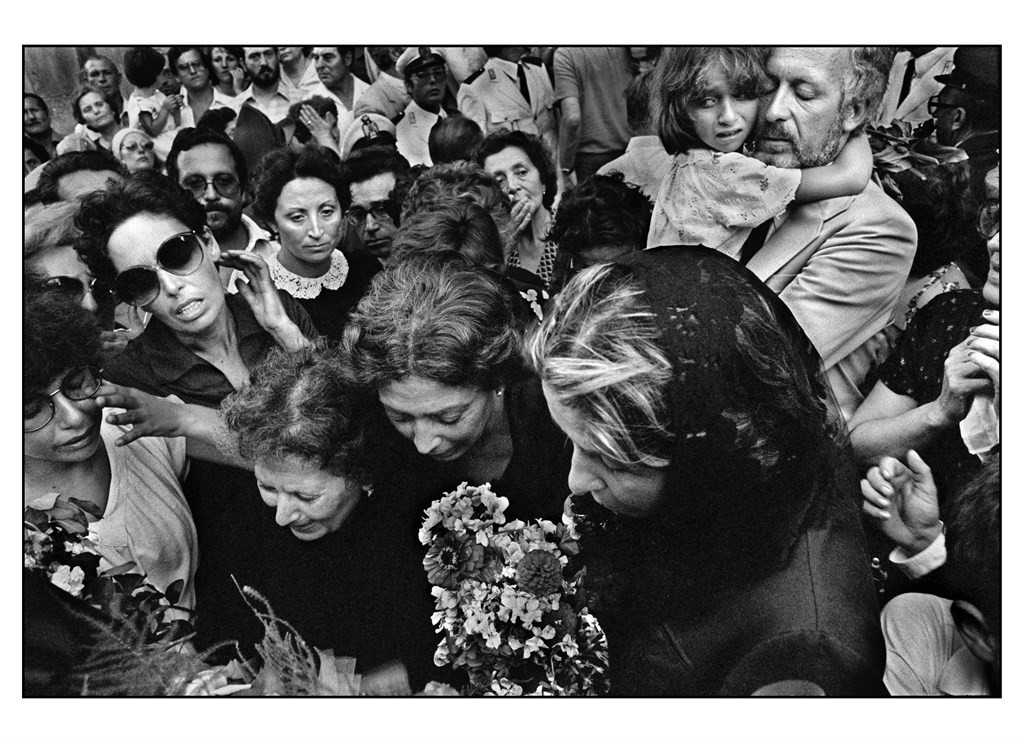
Another powerful example of visual sociology is found in the work of Letizia Battaglia and Francis Zecchin (1989), whose photographic studies of violence and Mafia influence in the Sicilian town of Palermo offer unique insights into the way organized crime pervades the life of a city. Their photos such as the one down here of people mourning for a loved but criminal family member, reveal how life is lived among people for whom organized crime and murder are a fact of daily existence in a world of poverty and relative lack of opportunity.
Applying your sociological imagination to visual material can be both interesting and informative. Levi-Strauss's work and the photos of Battaglia and Zecchin are only two examples of the rich vein of visual sociology that is captured in photographs. Similar examples appear throughout this analysis. In addition to photographs, works of fine art can provide insight into the societies in which they were created.
*SOURCE: SOCIOLOGY IN A CHANGING WORLD, 6TH ED., 2003, WILLIAM KORNBLUM, PP. 33-35*
Politicians seeking our votes are eager to tell us what to believe about social issues and what society should do about them. But often the claims and recommendations we hear are contradictory. The explanations given for such problems as suicide, for example, may suggest very different solutions. How is an informed citizen to make decisions about the causes of social conditions or what should be done to remedy them? This is where sociology comes in. Sociology brings scientific methods to bear on these debates.
Most people associate social scientific research with questionnaires, opinion surveys, and statistical reports. It is true that sociologists throughout the world use these research techniques, but they also use many other methods to explore social conditions. In the next several posts we will review many of the most common research tools used by sociologists. I will show how sociological research conforms to the rules of the scientific method and how the findings lead to changes in theories and to new research.
Anyone who embarks on scientific research, no matter what the subject or the method used, will go through many intellectual and emotional ups and downs before the work is done. Very often it will appear that the research is easy to define and conduct; soon, however, it will seem far more complicated, and the research questions themselves may appear less well defined than they did at the outset. This can be just as true in biology or chemistry as it is in sociology or another social science. Nevertheless, in all research projects certain basic steps must be completed, though not always in the order listed here:
Deciding on the problem. At first this may be simply a subject or topic of interest. Eventually, however, it must be worked worded in the form of a specific research question or questions in order to provide a focus for the rest of the work.
Reviewing the literature. Usually others have conducted research on the same topic. Find their reports and use them to determine what you can accomplish through your own research.
Formulating research questions. The work of others points to questions that have not been answered. Your own interest, time, resources, and available methods help determine what specific questions within your broad topic you can actually tackle.
Selecting a method. Different questions require different types of data, which in turn suggests different methods of data collection and analysis. Some of those methods are described in detail in this analysis.
Analyzing the data. Data are analyzed at each stage of the research, not just when preparing the final report.
In the next few posts we act as if this step by step procedure is always followed by researchers in the social sciences. But do not assume that this procedure can be applied to every research question. One does not always progress easily from one step to another, and often one must go back and repeat the steps. In addition, some research questions require that we devise new ways of conducting research or new combinations of existing research methods.
Formulating Research Questions
A good deal of information is required even to know what situations or events one should study in conducting research on a particular social issue. General questions about societies or social behavior have to be translated into specific questions that can be studied using observations and measures of all kinds. In his book Suicide: A Study in Sociology (1897), Emile Durkheim's study of suicide provides a good example of the process by which a sociologist converts a broad question about social change into the specific questions to be addressed in an empirical study---one that gathers evidence to describe behavior and to prove or disprove explanations of why that behavior occurs. These explanations are often, but not always, stated in the form of a hypothesis, a statement that expresses an informed or educated guess regarding a possible relationship between two or more phenomena. In his study of suicide, Durkheim challenged the intellectuals and scientists of his day. Through the presentation of verifiable statistical evidence on suicide rates in different societies, he demonstrated that he could predict where and when suicides would be more numerous. Psychological reasons might account for why a particular individual committed suicide, but Durkheim showed that "social variables" such as religion or fluctuations in economic conditions could explain differences in the number of suicides from one society or region to another.
The question that eventually led Durkheim to his empirical study of suicide actually had nothing to do with suicide. He began by thinking about the consequences of large-scale social change in Western nations. In particular, he believed that industrialization and the rapid growth of cities weaken people's attachments to their families and communities. As people became increasingly anonymous and isolated, they were more likely to engage in a variety self destructive acts, the most extreme being suicide. In Durkheim's view, the act of suicide could be explained as much by social variables like rates of marriage and divorce as by individual psychological variables like depression or despair. Thus for Durkheim the study of suicide was a way of exploring the larger concept of integration or lack of integration into society. He sought to discover whether people who are less well integrated into society (i.e., more isolated from other people) were more likely to commit suicide.
If this view was correct, Durkheim reasoned, the rates of suicide among various populations should vary along with measures of social integration. He therefore formulated these hypotheses, among others:
Suicide rates should be higher for unmarried people than for married people.
Suicide rates should be higher for people without children than for people with children.
Suicide rates should be higher for people with higher levels of education (education emphasizes individual achievement which weakens a group ties).
Suicide rates should be higher in Protestant than in Catholic communities (protestantism places more stress on individual achievement than Catholicism does, and this in turn weakens group ties).
Each of these hypotheses specifies a relationship between two variables that can be tested---that is, proved true or false through empirical observation. In sociology, variables are characteristics of individuals, groups, or entire societies that can vary from one case to another. In the hypotheses just presented, the suicide rate is a social variable. Religion, education, marital status, and number of children are other variables in these hypotheses. The techniques Durkheim used to establish a set of hypotheses became a model for modern social scientific research.
Let us examine one of Durkheim's classic hypotheses about suicide to see what it can teach us about applying the scientific method to social issues. In the hypothesis stating that suicide rates should be higher for unmarried people than for married people. Durkheim was proposing that there is a relationship between two variables: incidence of suicide and incidence of marriage. The suicide rate is a measure of suicide that takes into account the size of the population. So is the rate of marriage, as we will see shortly.
In this hypothesis the suicide rate is referred to as the dependent variable; it is the variable that we are trying to explain. Our hypothesis suggests that variations in the suicide rate from one nation to another depend on the influence of another variable: marriage rates in different nations. Marriage rates are refered to as the independent variable. An independent variable is a factor that the researcher believes causes changes in the dependent variable. It is independent of the variable we are trying to explain. We cannot, for example, imagine explaining variations in marriage rates in terms of changes in suicide rates.
It is necessary to be extremely careful in making statements about causality, however. All social phenomena are caused by interactions among several variables rather than by only one or two. Thus we may say that lower marriage rates are one cause of suicide in a society. We know that there are other causes as well. We will discuss the issue of causality more fully later in the analysis.
But, clearly, the story is more complicated than that. Some people commit suicide even though they are married and loved. Today some people think about suicide as an alternative to a lingering hospital death. As Durkheim first showed a century ago, suicide can take many forms and have many causes in different societies. Since then, sociologists have argued that before anyone can develop a set of testable hypotheses about the causes of suicide or any other complex social situation or behavior, it is necessary to know a great deal about the actual experiences of the people involved. Thus even a sociologist who has never contemplated suicide or been part of a suicidal cult can attempt to see the world from the viewpoint of people in suicidal situations to find out what their daily lives are like. If they exist, such studies are usually the first ones consulted when the sociologist begins to conduct research on a particular problem.
Reviewing the Literature
Perhaps the insights one would need to understand the issues surrounding suicide are already available in "the literature"---in existing books or journal articles, published statistics, photos, and other materials. There is no need to conduct new research if the answers sought are already available. Most sociological research therefore begins in the library with a "review of the literature."
To stimulate our sociological imagination about suicide or any other social phenomenon, we need to look at a variety of studies that deal with this issue. But it takes some imagination just to think of the kinds of studies to look for. The various sociological perspectives described in an earlier post can help organize the search, especially when the perspectives are framed as questions.
Who? How many? Where? Who are we talking about and where are they? This is a way of phrasing the ecological perspective, which suggests why that perspective is helpful in beginning research on an issue. In researching almost any subject involving human behavior, it is helpful to ask who is involved and in what numbers, and where the behavior in question occurs. The ecological perspective (see parts four and five) leads to two types of studies: community studies and demographic studies.
Community studies are among the richest research traditions in sociology. They portray the typical day-to-day life of a particular population. An example of a community study of a suicidal group is John R. Hall's Gone From the Promised Land: Jonestown in American Cultural History (1987). Hall was not a member of the infamous People's Temple, but he had lived in several communes and religious communities, where he collected firsthand accounts of what it is like to be a part of an intense community such as the one led by Jim Jones. If a student wanted to explore what led members of the Heaven's Gate Community to commit mass suicide in March 1997, Hall's study would be an excellent resource for ideas and comparisons. A search of the literature on the Heaven's Gate suicide would also turn up many firsthand accounts about what it is like to live among people who are obsessed with extraterrestrials and UFOs.
Demographic studies are also useful in studying the magnitude of a major social phenomenon such as suicide. Such studies provide counts of people in various relevant population categories---in this case, people who are isolated in one way or another, or who have actually attempted or succeeded in committing suicide, or who may be considering assisted suicide because of advanced illness. Demographic studies of suicide offer a wealth of information about this drastic behavior from nations throughout the world.
How Is the Situation Defined? Interactionist approaches to extreme phenomena such as suicide tend to look at how people who decide to take their own lives actually perceive their situation and how their interactions with others influence their behavior. In the case of suicide such studies are not common, but sociological research can often draw firsthand accounts. This is especially true of sensational suicides like the Heaven's Gate case. Since the 1997 mass suicide there have been numerous testimonials by former cult members describing how followers surrender their personal autonomy to the will of the leader and accept the leader's extreme definition of the situation. For the Heaven's Gate cult, the definition of the situation was that all who killed themselves would be immediately transported to a better existence among the superior beings accompanying the Hale-Bopp Comet. In fact, it was possible to follow the development of the deadly cult's beliefs on the Internet, which was also used to recruit new members.
What Groups or Organizations are Involved? This question stems from the functionalist perspective. It asks how society is organized to deal with a social issue or problem. Functionalist sociologists are concerned with how social policies actually function, as opposed to how they are supposed to function. Studies of social interventions to prevent suicide, for example, would describe how community crisis hotlines are established and who operates them, and ideally would include some measures of how effective they are. These measures might include how many calls are received and the nature of the calls (actual suicide threats, people in need of counseling, parents or guardians of possible teenage suicides, and so on). There might also be some description of how many times the potential suicide victim was saved through the actual intervention of crisis center personnel.
What Difference Does Power Make? This question arises from the conflict perspective. Studies that take a conflict approach to suicide would be likely to compare suicide rates for men and women around the world.
For any research subject, if you ask questions about who and where and how people interact, what organizations and policies guide their actions, and who has the power, you will be well on your way toward a thorough review of what is known about the issue you plan to study.
*SOURCE: SOCIOLOGY IN A CHANGING WORLD, 6TH ED., 2003, WILLIAM KORNBLUM, PP. 28-33*
Sociological perspectives are sets of ideas and theories that sociologists use in attempting to understand various problems of human society, such as the problem of population size, the problem of conflict between populations, the problem of how people become part of a society, and other issues that we will encounter throughout this analysis. Although human ecology (a study of the relationship betweenhumansand their natural, social, and built environments) remains an important sociological perspective, it is by no means the only one employed by modern sociologists. Other perspectives, to which we now turn, guide empirical description and help explain social stability and social change.
Interactionism
Interactionism is the sociological perspective that views social order and social change as resulting from all the immense variety of repeated interactions among individuals and groups. Families, committees, corporations, armies, entire societies---indeed, all the social forms we can think of are a result of interpersonal behavior in which people communicate, give and take, share, compete, and so on. If there were no exchange of goods, information, love, and all the rest---that is, if there were no interaction among people obviously there could be no social life at all.
The interactionist perspective usually generates analyses of social life at the level of interpersonal relationships, but it does not limit itself to that micro level of social reality. It also looks at how middle and macro-level phenomena result from micro-level behaviors or, conversely, how middle- and macro-level influences shape the interactions among individuals. From the interactionist perspective, for example, a family is a product of interactions among the set of individuals who defined themselves as family members. But each person's understanding of how a family ought to behave is a product of middle- and macro-level forces: religious teachings about family life, laws dealing with education or child support, and so on. And these are always changing. You may have experienced the consequences of changing values that cause older and younger family members to feel differently about such issues as whether a couple should live together before marrying. In sum, the interactionist perspective insists that we look carefully at how individuals interact, how they interpret their own and other people's actions, and the consequences of those actions for the larger social group.
The general framework of interactionism contains at least two major and quite different sets of issues. One set concerns the problems of exchange and choice: How can social order exist and groups or societies maintain stability when people have selfish motives or being in groups---that is, when they are seeking to gain as much personal advantage as they can? The second set of issues involves how people actually manage to communicate their values and how they arrive at mutual understandings. Research and explanations of the first problem fall under the heading of "rational choice" (or exchange theory), while the second issue is addressed by the study of "symbolic interaction." In recent years these two areas of inquiry have emerged as quite different yet increasingly related aspects of the study of interaction.
Rational Choice: The Sociological View
Adam Smith, whose famous work The Wealth of Nations (1776) became the basis for most subsequent economic thought, believed that individuals always seek to maximize their pleasure and minimize their pain. If over time they are allowed to make the best possible choices for themselves, they will also produce an affluent and just society. They will serve others, even when they are unaware that they are doing so, in order to increase their own benefit. They will choose a constitution and government that protect their property and their right to engage in trade. They will seek the government's protections against those who would infringe on their rights or attempt to dominate them, but the government need do little more than protect them and allow them to make choices based on their own reasoning.
You may have already encountered this theory, known as utilitarianism, in an economic or political science course. In sociology it is applied to a variety of issues. Often this rational choice view of interaction is referred to as exchange theory because it focuses on what people seem to be getting out of their interactions and what they in turn are contributing to the relationship or to the larger group. In every interaction something is being exchanged. It may be time or attention, friendship, material values (e.g., wages or possessions), or less calculated values such as esteem or allegiance. The larger the number of interacting members, the more complex the types of exchanges that occur among them. When people perceive an interaction as being one way, they begin to feel that they are being exploited or treated unfairly and will usually leave the relationship or quit the group. In industry, for example, if workers feel that they are not being paid enough for their work, they may form a union, bargain collectively with the bosses, or even go on strike. But in doing so each worker will weigh potential benefits against potential losses---losses in pay, in esteem, in friendship, and so forth. The choices are not always easy, nor are the motivations always obvious. When many values are involved, the rational calculation of benefits and costs becomes even more difficult.
Rational-choice models of behavior prompt us to look at patterns of behavior to see how they conform to and depart from normal expectations of personal profit and loss. But those models do not always identify the underlying values. How we can learn what to value in the first place, how we communicate our choices and intentions, how we learn new values through interaction---all are subjects that require other concepts besides those found in rational-choice theory of behavior. Such questions lead us toward research about how human interaction is usually carried out and understood by people and their daily lives.
Symbolic Interactionism When we make choices about our interactions with other people, we may be said to be acting rationally. But there are likely to be other forces shaping our behavior as well. Our choices tell other people about us: what we like, what we want to become, and so on. Indeed, the way people dress, the way they carry themselves (body language), the way they speak to each other, and the gestures they make convey a great deal of information that is not always intentional or expressed in speech. Some forms of communication give information without speaking it, or speak one thing and mean another. But words are of great importance too, and the content of communication is made explicit in words and sentences. Socialists refer to all these aspects of behavior as symbolic interaction. From the symbolic interactionist perspective, society itself tends to be seen as a mosaic of little scenes and dramas in which people make indications to themselves and others, respond to those indications, align their actions, and so build identities and social structures.
Symbolic interactionists call attention to how social life is "constructed" through the mundane acts of social communication. For example, in all the choices people make---their joining of friendship groups, their learning of the informal rules, their challenging and breaking all those rules---the social order, or culture, is actually "constructed." Erving Goffman, whose work was mentioned in an earlier post, is known for his research on those processes. Goffman applied the symbolic interactionist perspective in the study of everyday interactions such as rituals of greeting and departure, of daily life in asylums and gambling houses, and of behavior in the streets and public places. His work examines how people behave in social situations and how their "performances" are rated by others.
The power of symbolic interactionism lies in its ability to generate theories about how people learn to play certain roles and how those roles are used in the social construction of groups and organizations. However, if we want to think sociologically about more complex phenomena, such as the rise of bureaucratic organizations or the reasons why some societies experienced revolutions, we also need the concepts developed by two other perspectives: functionalism and conflict theory.
Functionalism
Is society simply the sum total of countless micro-level exchanges and communicative interactions, or do organizations within a society have properties independent of the actions of individuals? When we speak of the family, the army, the corporation, or the laboratory, we generally have in mind an entity marked by certain specific functions, tasks, and types of behavior. The army requires that its members learn to engage in armed combat, even if that is not what they will be doing most of the time. The family requires that its members behave in nurturerent ways toward one another. The farm requires that those who run it know how to plant and harvest. Individual interactions may determine how well a given person performs these various tasks. But it is the larger organization---the army, the family, the farm that establishes specific ways of behaving, of doing the work of that organization, which the individual must master. In this sense the organization, which exists longer than any of its members, has its own existence.
The functionalist perspective also asks how society manages to carry out the functions it must perform in order to defend itself against attackers, produce the next generation, and so on. From this perspective the many groups and organizations that make up a society form the structure of human society. The social structure is a complex system designed to carry out the essential functions of human life. The functions of the family, for example, is to raise and train a new generation to replace the old; the function of the military is to defend the society; the function of schools is to teach the next generation the beliefs and skills they will need to maintain the society in the future; and a major function of religion is to develop shared ideas of morality.
When a society is functioning well, all its major parts are said to be well integrated and in equilibrium. But periods of rapid social change can throw social structures out of equilibrium. Entire ways of life can lose their purpose or function. When that happens, the various structures of society can become poorly integrated, and what were formerly useful functions can become dysfunctional.
Consider an example in agrarian societies, in which most people work the land, families typically include three generations, with many members in each generation living close to one another. Labor is in great demand; many hands are needed where there are no machines to perform work in fields and barnyards and granaries. The emphasis on early marriage and large numbers of children found in the agrarian family is highly functional for such a society. But when the society industrializes and its agriculture becomes mechanized, families may continue to produce large numbers of children even though the demand for farmlands has decreased. When they grow up, those children may migrate to towns and cities. The migrants are likely to continue to value large families and to have numerous children, but if there are a limited number of jobs in the cities, they may join the ranks of the unemployed and their children may grow up in poverty. In this situation the family can be said to be poorly integrated with the needs of the society; the value of large family size has become dysfunctional: It no longer contributes to the well-being of groups or individuals.
Conflict Theory
A major flaw in the functionalist perspective is the fact that we have rarely seen anything approaching equilibrium in human societies. Conflict and strife appear to be as basic to society as harmony, integration, and smooth functioning. In the 20th century alone, two world wars and many civil wars disrupted the lives of millions of people. Almost as devastating was the Great Depression of the 1930s, the most severe economic slump in modern history. Worst of all were the nightmares of the Nazi Holocaust and the purges of Stalinist Russia, in which more than 20 million people were exterminated.
The world wars, the depression, and the Holocaust shocked and demoralized the entire world. They also called into question the optimism of the nineteenth- and early twentieth-century social philosophers, many of whom believed in the promise of progress through modern science and technology. Between 1914 and the end of World War II, modern ideas and technologies were used for horrible purposes often enough to disillusion all but the most ardent optimists. Bewildered intellectuals and political leaders turned to sociology to find some explanation for those horrors.
One explanation was provided by Marxian theory. According to Marx, the cause of conflict in modern times could be found in the rise of capitalism. Under capitalism, forms of exploitation and domination domination spread. For example, in the early period of industrial capitalism, workers were forced to work 12 hours a day, 6 days a week; in less developed areas of the world, large populations were virtually enslaved by the new colonial powers.
At the heart of capitalism, for Marx, is conflict among people in different economic classes, especially between those who control wealth and power and those who do not. Marx argued that the division of people in a society into different classes, defined by how they make a living, always produces conflict. Under capitalism this conflict occurs between the owners of factories and the workers. Marx believed that class conflict would eventually destroy or at least vastly modify capitalism. His theory is at the heart of what has come to be known as conflict theory or the conflict perspective.
In the 1960s, when protests against racism and segregation, the Vietnam War, pollution of the environment, and discrimination against women each became the focus of a major social movement, the conflict perspective became more prominent. It clearly was not possible to explain the rapid appearance of major social movements with theories that emphasized how the social system would function if it were in a state of equilibrium. Even Marxian theory did not do a very good job of predicting the protest movements of the 1960s or their effects on American society. The environmental movement and the women's movement, for example, were not based on economic inequalities alone, nor were the people who joined them necessarily exploited workers. Sociologists studying the role of conflict in social change therefore had to go beyond the Marxian view. Many turn to the writings of the German sociologist Georg Simmel, who argued that conflict is necessary as a basis for the formation of alliances. According to Simmel, conflict is one means whereby a "web of group affiliations" is constructed. The continual shifting of alliances within this web of social groups can help explain who becomes involved in social movements and how much power those movements are able to acquire.
The concept of power holds a central place in conflict theory. From the functionalist perspective society holds together because its members share the same basic beliefs about how people should behave. Conflict theorists point out that the role of power is just as important as the influence of shared beliefs in explaining why society does not disintegrate into chaos. Power is the ability of an individual or group to change the behavior of others. A nation's government, as we will see in a later post, usually controls the use of force (a form of power) to maintain social order. For sociologists who study conflict and power, the important questions are who benefits from the exercise of power and who loses. For example, when the government intervenes in a strike and obliges workers to return to their jobs, does the public at large or the corporation against which the workers were striking benefit most? And what about the workers themselves? What do they gain or lose? Such questions are Central to conflict theory today.
The Multi-Dimensional View of Society
Each of the sociological perspectives leads to different questions and different kinds of observations. These are extremely powerful analytical tools. Anyone that masters them and learns to apply them in appropriate ways will have an immense advantage over more naive observers of the ever-changing parade of social life. From the ecological perspective come questions about how populations can exist and flourish in various natural and social environments. From the interactionist perspective come questions about how people get along and behave in groups and organizations of all kinds. Functionalism asks questions about how society is structured and how it works as a social system. And the conflict perspective asks how power is used to maintain order and how conflict changes society. These different perspectives developed as sociologists asked different questions about society. In contemporary sociology each continues to stimulate relatively distinct research based on the types of questions being asked. Yet a great deal of research combines the insights of different perspectives in ways that vastly increase the power of the resulting analysis.
*SOURCE: SOCIOLOGY IN A CHANGING WORLD, 6TH ED., 2003, WILLIAM KORNBLUM, PP. 13-19*