Mission Statement

The Rant's mission is to offer information that is useful in business administration, economics, finance, accounting, and everyday life. The mission of the People of God is to be salt of the earth and light of the world. This people is "a most sure seed of unity, hope, and salvation for the whole human race." Its destiny "is the Kingdom of God which has been begun by God himself on earth and which must be further extended until it has been brought to perfection by him at the end of time."

Saturday, June 13, 2020

Sociological Imagination: How to Gain Wisdom about the Society in which We All Participate and for Whose Future We Are All Responsible (Part 10)


I had always looked down on sociology as this arriviste discipline. It didn't have the noble history of English and history as a subject. But once I had a little exposure to it, I said, 'Hey, here's the key. Here's the key to understanding life and all its forms.'


Societies and Nations 
(Part A)
by
 Charles Lamson

Populations and Societies

The remarkable growth of the world's human population is the great biological success story of the last million years. Throughout most of the evolution of the human species, the world's population remained relatively small and constant. At the end of the Neolithic period, about 8000 BCE, there were an estimated 5 million to 10 million humans, concentrated mainly in the Middle East, East Africa, southern Europe, and a few fertile river basins in India, China, Latin America, and Central America. The overall range of human existence is much wider---populations were moving north as the last Ice Age receded about 12,000 years ago---but the human population was nowhere near as widely distributed as it is today. By the time of Jesus there were an estimated 200 million people on the earth, and by the start of the Industrial Age, about the year 1650, there were an estimated 500 million. By 1945, however, the population had reached about 2.3 billion, and it is now 7.8 billion as of March 2020, according to my Google Assistant. (https://en.wikipedia.org/wiki/World_population). 


What explains the shape of this population curve, the gradual rise in the world's population during the late Stone Age, the increasing rate of growth in the early millennia of recorded history, the explosive growth after 1650? The answers have to do with the changing production technologies of society and their ever-increasing ability to sustain their populations, not only those directly involved in acquiring food but the ever larger numbers of non-food producers as well. In other words, human population growth is related to the shift from hunting and gathering to agriculture and, later, to industrial production as the chief means of supplying people with the necessities of life.

The First Million Years: Hunting and Gathering

A human lifetime is no more than a twinkling in time. What are seventy or eighty years compared with the billions of years of the earth's existence? What is one generation compared with the millions of years of human social evolution? Yet many of us hope to leave some mark on society, perhaps to change it for the better, to ease some suffering, to increase productivity, to fight racism and ignorance. This is a radical change from the worldview of our ancestors. The idea that people can shape their society or even enjoy adequate shelter and ample meals is widely accepted today. But for most of human history mere survival was the primary motivator of human action, and thus a fatalistic acceptance of human frailty in the face of overwhelming natural forces was the dominant worldview.

For most of the first million years of human evolution, human societies where developing from those of primates. Populations were small because humans, like other primates, lived on wild animals and plants. These sources of food are easily used up and their supply fluctuates greatly, and as a result periods of starvation or gnawing hunger might alternate with bouts of gorging on sudden "manna from heaven" in the form of game or berries. Thus the hunting-and-gathering life that characterized the earliest human populations could support only extremely small societies; most human societies therefore had no more than about 60 members.

Archaeological evidence indicates that some hunting-and-gathering societies began to develop permanent settlements long before the advent of agriculture. The emergence of farming was one of the changes that accelerated human social evolution, but in parts of what is now Europe and the Middle East there were stable settlements of hunter-gatherers as early as 30,000 to 20,000 years ago. These rather large and complex societies were most firmly established in the area that is now Israel at the end of the last Ice Age, some 13,000 to 12,000 years ago. 

Despite the slow pace of human evolution until about 35,000 years ago, some astonishing physical and social changes occurred during that long period, changes that enabled human life to take the forms it does today. Among them where the following:
  • The development of an upright posture (which freed the hands for eventual use of tools) and an enlarged cerebral brain, making possible vastly increased cognitive abilities and the development of language.
  • Social control of sexuality through the development of the family and other kinship structures and enforcement of the incest taboo.
  • The establishment of the band of hunter-gatherers as the basic territorial unit of human society, coupled with the development of kinship structures that linked bands together into tribes. Within the band, The family became the primary economic unit, organizing the production and distribution of food and other necessities.
By the end of the last Ice Age, many aspects of this evolutionary process were more or less complete. Human societies had fully developed languages and a social structure based on the family and the band. To be cast out of the band for some wrongdoing---that is, to be considered a deviant person---usually meant total banishment from the society and eventual death, either by starvation or as a result of aggression by members of another society.

The lives of the hunter-gatherers were far more subject to the pressures of adaption to the natural environment than has been true in any subsequent form of society. Individual survival was usually subordinated to that of the group. If there were too many children to feed, some were killed or left to die; when the old became and infirm or weak, they often chose death so as not to diminish the chances of the others. Thus the frail Eskimo grandfather or grandmother wandered off into the snowy night to meet the polar bear and the great spirit. Additional thousands of years of social evolution would pass before the idea that every person could and should survive, prosper, and die with dignity would even occur to our ancestors.

The Transition to Agriculture

For some time before the advent a plow-and-harvest agriculture in the Middle East and the Far East, hunting and gathering societies were supplementing their diets with foods acquired through domestication of plants and animals. In this way they were able to avoid the alternation of periods of feast and famine caused by reliance on animal prey. Karl Marx was the first social theorist to observe that social revolutions like the shift to agriculture or industrial production are never merely the result of technological innovations such as the plow or the steam engine. The origins of new forms of society are to be found within the old ones. New social orders do not simply burst upon the scene but are created out of the problems faced by the old order. Thus, as they experimented with domestication of animals and planting of crops, some hunting-and-gathering societies were evolving into nomadic shepherding or pastoral societies in which bands follow the flocks of animals. Others were developing into horticultural societies in which the women raised seed crops and the men combed the territory for game and fish.

Regarding this momentous change in the material basis of human survival, the historian William McNeil made the following observation:
The seed-bearing grasses ancestral to modern cultivated grains probably grew wild eight or nine thousand years ago in the hill country between Anatolia and the Zagros Mountains as varieties of wheat and barley continue to do today. If so, we can imagine that from time immemorial the women of those regions searched out patches of wheat and barley grasses when the seeds were ripe and gathered the wild harvest by hand or with the help of simple cutting tools. Such women may gradually have discovered methods for assisting the growth of grain, e.g., by pulling out competing plants, and it is likely that primitive sickles were invented to speed the harvest long before agriculture in the stricter sense came to be practiced. (The Rise and Fall of the West: A History of the Human Community, 1963, p. 12)
As a result of these and other innovations, agriculture became the productive basis of human societies. Pastoral societies spread quickly throughout the uplands and grasslands of Africa, Northern Asia, Europe, and the Western Hemisphere, and grain-producing societies arose in the fertile river valleys of Mesopotamia, India, China---and somewhat later---Central and South America. Mixed societies of shepherds and marginal farmers wandered over the lands between the upland pastures and the lowland farms. 

The First Large-Scale Societies We have reached the beginning of recorded history (around 4000 BC), which was marked by the rise of the ancient civilizations of Sumer, Babylonia, China and Japan, and the Maya, Incas, and Aztecs. The detailed study of these societies is the province of archaeology, history, and classics. Sociologists need to know as much as possible about the earliest large-scale societies because many contemporary social institutions (e.g., government and religion) and most areas of severe social conflict (e.g. class and ethnic conflict) developed sometime in the agrarian epoch---between 3000 BC and a 1600 AD.

The Big Question - Agriculture VS Hunter Gatherers
FIGURE 4 Depiction of Tenochtitlan (Pre-Colombian Mexico City)

From the standpoint of social evolution, the following dimensions of agrarian societies are the most notable (R.S. Braidwood, Prehistoric Man, 1967):

  • Agriculture allows humans to escape from dependence on food sources over which they have no control. Agrarian societies produce surpluses that do not merely permit but require new classes of non-food producers to exist. An example is the class of warriors, who defended the surplus or add to it through plunder.
  • Agriculture requires an ever-larger supply of land, resulting in conflict over territory and in wars with other agricultural or pastoral societies.
  • The need to store and defend food surpluses and to house the nonagrarian classes results in new territorial units: villages and small cities. 
New Social Structures Freed from direct dependence on on domesticated species of plants and animals, agrarian societies developed far more complex social structures than were possible in simpler societies. Hunting-and-gathering societies divided labor primarily according to age and sex, but in agricultural societies labor was divided in new ways to perform more specialized tasks. People who had been conquered in war might be enslaved and assigned the most difficult or least desirable work. Priests controlled the society's religious life, and from the priestly class there emerged a class of hereditary rulers who, as the society became larger and more complex, assumed the status of pharaoh or emperor. Artisans with special skills---in the making of armaments or buildings, for example---usually formed another class. And far more numerous than any of these classes where the tillers of the soil, the common agricultural workers and their dependents.

The process whereby the members of the society are sorted into different statuses and classes based on differences in wealth, power, and prestige is called social stratification. in general, societies may be open, so that a person who was not born into a particular status may gain entry to that status, or closed, with each status accessible only by birth. A key characteristic of agrarian societies is that their stratification systems became extremely closed and rigid. Because most people were needed in the fields, there were few opportunities for people to move from one level of society to another. These therefore we're closed societies.

The emergence of agrarian societies was based largely on the development of new, more efficient production technologies. Of these, the plow and irrigation are among the most important. The ancient agrarian empires of Egypt, Rome, and China are examples of societies in which irrigation made possible the production of large food surpluses, which in turn permitted the emergence of central governments led by pharaohs and emperors, priests and soldiers. Indeed, some sociologists have argued that because large-scale irrigation systems required a great deal of coordination, their development led to the evolution of imperial courts and such institutions as slavery which coerced large numbers of agrarian workers into forced labor (K.Wittfogel, 1957, Oriental Despotism: A Comparative Study of Total Power).
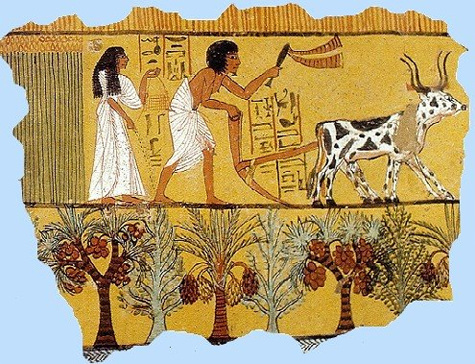
Agrarian Societies - Agriculture Civilization 101
FIGURE 5 Irrigation in Ancient Egypt Permits Emergence of Central Govrnment Led by Pharaohs, Priests, and Soldiers

By the 15th century the world's population was organized into a wide variety of societies with many different types of cultures and civilizations. The area where the earliest civilizations emerged are to this day the most densely inhabited parts of the world. In 1500 these civilizations were marked by their ability to produce food surpluses through the use of the plow, domesticated animals, wheels, and carts. Above all, they are marked by the importance of towns and cities as centers of administration and religious practice. Although the Mayan and Incan civilizations did not have the wheel or the plow, their advanced systems of astronomy, art, and writing make a strong argument for their inclusion as world civilizations.

The explorations led by Portugal, Spain, and England in the 16th and 17th centuries resulted in conquest and European settlement in many parts of the Western Hemisphere and Africa. Conquest caused  radical disruptions in the internal development of the world's cultures and civilizations. But even more drastic would be the changes caused by the Industrial Revolution of the eighteenth and nineteenth centuries.

The Industrial Revolution

In 1650, when Holland, Spain, and England were the world's principal trading nations, the population of England was approximately 10 million, of which about 90% earned a livelihood through farming of one kind or another. Just two hundred years later, in 1850, the English population had soared to more than 30 million, with less than 20% at work in fields, barnes, and granaries. England had become the world's first industrial society and the center of an empire that spanned the globe.

A similar transformation occurred in the United States. In 1860, on the eve of the Civil War, there were about 30 million people in the United States. Ninety percent of that population, a people considered quite backward by the rapidly industrializing English, were farmers or people who worked in occupations directly related to farming. A mere 100 years in 1960, only about eight percent of Americans were farmers or agricultural workers, yet they were able to produce enough to feed a population exceeding 200 million. As of 2008, less than 2 percent of the population is directly employed in agriculture (Agriculture in the United States - Wikipedia). These dramatic changes in England and America and in other nations as well occurred as a result of the Industrial Revolution.

The Industrial Revolution is often associated with Innovations in energy production, especially the steam engine. But the shift from an agrarian to an industrial society did not happen simply as a result of technological advances. Rather, the Industrial Revolution was made possible by the rise of a new social order known as capitalism. This new way of organizing production originated in nation-states, which engaged in international trade, exploration, and warfare. Above all, the Industrial Revolution depended on the development of markets, social structures that would function to regulate the supply of and demand for goods and services throughout the world.

The transition from an agrarian to an industrial society affects every aspect of social life. It changes the structure of society in several ways of which the following are among the most significant:

  • The industrialization of agriculture allows many more people to be supported by each agrarian worker than ever before. Only a relatively small number of people live on the land; increasing numbers live in towns, cities, and suburbs.
  • Industrial societies are generally far more receptive to social change than agrarian societies. One result is the emergence of new classes like industrial workers and scientific professionals (engineers, technicians) and new social movements like the women's movement and the movement for racial equality.
  • Scientific, technical, and productive institutions produce both unparalleled wealth and unparalleled destructive capacities.
  • The world "shrinks" as a result of innovations in transportation and communication. A global society develops, but in the same time the unevenness of industrialization leads to conflicts that threaten world peace.
These are only some of the important features of industrial societies. There are many others, which we analyze throughout this analysis. I will present research that shows how the types of jobs people find and the ways in which they spend their leisure time change as technology advances and their expectations change. We will look into the ways in which other major institutions (especially the family) adapt to the changes created by the Industrial Revolution. In fact, we will continually return to the Industrial Revolution as a major force in our times.

Steam Train Doubleheaders - YouTube
FIGURE 7 Onward to the Postindustrial Society!

The Theory of Postindustrial Society The United States and most other societies that experienced industrialization in earlier periods are now condemned by sociologists to be "postindustrial societies." Even though these societies continue to be important producers of industrial goods like steel, glass, aluminum, and many other products, their industrial plants are highly automated and employment in manufacturing is no longer the largest sector of the economy.

Postindustrial or not, the United States and the European nations are still among the world's industrial societies because they are major producers of manufactured goods. However, it should be noted that the businesses that produce those goods are dwindling in number because of the effects of the Industrial Revolution in other areas of the world. Also, for the first time in U.S. history the number of jobs in services exceeds that of jobs in goods-producing industries. Far more jobs are created in restaurants and hotels each year than in steel mills and other kinds of factories (J.D. Kasarda, 1989, Urban Industrial Transition and the Underclass. Annals of the American Academy of Political and Social Science. 501, 26-47). In addition there is an increasing demand for highly educated and trained workers in new industries that deal with high-speed transmission of information. Computers and telecommunications technologies are surely produced by "industries," but they are not the type of mass-employment "smokestack" industries that were the hallmark of earlier stages of the Industrial Revolution.

The theory of post-industrial society explores why those fundamental changes have come about and their impact, not only on post industrial societies themselves but also on the cultures of other societies. There are also many questions about what will happen as the world societies become more and more interdependent and decisions made in metropolitan centers like Tokyo, Los Angeles, and London affect the lives of villagers in the most remote parts of the world. We will return to the issues raised by theories of industrialization and the emergence of a post-industrial society throughout analysis. For it is clear that while the most advanced and powerful nations are undergoing an economic transformation, in many other parts of the world the Industrial Revolution is in full swing, and in still other, more remote areas older forms of agrarianism and tribalism continue to thrive. 

*MAIN SOURCE: SOCIOLOGY IN A CHANGING WORLD, 6TH ED., 2003, WILLIAM KORNBLUM, PP. 92-100*

end

Tuesday, June 9, 2020

Sociological Imagination: How to Gain Wisdom about the Society in which We All Participate and for Whose Future We Are All Responsible (Part 9)


Rich people never go to war. You ask a college kid to go to war, and he's like, 'Umm, I'm taking this sociology class, and I think war is, like, really stupid, and my roommate's, like, half Afghani, so it's going to cause some static.'


Culture
(Part A)
by
 Charles Lamson

 Dimensions of Culture

The culture of any people on Earth, no matter how simple it may seem to us, is a complex set of behaviors and artifacts. A useful framework for thinking about culture was suggested by Robert Bierstedt (American sociologist who often wrote about sociological theory, culture, and constitutional law) in 1963. Bierstadt views culture as having three major dimensions: ideas, or ways of thinking that organize human consciousness; norm's, or accepted ways of doing or carrying out ideas; and material culture, or patterns of possessing and using the products of culture.

Indus River | Pakistan Today


Ideas

Theories about how the physical world operates (scientific knowledge), strongly held notions about what is right and wrong (values), and traditional beliefs, legends, and customs (folklore) are among the most important types of ideas found in any given culture. Of these, values are especially important because people feel so strongly about them and because they often undergo changes that result in social conflict as we can see in contemporary debates about abortion.

Values are socially shared ideas about what is right. Thus for most people in North America education is a value; that is, they conceive of it as a proper and good way to achieve social standing. Loyalty to friends and loved ones, patriotism, the importance of religion, the significance of material possessions---these and other values are commonly found in our culture and many others, but of course there are wide differences in how people interpret these values and in the extent to which they adhere to them. In small tribal and peasant societies, there tends to be far greater consensus on values than in large, complex industrial societies. In a large and diverse society like ours, there is bound to be a good deal of conflict over values. Some people are satisfied with the way wealth and power are distributed, for example, while others are less satisfied with the status quo. Some people feel that it is desirable to attempt to improve one's own well-being and that society as a whole gains when everyone strives to be well-off. Others assert that the value of individual gain conflicts with the values of community and social cohesion; too great a gap between the well-off and the not well-off creates suffering, envy, crime, and other problems.

In societies undergoing rapid and far-reaching social change, such as the United States, there is bound to be conflict over values. Controversies over "family values," the sanctity of marriage, obligations to children, and similar issues tend to be particularly intense because people's individual experiences differ greatly. The more diversity there is among the people who share a basic culture, the more conflict there is likely to be over a certain aspect of that culture. Such disputes often turn on ideas about how to behave---that is, on the norms governing behavior in a society.

Norms From people's beliefs in what is right and good---that is, from their values---are derived the norms, or rules of behavior, of a society. Values are more abstract than norms; they are the ideas that support or justify norms. Norms are more specific. They are the adjustments which human beings make to the surrounding environment. We may think of them as solutions to recurring problems or situations. But norms involve more than behavior. Any given norm is supported by the idea that a particular behavior is correct and proper or incorrect and improper. The moral order of society is a kind of tissue of "oughts;" negative ones which forbid certain actions and positive ones which require certain actions.

If we think about a complex aspect of everyday life like driving a car, it is evident that without norms life would be far more chaotic and dangerous than it already is. When we drive we keep to the right, obey traffic lights and speed limits, and avoid reckless behavior that could cause accidents. These are among the many norms that allow the automobile to be such an essential article of North American culture.

Examples of norms are easy to find. Take the college or high school classroom. The classroom is organized according to norms of educational practice: There should be a textbook or books; there should be a class discussion; there should be assignments, exams, grades. Note that these "shoulds" correspond to actual behavior. Norms usually refer to behavior that we either approve or disapprove of. However, members of a culture often disagree about how a particular norm operates. Thus in the case of classroom organization there is considerable debate about what educational practices are most effective. In Israel, for example, there is a debate among orthodox and liberal Jews over whether boys and girls should be separated in classrooms, and similar debates divide fundamentalist and more secular Muslims in other Middle Eastern societies.

In societies where values are in conflict or where changes are occurring rapidly, Norms are also subject to change. This can readily be seen in the case of smoking. The norms governing smoking are changing rapidly as a result of changing values regarding health. Until recent years the norms governing smoking in the United States were very liberal. One could light up almost anywhere, and non-smokers were expected not to complain. Recently, however, greater emphasis on fitness and health, as well as new knowledge about the dangers of second-hand smoke, have increased the value people place on clean air and have tipped the balance against the earlier norms. But the change has not occurred without conflict between smokers and non-smokers and their representatives in courts and legislatures.

Laws are norms that are included in a society's official written codes of behavior. Laws are often developed by a specialized occupational group, such as priests in the ancient world and legislators, judges, and lawyers in the modern world. Some of the oldest examples of laws are the Code of Hammurabi, the ancient Babylonian order that specified punishments equal to the gravity of the crime (e.g., an eye for an eye, a tooth for a tooth); the Ten Commandments, written by God, according to the Old Testament, on stone tablets at least 1,600 years before the birth of Christ; and the codes of Confucius, written and interpreted by the royal scribes of the ancient Chinese Empire. In our time, laws are the special province of professional lawmakers, but all citizens participate in a network of laws and other written regulations that govern daily life. Basic behaviors like driving, going to school, marrying, and investing are greatly influenced by laws governing the conduct of these activities. 

At times we may grumble or protest against laws that we find overly restrictive. And there is always some group planning to protest a law that is under consideration in a legislative body like Congress. But when we regard the world beyond our own society we see that the rule of law could save millions of lives if only it could be achieved in less-developed, poverty-stricken, war-torn nations. On the other hand, even in nations where the rule of law is generally accepted, social scientists often find that new laws have unintended consequences. For example, when extremely strict laws against adult drug-dealing were passed, the dealers began recruiting juveniles to sell drugs, the lawmakers never intended the new laws to encourage teenagers to become dealers, but in many states that is what happened. Laws often have unintended consequences because they were created in response to vigorous efforts by people who espouse particular ideologies.

Famous Sites Along the Indus River

Ideologies

Ideologies comprise two dimensions of culture; they are sets or systems of ideas and norms. Ideologies combine the values and norms that all the members of a society are expected to believe in and act upon without question. A classic study of the emergence of an ideology was Max Weber's analysis of the link between Protestantism and capitalism, The Protestant Ethic and the Spirit of Capitalism (1905). Weber noticed that the rise of Protestantism in Europe coincided with the rise of private enterprise, banking, and other aspects of capitalism. He also noticed that a majority of the most successful early capitalists were Protestants. Weber hypothesized that their religious values taught them that salvation depended not on good deeds or piety but on how they lived their entire lives and particularly on how well they adhered to the norms of their "callings" (occupations). As a result, the Protestants placed a high value on frugality and abstinence. To prove that they were worthy of salvation, they devoted themselves tirelessly to commerce and plowed their profit back into their firms. But Catholics, who did not share these values, were less single-mindedly dedicated to their business ventures. They often spent their profits on good deeds rather than investing them in their businesses. Weber attempted to show how a set of religious values and norms combined with economic norms to create the ideologies of capitalism.

A contemporary example of an ideology may be found among religious fundamentalists. Christian fundamentalists in the United States generally share a set of ideas and norms of behavior that include the value of prayer, the value of family and children, the negative value of abortion and secular humanism (an ethical system based on scientific knowledge rather than on religious teachings), the belief in salvation and redemption for one's sins and other values. In the Islamic world, conflict between religious fundamentalists and more secular people is especially widespread and bitter. And the fundamentalists often see the United States as a threat to their most cherished values. In part because of their prominence on global television, examples of life in the United States---especially those that feature sexual display, the consumption of alcohol, or gender equality (which is not permitted among orthodox Muslim) become symbols of moral corruption 

Values and Ideologies in Conflict

Most societies and regions of the world experience conflict among people with differing values and ideologies. At times this conflict can have serious outcomes, such as widespread violence among antagonistic factions or parties, as occurred in Northern Ireland between Protestants and Catholics, in Israel between ultra-orthodox Jews and more secular populations, and in Islamic Nations like Egypt or Algeria, between extremely orthodox Muslims and those who seek compromise between secular values and religious ones. We return continually to the subject of conflicting values and resultant conflict among social groups because the subject is so important in understanding social life and social change. In discussing values and ideologies, however, it is important to point out that in almost every known society there are inherent conflicts in the values the society claims to support. In most democratic societies, for example, the values of liberty, (freedom), and equality are cherished. But there is an inherent conflict in these two central values.

Perfect Liberty is not compatible with perfect equality. If people are free to do anything they choose, then the strong will crush the week, the wolves will eat the sheep, and this puts an end to equality. If perfect equality is to be attained, then men must be prevented from outdistancing each other, whether in material or in intellectual or in spiritual achievement, otherwise inequalities will result.

HD wallpaper: leh, indus river, valley, ladakh, incredible india ...

We will see in later parts of this analysis that the desire of some groups to achieve total equality or freedom continues to produce ideologies in which the goals of actions---that is, equality or freedom---led people to assert that "the ends justify the means" used to achieve those ends, even if they include violating norms like "Thou shalt not steal" or Thou shalt not kill." Such ideologies led to some of the twentieth century's most atrocious episodes of mass violence and destruction. But the inherent conflict among values can also be a creative aspect of society. As we seek to decrease the gap between the haves and the have-nots in the United States and elsewhere while attempting to preserve as much individual freedom as possible, we realize that a just society is one in which people are free to seek the the best peaceful means of balancing their conflicting interests and values. 

Material Culture 

The third dimension of culture identified by Bierstedt is material culture. Material culture consists of all things a society produces. Mundane things like pots and pans or the wooden eating bowls of nonindustrial societies; immensely complex systems of things, such as the space shuttle; cherished items of religious worship like rosary beads; or Indian fetish necklaces all take their shape and purpose from the ideas of the culture that produces them. Members of societies that place a high value on science and efficiency are used to seeing these values expressed in material objects. For example, we design our houses to conserve energy and create desirable combinations of view and privacy. We may take older forms like the ranch house or the Cape Cod bungalow and modify them to suit modern purposes; in this way our houses is combine tradition with usefulness. The particular form that appeals to us is usually a result of many different ideas, including what we know from our own upbringing, what we can afford, how much space we acquire, and the environmental conditions we anticipate.

Fearghal O'Nuallain's Journey along the Indus River | Outsider ...

The same is true throughout the world. If one travels in Africa, for example, one will find large areas in which people build square houses with thatched roofs or roofs of corrugated metal. Suddenly one will pass into a region where the people build round houses with steeply pitched roofs. In another region people may live in the sprawling apartment-like complexes built of sand and mortar. When asked why they prefer a particular kind of dwelling, people usually say, because we have always built our houses this way. In other words, their answers are based on ideas of what is right for them. But on further discussion a traveler with a sociological imagination will discover that the different building forms also express functional ideas. The mud wall "apartments" of the desert village seem cramped and dark to Western eyes, but the people of the village will explain that they often sleep outdoors and the dark, cool rooms are most useful on very hot days. On the other hand, the tribespeople in a society that builds round houses may give a spiritual explanation for the shape of their dwellings; they may believe that corners are places where evil spirits can lurk. In sum, different cultures may give different reasons for the form and function of a material element such as a house, but in all cultures one will find material culture that stems from the society's most important ideas

Technologies

Technologies are another aspect of culture that spans two of Bierstedt's major dimensions. According to Bierstadt, technologies are the things (material culture) and the norms for using them that are found in a given culture. Without the norms that govern their use, things are at best confusing and at worst useless or dangerous. In the United States, for example, new telecommunications technologies based on computers, modems, and networks like the Internet are a powerful means of communicating information across long distances. But norms for using these new technologies such as norms about privacy, freedom of speech, and personal accountability are only now developing. Because the Internet is a relatively new form of communication, the norms (i.e., laws) that apply to print and TV communication have not yet been fully worked out and applied to this relatively new communication medium.

Old fishermen document declining range of the Indus River dolphin

Guns present another case in which norms governing use of the things themselves are very much in dispute. Most Americans agree that people should be free to own and use hunting weapons but what about handguns, assault rifles, machine guns, and rocket launchers? What, if any, restrictions should there be on the distribution and use of such weapons? As we will see in later parts of this analysis, the debate about appropriate norms for controlling the distribution and possession of deadly firearms that are clearly not designed for hunting is an indication of a deeper cultural conflict over the right to bear arms versus the state's monopoly over the use of force. 

*SOURCE: SOCIOLOGY IN A CHANGING WORLD, 6TH ED., 2006, WILLIAM KORNBLUM, PP. 56-60*

end

Sunday, June 7, 2020

Sociological Imagination: How to Gain Wisdom about the Society in which We All Participate and for Whose Future We Are All Responsible (Part 8)


Before I became a film major, I was very heavily into social science, I had done a lot of sociology, anthropology, and I was playing in what I call social psychology, which is sort of an offshoot of anthropology/sociology - looking at a culture as a living organism, why it does what it does.

The Tools of Sociology
(Part C)
by
 Charles Lamson

 Experiments

Although for both moral and practical reasons sociologists do not have many opportunities to perform experiments, a large body of literature in the social sciences is based on experiments. There are two experimental models that social scientists use frequently. The first and most rigorous is the controlled experiment conducted in a laboratory. The second is the field experiment, which is often used to test public policies that are applied to some groups but not to others.

How India and Pakistan are competing over the mighty Indus river

Controlled Experiments The controlled experiment allows the researcher to manipulate an independent variable in order to observe and measure changes in a dependent variable. The experimenter forms an experimental group that will experience a change in the independent variable (the "treatment") and a control group that will not experience the treatment but whose behavior will be compared with that of the experimental group. The control group is similar to (The experimental group in every other way.) This type of experiment is especially characteristic of studies at the micro level of sociological research.

Consider an example: Which line in Figure 1 (b) appears to match the line in Figure 1 (a) most closely? Could anything persuade you that a line other than the one you have selected is the correct choice? A simple diagram formed the basis of a famous series of experiments conducted by Solomon Asch in the early 1950s. They showed that the opinion of the majority can have an extremely powerful influence on that of an individual.

FIGURE 1 Lines Used in the Asch Experiment on Conformity
Cards like these were used in the Asch experiment. Subjects were asked to judge the lengths of various lines by comparing them with the three lines on the bottom card. The line on the top card quite obviously matches line B on the bottom card; all of the judgments were this simple.

Asch's control group consisted of subjects (The term subject refers to a person who participates in a controlled experiment.) who were seated together in a room but were allowed to make their judgments independently. When they looked at sets of lines like those in Figure 1, the subjects in this group invariably matched the correct lines, just as you no doubt have. But in the experimental group a different result was produced by the introduction of an independent variable: group pressure.

Asch's experimental group consisted of subjects who are asked to announce their decisions aloud in the group setting. Each subject was brought into a room with eight people who posed as other subjects but were actually confederates of the experimenter. When the lines were flashed on a screen, those "subjects" all chose a line that was not the matching one. When it was the real subject's turn to choose, he or she was faced with the unanimous opinion of a majority of "subjects" who had picked the wrong line. Thirty-two percent of the real subjects went along with the majority and chose the wrong line as well. And even among the subjects Asch called independent (the 68 percent of the real subjects who gave the correct response despite the pressure of the majority) there was a great deal of variation. Some gave the correct response at all times, whereas others gave it only part of the time. This confirming response was less likely when there was at least one other person in the group who also went against the majority. By varying the number of people who said that the shorter line was longer, Asch was varying the degree of group pressure experienced by the subject. Higher levels of the independent variable (group pressure) thus produced more "errors," or choices of the wrong line. 

Field Experiments Field experiments are used extensively in evaluating public programs that address specific social problems. In these experiments there is usually a "treatment group" of people who participate in the program and a control group of people who do not. In one example of this type of experiment, Angelo Atondo, Mauro Chavez, and Richard Regua of California's Evergreen Valley College attempted to test the theory that if students at risk of failure are linked with adult mentors from their own communities, their chances of success will improve Machi. This popular Theory stems in part from an influential article in the Harvard Business Review titled "Everyone Who Makes It Has a Mentor" (Collins & Scott, 1978). Many successful people from all walks of life, especially people who have escaped from impoverished backgrounds, say that they benefited greatly from the guidance of a mentor who steered them toward constructive goals. Most mentors do not actually tutor the individuals they spend time with; instead, they teach through conversation and example.

Researchers have found little evidence to prove that mentors actually make a difference. Unless one can compare students who had mentors with similar students who did not, it is impossible to say within a scientific certainty---that is, beyond individual stories of success or failure whether the mentors made a difference. The Evergreen Valley College researchers therefore assigned 115 entering Latino students with low English proficiency to Latino mentors with excellent English skills. Their control group was composed of a comparable number of Latino students with similar characteristics; these students were not assigned to mentors. Both groups attended the same classes and took the same exams. At the end of the semester 89% of the students with mentors passed the Freshman English course, but only 46% of the students in the control group passed the same course. Later, more of the students with mentors went on to 4-year colleges. While much more controlled research of this nature needs to be done before we can fully understand how mentors help students overcome their educational problems, this example shows how a field experiment can advance our understanding of a social issue like success and failure in schools.

The Hawthorne Effect A common problem of experimental studies is that just by paying attention to people in an experimental group the researcher may be introducing additional variables. This problem was recognized for the first time in the late 1930s, when a team of researchers led by Elton Mayo conducted a famous series of experiments at Western Electric Hawthorne plant. The purpose of the study was to determine the effects of various environmental and social conditions on the worker's productivity. One hypothesis was that improvements in the physical features of the workplace (such as better lighting and improved social conditions (coffee breaks, different methods of payment, and so on) would result and greater productivity (the dependent variable). But it appeared that no matter what the experimenters did, the worker's productivity increased. When the experimenters improved the lighting, the worker's productivity increased over that of the control group. When they dimmed the lights, productivity went up again. This was true even when the workers were subjected to somewhat worse conditions or were returned to their original conditions.

At first the series of experiments was considered a failure, and the researchers concluded that the variables they were introducing had little to do with the changes in productivity that resulted. But on further reflection they realized that the real independent variable was not better working conditions but, simply attention. The workers liked the attention they were getting; it made them feel special, so they worked harder. This realization led the researchers to design experiments dealing with the effects of attention from supervisors and better communication between workers and their managers; those experiments led to a new philosophy of worker-management relations. Today the term Hawthorne effect is used to refer to any unintended effect that results from the attention given to subjects in an experiment.

The Hawthorne effect occurs in a variety of experimental situations. For example, in the Evergreen Valley College experiment described earlier, it is possible that the students with mentors were most or more successful than the students in the control group because they were getting extra attention from adults. Over time the effects of that attention may disappear and the experimenters may conclude that once the novelty of the extra attention wears off, students with mentors do not do appreciably better and others. Sophisticated evaluations of educational change try to anticipate the Hawthorne effect by making sure that the experimental group does not get more attention than the control group.

*SOURCE: SOCIOLOGY IN A CHANGING WORLD, 6TH ED., 2003, WILLIAM KORNBLUM, PP. 35-38*

end

Saturday, June 6, 2020

Sociological Imagination: How to Gain Wisdom about the Society in which We All Participate and for Whose Future We Are All Responsible (Part 7)


There must be possible a fiction which, leaving sociology and case histories to the scientists, can arrive at the truth about the human condition, here and now, with all the bright magic of the fairy tale.


The Tools of Sociology
(Part B)
by
Charles Lamson

 Basic Methods

Once the researcher has specified a question, developed hypotheses, and reviewed the literature, the next step is to decide on the method or methods to be used in conducting the actual research. Sociological research methods are the techniques an investigator uses to systematically gather information, or data, to help answer a question about some aspect of society. The variety of methods that may be used is vast, with the choice of a method depending largely on the type of question being asked. The most frequently used methods are observation, experiments, and surveys. All these will be covered in the next several posts. This post focuses on observation.

Where Colors merge - Confluence of Indus & Zanskar in Ladakh ...

Observation

Participant Observation Much sociological research requires direct observation of the people being studied. Community studies like Hall's work on the People's Temple are based on lengthy periods spent observing a particular group. This research method is rarely successful unless the sociologist also participates in the daily life of the people he or she is observing---that is, becomes their friend and a member of their social group. Therefore the central method of community studies is known as participant observation. The sociologist attempts to be both an objective observer of events and an actual participant in the social milieu under study---not an easy task for even the most experienced researcher. In such situations the observer faithfully records his or her observations and interactions in field notes, which supply the descriptive data that will be used in the analysis and writing phases of the study.

An excellent example of a study based on participant observation Is Donna Gaines's study Teenage Wasteland (1998). Gains spent many months hanging out and speaking with teenagers in a relatively affluent suburban community adjacent to a large central city. Many of the teenagers lived lives devoted to school, family, and part-time jobs. But others became what Gains called "suburbia's dead-end kids." They experimented with drugs, where attracted to satanism and heavy metal rock music, and flirted with violence and suicide, sometimes with tragic consequences. These young people, who often thought of themselves as "burnouts," described their lives to Gains because she listened to them and showed that she could be trusted. In the beginning they tested her by giving her information and telling her not to share it with other kids. Once they saw that she did not divulge secrets, she was able to learn much more about their behavior. And by listening carefully she also learned how some kids who seem to be a dead-end are actually struggling to create a better world for themselves, often against great odds.

This kind of research describes the quality of life of the people involved; therefore it is often called qualitative research in order to distinguish it from the quantitative research methods we will consider shortly.

India and Pakistan at Odds Over Shrinking Indus River

Another excellent example of a study based on participant observation is Douglas Harper's classic Good Company (1982). Harper spent many months riding on freight trains and living in "hobo jungles." His goal was to describe how hoboes, or tramps or bums as they are often called, actually live and how they learn to trust or distrust one another in a world considered deviant by members of "respectable society." Harper had to learn how to live the nomadic and often dangerous life of the hobo, which meant that he needed to establish a relationship with someone in that life who could serve as his mentor. The successful participant observer usually finds at least one such person. In Harper's case, a hobo named Carl made it possible for him to participate in, and therefore to understand and write about, the hobo's world.

Qualitative research carried out in the field where behavior is actually occurring is the best method for analyzing the processes of human interaction. If Donna Gaines had not spent a good deal of time with suburban teenagers, she would not have obtained nearly as many insights into their behavior. A shortcoming of this approach, however, is that it is usually based on a single community, group, or social system, which makes it difficult to generalize the findings to other social settings. Thus community studies and other types of qualitative studies are most often used for explanatory research, and the findings serve as a basis for generating hypotheses for further research.

Unobtrusive Measures Observation can employ numerous other techniques besides direct participation. Among these are unobtrusive measures, observational techniques that measure the effects of behavior but intrude as little as possible into actual social settings. Here are some examples:
The floor tiles around the hatching chick exhibit at Chicago's Museum of Science and Industry must be replaced every six weeks. Tiles in other parts of the museum need not be replaced for years. The selective erosion of tiles, indexed by the replacement rate, is a measure of the relative popularity of exhibits.

Roots of Indus, from the blades of Himalayas – River Indus, From ...

Chinese Jade dealers have used the pupil dilation of their customers as a measure of the client's interest in particular stones. .
To study changes in the diet of Americans, investigators sifted through more than 2,000 household trash collections to measure the amount of fat being trimmed from meat packages.
Observations like these can be transformed into useful measures of the variable under study. Their nature is limited only by researcher's creativity, and they intrude far less into people's lives than do interviews or participant observation.

Visual Sociology An increasingly popular set of observational techniques involves the use of photography and video tape, or visual sociology. These techniques can be just as obtrusive as interviewing if not more so, but they can also be used in unobtrusive ways, depending on the questions being asked. A classic example of the use of photographic data is the work of the French anthropologist Claude Levi-Strauss. His extensive exploration in Brazil in the late 1930s provided priceless images of what life was like for the indigenous tribes of the Amazonian region before the most powerful effects of conquest and forced modernization began to be felt. Levi-Strauss created a photographic record of his interactions with the tribespeople; the results offer some glimpses of what social scientific field research in simpler societies was like during the early part of the 20th century. Many of his photos also show how rapid social change was altering the life of the Indians.

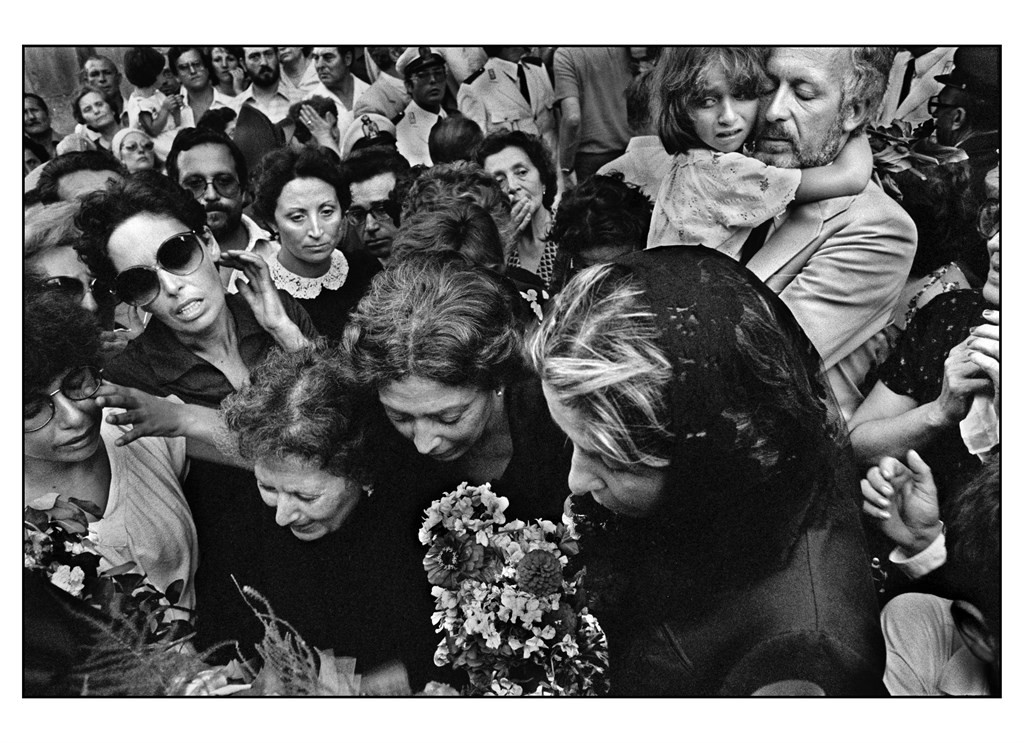
Another powerful example of visual sociology is found in the work of Letizia Battaglia and Francis Zecchin (1989), whose photographic studies of violence and Mafia influence in the Sicilian town of Palermo offer unique insights into the way organized crime pervades the life of a city. Their photos such as the one down here of people mourning for a loved but criminal family member, reveal how life is lived among people for whom organized crime and murder are a fact of daily existence in a world of poverty and relative lack of opportunity.

Life and Death in Palermo | East Bay Express
Applying your sociological imagination to visual material can be both interesting and informative. Levi-Strauss's work and the photos of Battaglia and Zecchin are only two examples of the rich vein of visual sociology that is captured in photographs. Similar examples appear throughout this analysis. In addition to photographs, works of fine art can provide insight into the societies in which they were created.  

*SOURCE: SOCIOLOGY IN A CHANGING WORLD, 6TH ED., 2003, WILLIAM KORNBLUM, PP. 33-35*

end

Rosary from Lourdes - 02/12/2025