The Rant

Mission Statement

The Rant's mission is to offer information that is useful in business administration, economics, finance, accounting, and everyday life. The mission of the People of God is to be salt of the earth and light of the world. This people is "a most sure seed of unity, hope, and salvation for the whole human race." Its destiny "is the Kingdom of God which has been begun by God himself on earth and which must be further extended until it has been brought to perfection by him at the end of time."

Monday, July 23, 2018

How To Advertise: An Analysis of Contemporary Advertising (part 21)


The Advertising Plan (part A)
by
Charles Lamson

The advertising plan is a natural outgrowth of the marketing plan and is prepared in much the same way. In IMC (integrated marketing communications) planning, though, the advertising plan is an integrated part of the overall procedure.

Image result for the mississippi river

Reviewing the Marketing Plan

The advertising manager first reviews the marketing plan to understand where the company is going, how it intends to get there, and what role advertising plays in the marketing mix (the "set of marketing tools that the firm uses to pursue its marketing objectives in the target [market]." -Wikipedia). The first section of the advertising plan should organize information from the marketing plan's situation analysis into four categories: internal strengths and weaknesses and external opportunities  and threats (SWOT). The SWOT analysis briefly restates the company's current situation, reviews the target market segments, itemizes the long- and short-term marketing objectives, and cites decisions regarding market positioning and the marketing mix.


Setting Advertising Objectives

The advertising manager then determines what tasks advertising must take on. What strengths and opportunities can be leveraged? What weaknesses and threats need to be addressed? Unfortunately, some corporate executives (and advertising managers) state vague goals for advertising, like "increasing sales and maximizing profits by creating a favorable impression of the product in the marketplace." When this happens, no one understands what the advertising is intended to do, how much it will cost, or how to measure the results. Advertising objectives should be specific, realistic, and measurable.


Understanding What Advertising Can Do

Most advertising programs can encourage prospects to take some action. However, it is usually unrealistic to assign advertising the responsibility for achieving sales. Sales goals are marketing objectives, not advertising objectives. Before an advertiser can persuade customers to buy, it must inform, persuade, or remind its intended audience about the company, product, service, or issue. A simple adage to remember when setting objectives is "Marketing sells, advertising tells." In other words, advertising objectives should be related to communication effects.

Image result for the mississippi river

The Advertising Pyramid: A Guide to Setting Objectives

Suppose you are advertising a new brand in a new product category, but you are not sure what kind of results to expect. The pyramid in Exhibit 1 shows some of the tasks advertising can perform. Obviously, before your product is introduced, prospective customers are completely unaware of it. Your first communication objective therefore is to create awareness---to acquaint people with the company, product, service, and brand.

Exhibit 1
The advertising pyramid depicts the progression of advertising effects on mass audiences---especially for new products. The initial image promotes awareness of the product to a large audience (the base of the pyramid). But only a percentage of this large group will comprehend the products benefits. Of that group, even fewer will go on to feel conviction about, then desire for the product. In the end, compared with the number of people aware of the product, the number of people who take action is usually quite small.

The next task might be to develop comprehension---to communicate enough information about the product so that some percentage of the aware group recognizes the product's purpose, image, or position, and perhaps some of its features.

Next, you need to communicate enough information to develop conviction---to persuade a certain number of people to actually believe in the product's value. Once convinced, some people may be moved to desire the product. Finally, some percentage of those who desire the product will take action. They may request additional information, send in a coupon, visit a store, or actually buy the product.

The pyramid works in three dimensions: time, dollars, and people. Advertising results may take time,, especially if the product is expensive or not purchased regularly. Over time, as a company continues advertising, the number of people who become aware of the product increases. As more people comprehend the product, believe in it, and desire it, more take the final action of buying it.

Let's apply these principles to a hypothetical case. Suppose you are in charge of advertising for the new "Lightening Bug," a hybrid car built by Volkswagon that runs on both gasoline and electricity. Your initial advertising objectives for this fictional car might read as follows:

  1. Within two years, communicate the existence of the Lightening Bug to half of the more than 500 people who annually buy foreign economy cars.
  2. Inform two-thirds of this "aware" group that the Lightening Bug is a superior economy car with many design, safety, and environmentally friendly features: that it is a brand new nameplate backed with unmatched service, quality, and value; and that it is sold only through dedicated Volkswagon dealers.
  3. Convince two-thirds of the "informed" group that the Lightening Bug is a high-quality car, reliable, economical, and fun to drive.
  4. Stimulate desire within two-thirds of the "convinced" group for a test drive.
  5. Motivate two-thirds of the "desire" group to visit a retailer for a test drive.
Image result for the mississippi river

These advertising objectives are specific as to time and degree and are quantified like marketing objectives. Theoretically, at the end of the first year, a consumer attitude study could determine how many people are aware of the Lightening Bug, how many people understand the car's primary features, and so on, thus measuring the programs effectiveness.

Volkswagon's advertising may accomplish the objectives of creating awareness, comprehension, conviction, desire, and action. But once the customer is in the store, it is the retailer's responsibility to close the sale with effective selling and service.

With the advent of integrated marketing communications, we can look at the pyramid in another way. By using a variety of marketing communication tools and a wide menu of traditional and nontraditional media, we can accomplish the communication objectives suggested by the pyramid in a more efficient manner. For instance, for creating sheer awareness for the new Lightening Bug as well as brand image for the car and the company, an intensive program of public relations activities supported by mass media advertising would be the communication tools of choice. Comprehension, interest, and credibility can be augmented by media advertising, press publicity, direct mail brochures and special events such as a sports car show. Desire can be enhanced by a combination of the buzz created by good reviews in car enthusiast magazines, plus media advertising, beautiful brochure photography, and the excitement generated by a sales promotion (such as a sweepstakes). Finally, action can be stimulated by direct mail solicitation, sales promotion, and the attentive service of a retail salesperson in an attractive new car showroom. Following the sale, media advertising should continue to reinforce the purchase decision. But at the same time, outbound telemarketing calls from the retailer can be used to thank the customer, solicit feedback on that customer's experience, and offer any needed assistance. This acknowledges that the sale was just the beginning of a valuable relationship.

The Old Model versus the New

The advertising pyramid represents the learn-feel-do model of advertising effects. That is, it assumes that people rationally consider a prospective purchase, and once they feel good about it, they act. The theory is that advertising affects attitude, and attitude leads to behavior. That may be true for certain expensive, high-involvement products that require a lot of consideration. But other purchases may follow a different pattern. For example, impulse purchases at the checkout counter may involve a do-feel-learn model, in which behavior leads to attitude. Other purchases may follow some other pattern. Thus, there are many marketing considerations when advertising objectives are being set, and they must be thought out carefully. 

The advertising pyramid also reflects the traditional mass marketing monologue. The advertiser talks and the customer listens. That was appropriate before the advent of computers and databases, and it may still be appropriate in those categories where the marketer has no choice.

But today, as the IMC model shows, many marketers have databases of information on their customers, about where they live, what they buy, and what they like and dislike. When marketers can have a dialogue and establish a relationship, the model is no longer a pyramid but a circle. Consumers and business customers can send messages back to the marketer in the form of coupons, phone calls, surveys, and database information on purchases. With interactive media, the responses are in real time. This feedback can help the marketer's product, service, and messages evolve. And reinforcement advertising, designed to build brand loyalty, will remind people of their successful experience with the product and suggest reuse.

Image result for the mississippi river

By starting with the customer and then integrating all aspects of their marketing communications---package and store design, personal selling, advertising, public relations activities, special events, and sales promotions---companies hope to accelerate the communications process, make it more efficient, and achieve lasting loyalty from good prospects.

*SOURCE: CONTEMPORARY ADVERTISING 11TH ED., 2008, PGS. 252-255*


END


at July 23, 2018 No comments:
Email ThisBlogThis!Share to XShare to FacebookShare to Pinterest

Saturday, July 21, 2018

How To Advertise: An Analysis of Contemporary Advertising (part 20)


Using IMC to Make Relationships Work (part A)
by
Charles Lamson

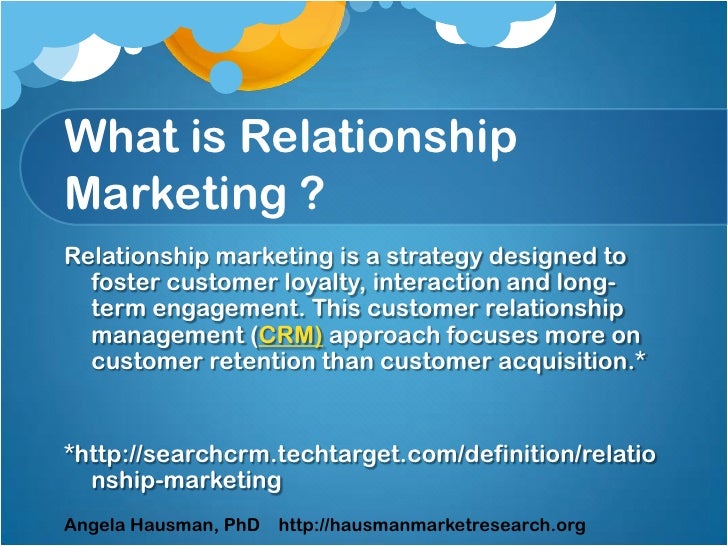
Image result for what is relationship marketing

Interest in relationship marketing coincided with the interest in integrated marketing communications (IMC). In fact, according to Northwestern professor Don Schultz, IMC is what makes relationship marketing possible.


The link is interdependence, the fundamental characteristic of all relationships. As former Drake University professor Lou Wolter points out, "IMC is the management of interdependence in the marketplace."


IMC: The Concept and the Process

Technology has enabled marketers to adopt flexible manufacturing, customizing products for customized markets. "Market driven" today means bundling more services together with products to create a "unique product experience." It means companies and customers working together to find solutions.

The counterpart to flexible manufacturing is flexible marketing---and integrated marketing communications---to reach customers at different levels in new and better ways.

IMC is both a concept and a process. The concept of integration is wholeness. Achieving this wholeness in communications creates synergy---the principle benefit of IMC---because each element of the communications mix reinforces the others for greater effect.

For example, when a Mountain Dew grocer runs an endcap promotion (a special display at the end of an aisle) alone, it might generate a 10 percent increase in volume. If he runs an ad for Dew with a coupon, that might deliver a 15 percent increase. But running both together might grow volume by 35 percent. That is synergy---because the whole is greater than the sum of its parts.

Tom Duncan, director of the IMC program at the University of Denver, points out that IMC is also a process in which communication becomes the driving, integrating force in the marketing mix and throughout the organization.

Image result for the mississippi river

The Evolution of the IMC Concept

With the phenomenal technological changes in the last two decades came a host of specialized media and the fragmentation of the mass market. At the same time we witnessed a flood of mergers and acquisitions, the ascension of the global marketplace, the escalation of competition between various internal departments and external suppliers, and the arrival of more sophisticated, critical, and demanding customers. Suddenly, companies faced costly redundancies and inefficiencies as company departments with different missions and agendas all sought to achieve their particular goals, often at odds with either corporate or customer needs. For efficiency, companies needed to coordinate the multiplicity of inconsistent company and product messages being issued.

Many companies initially took a narrow, inside-out view of IMC. They saw it as a way to coordinate and manage their marketing communications (advertising, sales promotion, public relations, personal selling, and direct marketing) to give the audience a consistent message about the company.

A broader, more sophisticated, outside-in perspective of IMC, sees customers as partners in an ongoing relationship, recognizes the references they use, acknowledges the importance of the whole communications system, and accepts the many ways customers come into contact with the company or the brand. Companies committed to IMC realize their biggest asset is not their products or their plants or even their employees, but their customers. Defined broadly:
Integrated marketing communications is the process of building and reinforcing mutually profitable relationships with employees, customers,  other stakeholders, and the general public by developing and coordinating a strategic communications program that enables them to have a constructive encounter with the company/brand through a variety of media or other contacts.
Whether a company employs the narrow view or the broad view depends to a great extent on its corporate culture. Some companies enjoyed rapid growth and strong customer relationships because they intuitively integrated and focused all corporate and marketing activities. Saturn, Apple, Honda, Nike, and Banana Republic are just a few.

Image result for the mississippi river

Tom Duncan recognized four distinct levels of integration that companies use; unified image, consistent voice, good listener, and at the most integrated, world class citizen (see Exhibit 1). These levels demonstrate how IMC programs range from narrowly focused corporate monologues to broad, interactive dialogues, resulting in a corporate culture that permeates an organization and drives everything it does, internally and externally.

Lev-el
Name
Descriptions/Focus
Examples
1
Unified image
One look, one voice,
strong brand image
focus
3M
2
Consistent voice
Consistent tone and look,
coordinated messages
to various audiences
[customers, trade, suppliers,
etc.]
Coca-Cola
Hallmark
Wal-Mart
3
Good listener
Solicits two-way communication,
enabling feedback through
toll-free numbers, surveys,
trade shows, etc., focus on
long-term relationships
Dove
Saturn
4
World-class citizen
Social, environmental
consciousness; strong
company culture; focus
on wider community
Ben & Jerry’s
Apple
Google
Honda
Exhibit 1 
Levels of integration.

How The Customer Sees Marketing Communications

To truly understand IMC, we have to look through the customer's eyes. In one study, consumers identified 102 different media as "advertising"---everything from TV to shopping bags to sponsored community events. Customers also develop perceptions of the company or brand through a variety of other sources: news reports, word of mouth, gossip, experts' opinions, financial reports, and even the CEO's personality.

Related image

All these communications or brand contacts, sponsored or not, create an integrated product in the consumer's mind. In other words, customers automatically integrate all the brand-related messages that emanate from the company or some other source. The way they integrate those messages determines their perception of the company. IMC gives companies a better opportunity to manage or influence those perceptions and create a superior relationship with those stakeholders.


The Four Sources of Brand Messages

To influence customers' perceptions, marketers must understand one of the basic premises of IMC: that everything we do (and do not do) sends a message. That is to say, every corporate activity has a message component. Duncan categorized four types of company/brand-related messages stakeholders receive: planned, product, service, and unplanned. Each of these influences a stakeholder's relationship decision, so marketers must know where these messages originate, what effect they have, and the costs to influence or control them.
  1. Planned messages. These are the traditional marketing communication messages---advertising, sales promotion, personal selling, merchandising materials, publicity releases, event sponsorships. These often have the least impact because they are seen as self-serving. They may also include help-wanted or financial offering ads, engineering articles in professional journals, and new contract announcements.
  2. Product messages. In IMC theory, every element of the marketing mix sends a message. Messages from the product, price, or distribution elements are typically referred to as product (or inferred) messages. For example, customers and other stakeholders receive one product message from a $2,500 Rolex watch and a totally different one from a $30 Timex. Product messages also include packaging, which communicates a lot about the product through the use of color, type fonts, imagery, design, and layout.
  3. Service messages. Many messages result from employee interactions with customers. In many organizations, customer service people are supervised by operations, not marketing. Yet the service messages they send have greater marketing impact than the planned messages. With IMC, marketing people work with operations to minimize negative messages and maximize positive ones.
  4. Unplanned messages. Companies have little or no control over the unplanned messages that emanate from employee gossip, unsought news stories, comments by the trade or competitors, word-of-mouth rumors, or major disasters. Unplanned messages may affect customers' attitudes dramatically but they can sometimes be anticipated and influenced, especially by managers experienced in public relations.

Related image

Exhibit 2
The integration triangle.


The Integration Triangle

The integration triangle developed by Duncan and Moriarty is a simple illustration of how perceptions are created from the various brand message sources (see Exhibit 2). Planned messages are say messages---what companies say about themselves. Product and service messages are do messages because they represent what a company does. Unplanned messages are confirm messages because that is what others say and confirm (or not) about what the company says and does. Constructive integration occurs when a brand does what its maker says it will do and then others confirm that it delivers on its promises.

*SOURCE: CONTEMPORARY ADVERTISING 11TH ED., 2008, WILLIAM F. ARENS, MICHAEL F. WEIGOLD, CHRISTIAN ARENS, PGS. 246-249*


END
at July 21, 2018 No comments:
Email ThisBlogThis!Share to XShare to FacebookShare to Pinterest

Thursday, July 19, 2018

How To Advertise: An Analysis of Contemporary Advertising (part 19)


The New Marketing Mantra: Relationship Marketing
by
Charles Lamson


Today, many advertisers are discovering that the key to building brand equity in the 21st century is to develop interdependent, mutually satisfying relationships with customers.


Image result for the mississippi river

A market-driven firm's overriding purpose is to create happy, loyal customers. Customers, not products, are the lifeblood of the business. This realization has created a new trend away from simple transactional marketing to relationship marketing---creating, maintaining, and enhancing long-term relationships with customers and other stakeholders that result in exchanges of information and other things of mutual value.

Today's affluent, sophisticated consumers can chose from a wide variety of products and services offered by producers located around the world. As a result, the customer relationship---in which the sale is only the beginning---is the key strategic resource of the successful 21st century business. As Dartmouth professor Frederick Webster points out, "The new market-driven conception of marketing will focus on managing strategic partnerships and positioning the firm between vendors and customers in the value chain with the aim of delivering superior value to the customer.

The writers of Contemporary Advertising define value as the ratio of perceived benefits to the price of the product.

Image result for the mississippi river

The Importance of Relationships

To succeed, companies must focus on managing loyalty among carefully chosen customers and stakeholders (employees, centers of influence, stockholders, the financial community, and the press). This is important for a number of reasons:
  1. The cost of lost customers. No amount of advertising is likely to win back a customer lost from shoddy products or poor service. The real profit lost is the lifetime customer value (LTCV) to a firm. For example, the average customer of one major transportation firm represented a lifetime value of $40,000. The company has 64,000 accounts and lost 5 percent of them due to poor service. That amounted to an unnecessary loss of $128 million in revenue and $12 million in profits! Moreover, negative word of mouth can have a terrible snowballing effect. Imagine if one lost customer influences only one other customer to not patronize the business. That immediately doubles the LTCV loss. Negative word of mouth is why bad motives disappear so quickly.
  2. The cost of acquiring new customers. Defensive marketing typically costs less than offensive marketing because it requires a great deal of effort to have satisfied customers away from competitors. The fragmentation of media audiences and the resistance of sophisticated consumers to advertising messages make it increasingly difficult for a brand to break out of the ghetto of advertising clutter by stepping up the advertising volume. In fact, it costs five to eight times as much in marketing, advertising, and promotion to acquire a new customer as it does to keeping an existing one.
  3. The value of loyal customers. Lester Wunderman, the founder of Wunderman Worldwide (the second largest direct response agency in the world), says that 90 percent of a manufacturer's profit comes from repeat purchasers; only 10 percent comes from trial or sporadic purchasers. Reducing customer defections by even 5 percent can improve profit potential by 25 to 85 percent. And the longer customers stay with a company, the more willing they are to pay premium prices, make referrals, increase their annual buying, and demand less hand-holding.

Thus, a company's first market should always be its current customers. In the past, most marketing and advertising effort focused on presale activities aimed at acquiring new customers. But today, sophisticated marketers are shifting more of their resources to postsale activities, making customer retention their first line of defense. They have discovered the primary benefit of focusing on relationships: increasing retention and optimizing lifetime customer value.


Levels of Relationships

Koder and Armstrong distinguish five levels of relationships that can be formed between a company and its various stakeholders, depending on their mutual needs:
  • Basic transactional relationship. The company sells the product but does not follow up in any way (Target).
  • Reactive relationship. The company (or salesperson) sells the product and encourages customers to call if they encounter any problems (Men's Warehouse).
  • Accountable relationship. The salesperson phones customers shortly after the sale to check whether the product meets expectations and asks for product improvement suggestions and any specific disappointments. This information helps the company to continuously improve its offering (Acura dealers).
  • Proactive relationship. The salesperson or company contacts customers from time to time with suggestions about improved product use or helpful new products (Nextel).
  • Partnership. The company works continuously with customers (and other stakeholders)to discover ways to deliver better value (Nordstrom's Personal Shopper).
Image result for the mississippi river

Different stakeholders require different types of relationships. The relationship a company seeks with a customer will rarely be the same as it seeks with the press. However, there is a significant overlap in shareholder roles. An employee may also be a customer and own stock in the company. Knowing intimately the customers and stakeholders is critical to the success of relationship marketing.

The number of stakeholders is also important. The more there are, the more difficult it is to develop an extensive personal relationship with each. Moreover, some customers may not want anything more than a transactional relationship. Most people would not want a phone call from Oscar Mayer asking if the hot dogs tasted good or from Gillette asking about the smoothness of their last shave. However, when Coca-Cola changed its formula in the early 1980s, legions of Coke loyalists besieged the company with angry letters and phone calls. They believed their relationship with the brand had been violated. The company quickly brought back Classic Coke. Clearly, therefore, brand relationships can be psychological or symbolic as well as personal, and they can be created by brand promotion, publicity, and advertising as well as by people.

Realizing this, Mountain Dew places a great deal of emphasis on creating a "Dew-x-perience" for its customers. Using guerrilla marketing tactics to reach out to urban youth, it employs a variety of hip hop and Latin recording artists in various "street marketing" efforts to distribute bottles of Dew. It also sponsors extreme athletes and appears at sporting events such as the Gravity Games and ESPN's X Games with vans full of merchandise and giveaways.

The final consideration is the profit margin. High-profit product or service categories make deeper, personal relationships more desirable. Low profit margins per customer suggest that the marketer should pursue basic transactional relationships augmented by brand image advertising.

*SOURCE: CONTEMPORARY ADVERTISING 11TH ED., 2008, WILLIAM F. ARENS, MICHAEL F. WEIGOLD, CHRISTIAN ARENS, PGS. 244-246*

END


at July 19, 2018 No comments:
Email ThisBlogThis!Share to XShare to FacebookShare to Pinterest

Wednesday, July 18, 2018

How To Advertise: An Analysis of Contemporary Advertising (part 18)


TOP STORIES 

Search Results

Who controls the Mississippi River?

Minnesota Public Radio News-9 hours ago
In many towns and cities along the river, there are clashes over levees, diversion plans. dredging drainage and development. Are we listening ...
Story image for the mississippi river from TwinCities.com-Pioneer Press

Discovery of human leg in Mississippi River investigated in Wabasha ...

TwinCities.com-Pioneer Press-14 hours ago
WABASHA, Minn. — Sheriff's officials in Wabasha County are investigating the discovery of a human leg found in the Mississippi River.
Body part found in Mississippi River in southeastern Minnesota
Daily Globe-18 hours ago
View all
Story image for the mississippi river from KDLT News (blog)

Human Remains Found in Minnesota River

KDLT News (blog)-1 hour ago
Sheriff's officials in Wabasha County are investigating the discovery of a human leg found in the Mississippi River. Authorities say deputies ...
Body of Missing Man Found in Pearl River in Mississippi
U.S. News & World Report-1 hour ago
View all


Top-Down Marketing
by
Charles Lamson


The traditional top-down marketing plan is still the most common format. It has been used for over 30 years and fits the hierarchigal organization of most companies. It is often appropriate for companies planning to launch completely new products. As Exhibit 1 shows, the top-down plan has four main elements: situation analysis, marketing objectives, marketing strategy, and tactics (or action programs). Large companies with extensive marketing plans sometimes include additional sections.


Exhibit 1
Traditional top-down marketing plan

Situation Analysis

The situation analysis section is a factual statement of the organization's current situation and how it got there. It presents all relevant facts about the company's history, growth, products, and services, sales volume, share of market, competitive status, markets served, distribution system, past advertising programs, results of marketing research studies, company capabilities, strengths and weaknesses, and any other pertinent information. To plan successfully for the future, company executives must agree on the accuracy of the data and their interpretation.

Once the historical information is gathered, the focus changes to potential threats and opportunities based on key factors outside the company's control---for example, the economic, political, social, technological, or commercial environments in which the company operates.

Image result for the mississippi river

Look at the situation Mountain Dew faced in the mid-1990s. Whereas the 1980s had been the decade of the diet colas, the 1990s were turning into the decade of the big-flavored brands. The soft drink category was still dominated by the two mainstream colas with the most marketing muscle Coca-Cola and Pepsi-Cola, and they were followed fairly closely by Diet Coke. But noncola drinks such as Sprite, Dr. Pepper, and Mountain Dew were producing consistent gains. In fact, the noncolas were growing faster than the colas; and the folks at Mountain Dew were celebrating because with scant resources and extraordinary competitive pressure, their little niche brand had reached the number six position overall and was the number two noncola brand behind Dr. Pepper. They were still some distance away from Diet Coke, but the brand was emerging as a growth leader even while being outspent by Dr. Pepper. In a nutshell, that was the situation. And it spelled opportunity.


Marketing Objectives

The organization's next step is to determine specific marketing objectives. These must consider the amount of money the company has to invest in marketing and production, its knowledge of the marketplace, and the competitive environment. Mountain Dew budgets far less for advertising than Pepsi or Coke. As a result, Dew has to set less ambitious marketing objectives in terms of total volume, but not in terms of growth.

Image result for the mississippi river

Marketing objectives follow logically from a review of the company's current situation, management's prediction of future trends, and the hierarchy of company objectives. For example, corporate objectives are stated in terms of profit or return on investment, or net worth, earnings ratios, growth, or corporate reputation. Marketing objectives, which derive from corporate objectives should relate to the need of target markets as well as to specific sales goals. These may be referred to as general need-satisfying objectives and specific sales target objectives.

To shift management's view of the organization from a producer of products to a satisfier of target market needs, companies set need-satisfying objectives. These have a couple of important purposes. First, they enable the firm to view its business broadly. For example, Revlon founder Charles Revson once said a cosmetic company's product is hope, not lipstick. An insurance company sells financial security, not policies. Because customer needs change, maintaining a narrow view may strand a company in a market where its products are no longer relevant. For example, if a button manufacturer thought his need-satisfying objective was to satisfy people's need for buttons, he might have completely missed the opportunity presented by new products such as Velcro and zippers, which satisfy a similar but broader need---fastening clothes.

Image result for the mississippi river

Second, by need-satisfying objectives, managers force the company to look through the customer's eyes. They have to ask, "What are we planning to do for the customer?" and "What is the value of that to our customer?" One of the best ways to define a market is to think about customer needs first and then identify the products that meet those needs.

The second kind of marketing objective is the sales target objective. This is a specific quantitative, realistic marketing goal to be achieved within a specified period of time. A sales target objective could be phrased as "What are we planning to do for ourselves?" They may be expressed in several ways: total sales volume; sales volume by product, market segment or customer type; market share in total or by product line. Mountain Dew, for example, uses a number of measures for its sales target objectives: case volume, share of market, growth, and share of growth.


Marketing Strategy

The marketing strategy describes how the company plans to meet its marketing objectives. Marketing strategies typically involves three steps: (1) defining the particular target markets; (2) determining the strategic position; and (3) developing an appropriate marketing mix for each target market. A company's marketing strategy has a dramatic impact on its advertising. It determines the role and amount of advertising in the marketing mix, its creative thrust, and the media to be employed.

Selecting the target mix     In top-down marketing, the first step in strategy development is to define and select the target market.

Image result for the mississippi river

When General Motors introduced its new Saturn SCI model, for instance, it defined its target market as "college-educated import owners and intenders"---highly educated young adults (18 to 34) considering their first or second car purchase. They were further defined as 60 percent female, living in one- or two-person households, and seeking a vehicle with sporty styling, fun performance, fuel economy, a good warranty, and sound quality/reliability/dependability. They typically drive a Honda Civic, Toyota Corrolla, or Nissan 240SX.

Similarly, Mountain Dew defines its target market as active, young people in their teens as well as young adults 20 to 39 years old. In addition, the brand aims a significant portion of its marketing activities at urban youth, especially African Americans and Latinos. To Mountain Dew, the prototypical consumer is an 18-year-old, street-smart, male teen.

Positioning the product     The famous researcher and copywriter David Ogilvy said one of the first decisions in marketing and advertising is also the most important: how to position the product. Positioning refers to the place a brand occupies competitively in the minds of consumers. Every product has some position---whether intended or not---even if the position is "nowhere." Positions are based on consumer perceptions, which may or may not reflect reality. Strong brands have a clear, often unique position in the target market. Ogilvy's agency (Ogilvy & Mather), for example, differentiated Dove soap in 1957 by positioning it as a complexion bar for women with dry skin. Now, a half century later, every commercial still uses the same cleansing cream demonstration, and Dove is consistently the number one brand, spending some $153.6 million in advertising annually to maintain its 24 percent share of the multibillion-dollar bar soap market.

Image result for the mississippi river

Many positions are available in a market. The big mistake many companies make is not staking out any position. They cannot be everything; but they do not want to be nothing. A company might pick a position similar to a competitors and fight for the same. Or it might find a position not held by a competitor---a hole in the market---and fill it quickly, perhaps through product differentiation or market segmentation.

Professor Ernest Martin proposes seven distinct approaches to developing a positioning strategy:
  1. Product attribute---setting the brand apart by stressing a particular product feature important to consumers.
  2. Price/quality---positioning on the basis of price or quality.
  3. Use/application---positioning on the basis of how a product is used (e.g., Arm & Hammer).
  4. Product class---positioning the brand against other products that, while not the same, offer the same class of benefits.
  5. Product user---positioning against the particular group who uses the product.
  6. Product competitor---positioning against competitors (e.g., Avis/Hertz), using the strength of the competitor's position to help define the subject brand.
  7. Cultural symbol---positioning apart from competitors through the creation or use of some recognized symbol or icon.
Image result for the mississippi river

The writers of Contemporary Advertising add an eighth approach: by category---positioning by defining or redefining the business category. A simple way for a company to get the number one position is to invent a new product category.

Xerox, for example, was originally known as the copier company; but with increased competition, the copier market became glutted, so Xerox tried to reposition itself as a problem solver. Now calling itself "The Document Company," it offers to use technology to find ways for everyone in an organization to manage and share useful information. But what it has really done is create a new business category occupied by one company: Xerox.

With all its high energy and exhilaration, "youth" is not only the positioning of Mountain Dew, it is the heartbeat of the brand. PepsiCo defines the Dew positioning this way:
To 48-year-old males who embrace excitement, adventure, and fun, Mountain Dew is the great-tasting soft drink that exhilarates like no other because it is energizing, thirst-quenching, and has a unique citrus flavor.
Determining the marketing mix     The next step in developing the marketing strategy is to determine a cost-effective marketing mix for each target market the company pursues. The mix blends the various marketing elements the company controls: product, price, distribution, and communications.

Image result for the mississippi river

Mountain Dew was blessed with a broad marketing toolbox to draw upon. First, it offered consumers an energizing, thirst-quenching soft drink product with a unique citrus flavor and an image of youthful exuberance, exhilaration, and adventure. Then to build distribution, it used a variety of promotions to the trade that would enable grocers and other resellers to increase both volume and profits. While its price was competitive with other soft drinks, Mountain Dew promoted itself aggressively with free samples, premiums, and prizes at various street and sporting events---which effectively lowered the price to consumers.

Finally, Mountain Dew initiated an integrated communications program that included extensive advertising on TV, radio, outdoor and print media, and the Internet; sports and event sponsorships; appearances at grass-roots geographical events; plus a host of public relations activities---all designed to develop and promote the distinct Mountain Dew personality.

Companies have a wide variety of marketing strategy options. They might increase distribution, initiate new uses for a product, change a product line, develop entirely new markets, or start discount pricing. Each opinion emphasizes one or more marketing elements. The choice depends on the product's target market, its position in the market, and its stage in the product life cycle.

Image result for the mississippi river

Marketing Tactics (Action Programs)

A company's objectives indicate where it wants to go; the strategy indicates the intended route; and the tactics (or action programs) determine the specific short-term actions to be taken, internally and externally, by whom, and when. Advertising campaigns live in the world of marketing tactics, which will be discussed in more detail in the next few posts. 

To be continued. . . 

*SOURCE: CONTEMPORARY ADVERTISING 11TH ED., 2008, WILLIAM F. ARENS, MICHAEL F. WEIGOLD, CHRISTIAN ARENS, PGS. 237-243*

END

at July 18, 2018 No comments:
Email ThisBlogThis!Share to XShare to FacebookShare to Pinterest
Newer Posts Older Posts Home
Subscribe to: Posts (Atom)

Rosary from Lourdes - 02/12/2025

  • Sociological Imagination: How to Gain Wisdom about the Society in which We All Participate and for Whose Future We Are All Responsible (part 29)
    That's what hip-hop is: It's sociology and English put to a beat, you know. Talib Kweli Inequalities of Social Class (...
  • Sociological Imagination: How to Gain Wisdom about the Society in which We All Participate and for Whose Future We Are All Responsible (part 34)
    I'm double majoring in social studies - which is sociology, anthropology, economics, and philosophy - and African-American studies. Yara...

Perpetual (24/7) Eucharistic Adoration Prayer Mission

Perpetual (24/7) Eucharistic Adoration Prayer Mission
Adoration, also known as Eucharistic Adoration, is a Catholic prayer in front of the Blessed Sacrament. It is a sign of devotion and worship to Jesus Christ, who is believed to be present in the consecrated host. During adoration, Catholics pray to Jesus Christ before the Eucharist at their local parish. The Eucharist is typically kept in a tabernacle at the parish church, and may be presented in front of a closed tabernacle or in front of the exposed host in a monstrance. A monstrance is a vessel used in Roman Catholic, Anglican, High Church Lutheran, and Old Catholic churches. It is a stand made of precious metal that holds the Blessed Sacrament during adoration. The word "monstrance" comes from Latin and means "to show".

The kingdom of God is among you

The kingdom of God is among you
Luke 17:20-25 Asked by the Pharisees when the kingdom of God was to come, Jesus gave them this answer, ‘The coming of the kingdom of God does not admit of observation and there will be no one to say, “Look here! Look there!” For, you must know, the kingdom of God is among you.’ He said to the disciples, ‘A time will come when you will long to see one of the days of the Son of Man and will not see it. They will say to you, “Look there!” or, “Look here!” Make no move; do not set off in pursuit; for as the lightning flashing from one part of heaven lights up the other, so will be the Son of Man when his day comes. But first he must suffer grievously and be rejected by this generation.’

English Audio Bible - Old Testament (COMPLETE) - New American Standard Bible 1995 (NASB)

English Audio Bible - Old Testament (COMPLETE) - New American Standard Bible 1995 (NASB)

English Audio Bible - New Testament (COMPLETE) - New American Standard Bible 1995 (NASB)

English Audio Bible - New Testament (COMPLETE) - New American Standard Bible 1995 (NASB)

Catechism of the Catholic Church

Catechism of the Catholic Church
Read online.

The women who accompanied Jesus

The women who accompanied Jesus
Luke 8:1-3:Jesus made his way through towns and villages preaching, and proclaiming the Good News of the kingdom of God. With him went the Twelve, as well as certain women who had been cured of evil spirits and ailments: Mary surnamed the Magdalene, from whom seven demons had gone out, Joanna the wife of Herod’s steward Chuza, Susanna, and several others who provided for them out of their own resources.

St Matthew, Apostle and Evangelist

St Matthew, Apostle and Evangelist
He was born in Capernaum, and was working as a tax-collector when Jesus called him. He is thought by some scholars to have written an early version of his gospel in Aramaic, a precursor to the Greek version we now have. He is also said to have preached in the East.

'Woman, this is your son'

'Woman, this is your son'
John 19:25-27: Near the cross of Jesus stood his mother and his mother’s sister, Mary the wife of Clopas, and Mary of Magdala. Seeing his mother and the disciple he loved standing near her, Jesus said to his mother, ‘Woman, this is your son.’ Then to the disciple he said, ‘This is your mother.’ And from that moment the disciple made a place for her in his home.

The Holy Rosary | How To Pray (A Step By Step Guide)

The Holy Rosary | How To Pray (A Step By Step Guide)
A hematite rosary

It is not peace I have come to bring, but a sword

It is not peace I have come to bring, but a sword
Jesus instructed the Twelve as follows: ‘Do not suppose that I have come to bring peace to the earth: it is not peace I have come to bring, but a sword. For I have come to set a man against his father, a daughter against her mother, a daughter-in-law against her mother-in-law. A man’s enemies will be those of his own household. ‘Anyone who prefers father or mother to me is not worthy of me. Anyone who prefers son or daughter to me is not worthy of me. Anyone who does not take his cross and follow in my footsteps is not worthy of me. Anyone who finds his life will lose it; anyone who loses his life for my sake will find it. ‘Anyone who welcomes you welcomes me; and those who welcome me welcome the one who sent me. ‘Anyone who welcomes a prophet will have a prophet’s reward; and anyone who welcomes a holy man will have a holy man’s reward. ‘If anyone gives so much as a cup of cold water to one of these little ones because he is a disciple, then I tell you solemnly, he will most certainly not lose his reward.’ When Jesus had finished instructing his twelve disciples he moved on from there to teach and preach in their towns.

The beheading of John the Baptist

The beheading of John the Baptist
Matthew 14:1-12 Herod the tetrarch heard about the reputation of Jesus, and said to his court, ‘This is John the Baptist himself; he has risen from the dead, and that is why miraculous powers are at work in him.’ Now it was Herod who had arrested John, chained him up and put him in prison because of Herodias, his brother Philip’s wife. For John had told him, ‘It is against the Law for you to have her.’ He had wanted to kill him but was afraid of the people, who regarded John as a prophet. Then, during the celebrations for Herod’s birthday, the daughter of Herodias danced before the company, and so delighted Herod that he promised on oath to give her anything she asked. Prompted by her mother she said, ‘Give me John the Baptist’s head, here, on a dish.’ The king was distressed but, thinking of the oaths he had sworn and of his guests, he ordered it to be given her, and sent and had John beheaded in the prison. The head was brought in on a dish and given to the girl, who took it to her mother. John’s disciples came and took the body and buried it; then they went off to tell Jesus.

Psalms 9:16

The LORD is known by the judgment which he executeth: the wicked is snared in the work of his own hands. Higgaion. Selah - Question: What does Higgaion and Selah mean? Answer: Both Higgaion and Selah are used numerous times in the Old Testament. They occur together in Psalm 9:16. The meanings of these words are uncertain. We observe Higgaion in such passages as Psalm 9:16; 19:14; 42:3; Lamentations 3:63. In Arabic, the root gives a deep vibrating sound, like the murmering sound of a harp (Psa. 92:3). The International Standard Bible Encyclopedia states that it may be derived from the Greek versions of Psalm 9:16 and takes it to mean an instrumental interlude. It may also mean a soliloquy or meditation such as concerning the judgment of God (Psa. 9:16), the words and work of God (Psa. 19:14), and the loving kindness and faithfulness of God (Psa. 92:2-3). In the Septuagint, Selah is translated as daplasma (meaning a division). It occurs in Habakkuk 3:3, 9, 13 and 71 times in the Psalms. It is used in 39 of our 150 psalms. Of those 39 psalms, 31 they are ones handed over to "the chief Musician." So, pause and meditation may be the predominate idea. In addition, it may mean to lift up (Hebrew, salal) or, in some definitions, a repetition, end of a strophe, or a recurring symphony. In his sermon named "HIGGAION!" about Psalm 9:16, Archibald G. Brown, on August 17, 1873, at the East London Tabernacle said this: "When the psalmist wrote this verse, and reached the words 'The wicked shall be snared in the work of his own hands', he seemed to be overpowered at the terror of the thought, and so put a full stop and wrote in the word 'Higgaion!' As much as to say, 'O my soul, meditate on the tremendous truth my hand has penned, and let all who read the same meditate.' And then after 'Higgaion' he puts 'Selah'. He would have there to be a solemn pause. Oh, I would that there could be just one moment's solemn pause in our meeting tonight. Would that there could be a Selah, a Higgaion! Friends, shall there be? I put it to you. 'The Lord is known by the judgment which he executes; and the wicked shall be snared in the work of his own hands!" Now let us just for a moment meditate on that. Let there be a solemn Higgaion, and let every heart ask itself the question, 'How do I stand in reference to this tremendous truth?' *Answer by Dr. Joseph R. Nally, Jr. (https://thirdmill.org/answers/answer.asp/file/47892)*

Search This Blog

  • Home

About Me

Charles Lamson
St. Peters, Missouri, United States
Hello
View my complete profile

Blog Archive

  • ►  2014 (35)
    • ►  April (18)
    • ►  May (17)
  • ►  2015 (3)
    • ►  September (2)
    • ►  December (1)
  • ►  2016 (150)
    • ►  March (1)
    • ►  April (33)
    • ►  May (19)
    • ►  June (12)
    • ►  July (22)
    • ►  August (15)
    • ►  September (19)
    • ►  October (10)
    • ►  November (11)
    • ►  December (8)
  • ►  2017 (181)
    • ►  January (8)
    • ►  February (10)
    • ►  March (14)
    • ►  April (15)
    • ►  May (18)
    • ►  June (20)
    • ►  July (14)
    • ►  August (10)
    • ►  September (18)
    • ►  October (15)
    • ►  November (24)
    • ►  December (15)
  • ►  2018 (172)
    • ►  January (20)
    • ►  February (10)
    • ►  March (8)
    • ►  April (9)
    • ►  May (17)
    • ►  June (14)
    • ►  July (18)
    • ►  August (13)
    • ►  September (20)
    • ►  October (12)
    • ►  November (11)
    • ►  December (20)
  • ►  2019 (267)
    • ►  January (18)
    • ►  February (17)
    • ►  March (33)
    • ►  April (30)
    • ►  May (27)
    • ►  June (15)
    • ►  July (20)
    • ►  August (23)
    • ►  September (18)
    • ►  October (19)
    • ►  November (27)
    • ►  December (20)
  • ►  2020 (297)
    • ►  January (23)
    • ►  February (24)
    • ►  March (27)
    • ►  April (13)
    • ►  May (11)
    • ►  June (16)
    • ►  July (20)
    • ►  August (29)
    • ►  September (25)
    • ►  October (35)
    • ►  November (40)
    • ►  December (34)
  • ►  2021 (544)
    • ►  January (47)
    • ►  February (35)
    • ►  March (48)
    • ►  April (54)
    • ►  May (67)
    • ►  June (41)
    • ►  July (33)
    • ►  August (35)
    • ►  September (49)
    • ►  October (50)
    • ►  November (38)
    • ►  December (47)
  • ►  2022 (454)
    • ►  January (45)
    • ►  February (45)
    • ►  March (29)
    • ►  April (25)
    • ►  May (49)
    • ►  June (41)
    • ►  July (47)
    • ►  August (51)
    • ►  September (35)
    • ►  October (37)
    • ►  November (21)
    • ►  December (29)
  • ►  2023 (1134)
    • ►  January (36)
    • ►  February (72)
    • ►  March (97)
    • ►  April (102)
    • ►  May (104)
    • ►  June (105)
    • ►  July (87)
    • ►  August (100)
    • ►  September (128)
    • ►  October (113)
    • ►  November (94)
    • ►  December (96)
  • ►  2024 (1634)
    • ►  January (115)
    • ►  February (141)
    • ►  March (163)
    • ►  April (160)
    • ►  May (151)
    • ►  June (123)
    • ►  July (125)
    • ►  August (130)
    • ►  September (133)
    • ►  October (118)
    • ►  November (133)
    • ►  December (142)
  • ▼  2025 (822)
    • ►  January (132)
    • ►  February (132)
    • ►  March (32)
    • ►  April (1)
    • ►  May (2)
    • ►  June (72)
    • ►  July (115)
    • ►  August (124)
    • ►  September (103)
    • ►  October (79)
    • ►  November (28)
    • ▼  December (2)
      • Catholic Daily Mass - Daily TV Mass - December 2, ...
      • Rosary from Lourdes - 02/12/2025

Report Abuse

The Charles Lamson YouTube Channel

The Charles Lamson YouTube Channel
Hello.

The Charles Lamson YouTube Channel

Loading...
Simple theme. Powered by Blogger.