Mission Statement

The Rant's mission is to offer information that is useful in business administration, economics, finance, accounting, and everyday life. The mission of the People of God is to be salt of the earth and light of the world. This people is "a most sure seed of unity, hope, and salvation for the whole human race." Its destiny "is the Kingdom of God which has been begun by God himself on earth and which must be further extended until it has been brought to perfection by him at the end of time."

Monday, May 25, 2020

Sociological Imagination: How to Gain Wisdom about the Society in which We All Participate and for Whose Future We Are All Responsible (Part 1)


The next time some academics tell you how important diversity is, ask how many Republicans there are in their sociology department.


Sociology: An Introduction
(part A)
 by
 Charles Lamson

 Throughout the world, significant social occasions are marked by parades. People walking or marching in the parade enjoy dressing in the appropriate uniforms or costumes and showing off before an admiring public. Spectators enjoy the pageantry, the excitement, the bands, the costumes, and much more. To sociologists and other keen observers, most parades are an occasion to observe people displaying many of the attributes of their societies that they value and enjoy.

Indus River - Wikipedia


Mardi Gras parades (see Exhibit 1) are among the world's most joyous and exciting public displays. In New Orleans, where Mardi Gras parades are a famous feature of the city's culture, the colorful floats and often raucous masked "krews," or clubs, dancing through different parts of the city and its suburbs are a major tourist attraction. Mardi Gras, or Carnival as it is often called, expresses the society of New Orleans. An insightful and knowledgeable observer can watch how people from different social backgrounds---rich, poor, black, white, women, men, and so on---interact in the parades. And the way the parades and other Mardi Gras celebrations, especially the famous masked balls, have changed over the last few decades tells us a great deal about how New Orleans society is changing. The city's population is now more than 60 percent African American, so it is no wonder that elected officials have recently passed ordinances denying parade permits to krews like Comus and Rex, two of the oldest and most elite clubs, that exclude people of color. Or is it surprising that as visitors and tourists from all over the United States flock to New Orleans for Mardi Gras, some of the parade include krews and floats representing other communities. 

These larger forces of social change are visibly transforming the nature of the Mardi Gras parades. A sociologist can use observations of Mardi Gras to study the way the local society of New Orleans functions---for example, who presents a float and which members of the city's elite still participate in the parade. Such observations can also reveal the way conflict is affecting New Orleans society, perhaps resulting in more integrated parades in the center of the city and more segregated ones in the suburbs. The observant sociologist can also watch how interactions among parade participants and bystanders reflect issues of gender and sexuality. Some masked revelers cross-dress in order to try on different identities. All of these subjects will come up in later parts of this analysis. The point here is that sociologists love parades for what they can reveal about underlying social relations.

Indus River: Definition, Location & Facts - Video & Lesson ...

The Sociological Imagination

It may take some thought to see why various kinds of parades tell us a great deal about our own and other societies. After all, one might argue that a parade is a special event. It is not meant to be read for its deeper social meanings. And no doubt most of the people who watch Mardi Gras parades are caught up in the fun of the event---by the creativity of the costumes, the flirtations that go on, the music and dance, and perhaps the drinking. They might be offended if someone asked them to look more analytically at the larger significance of their behavior. But a sophisticated understanding of social life requires some imagination. Although some participants in an event like a parade may be entirely caught up in the moment, others may also have fun while simultaneously thinking about what is going on at a deeper level.

One of the main goals of this analysis is to help you develop the ability to both participate in social life and step back and analyze the broader meanings of what is going on. This ability is often called the sociological imagination. In this analysis, I hope to help you develop this special insight, which will equip you to use sociological knowledge in your daily life. Most of all, I hope to enable you to use your sociological imagination to gain wisdom about the society in which we all participate and for whose future we are all responsible. 

Most people need some help in developing a sociological imagination. This is especially true when it comes to understanding their own place in what might be thought of as the "parade" of social life. People with a limited sociological imagination often fail to distinguish between social forces and personal troubles. If they are excluded from the "parade" because they are unemployed, they blame themselves for failing to do better; if they divorce, they blame each other. When they see crime, they blame “human nature”; when they see success, they praise individual achievement. But this this tendency to think of life as a series of individual mistakes or successes blinds them to the fact that social conditions also shape their lives, often in ways for which they can hardly be held accountable. And the habit of seeing events mainly in terms of how they affect individuals blinds people to the possibility of improving the way their society is organized.

Pakistan news: India seeks deferment of annual Indus meeting with ...

Sociologists are concerned with how social conditions influence our lives as individuals. Social conditions are the realities of the life we create together as social beings. Conditions such as poverty or wealth or crime and drug use, for example, differ from biological facts (facts concerning our behavior and needs as animals) and psychological facts (facts about our patterns of behavior as individuals). Sociologists do not deny that psychological facts are important. Differences among individuals help some people cope with stress better than others, seize opportunities that others allow to slip by, or fail where others succeed. But before saying that the success or failure of an individual or group is the result of psychological causes, the sociologist tries to look at how social conditions such as poverty or wealth, war, or changes in the availability of jobs affect the individual's chances of success. 

According to sociologist C. Wright Mills, who made famous the term sociological imagination, people often believe that their private lives can be explained mainly in terms of their personal successes and failures. They are critical of themselves but not of their societies. They fail to see the links between their own individual biographies and the course of human history. Often they blame themselves for their troubles without grasping the effects of social change on their lives. "The facts of contemporary history," Mills points out, "are also facts about the success and the failure of individual men and women." Mills further states:

When a society is industrialized, a peasant becomes a worker, a feudal lord is liquidated or becomes a businessman. When classes rise or fall, a man is employed or unemployed; when the rate of investment goes up or down, a man takes new heart or goes broke. When wars happen, an insurance salesman becomes a rocket launcher; a store clerk, a radar man; a wife lives alone; a child grows up without a father. (The Sociological Imagination (C. Wright Mills; Oxford University Press, 1959, p. 3))

According to Mills, neither a person's biography nor the history of a society can be understood unless we consider the influence of each on the other. The social forces of history---war, depression or recession, increases in population, changes in production and consumption, and many other social conditions---become the forces that influence individuals to behave in new ways. But those new ways of behavior themselves become social forces and, in turn, shape history.
Indus River - Wikipedia

To take just one example, the not-so-distant ancestors of many African Americans were brought to the Western Hemisphere in slave ships. African Americans have experienced slavery, war, emancipation, segregation, and rural and urban poverty. In reaction to the historical forces that deprived them of full citizenship in the United States, they developed a variety of behaviors, from the spirituals that express their deep feelings of religious faith and protest to boycotts and demonstrations against segregation. These protests and demonstrations, which often took the form of a special kind of parade, became powerful social forces that continue to shape the history of the American people.

By applying the sociological imagination to events such as war-time rapes, suicide bombings, or to stock market "bubbles" and subsequent crashes, one can begin to "grasp history and biography and relations between the two within society" (Mills, 1959, page 6). A woman who has been raped by invading soldiers, for example, may be dishonored in her own village as if she were the guilty person. But if she understands that she has been caught in a conflict of historic proportions, she may be able to take on new courage and join others in combating violence against women.

One of the main objectives of this analysis is to help you apply your sociological imagination to an understanding of the social forces that are shaping your own place in the parade---that is, the forces that are shaping your life and those of the people you care about. The sociological imagination can help us avoid blaming ourselves needlessly for the trouble we encounter in life. It can help us understand, for example, why some people are rich and powerful but many others are not; why the benefits of good health care or enriching education are available to some but not to others; or why women may find themselves resenting the men in their lives. Sociological imagination helps us sort out which facts about ourselves are explained by our place in society and which ones are results of our own actions. Above all, the sociological imagination can suggest ways in which we can realistically affect change in our lives and society itself. 
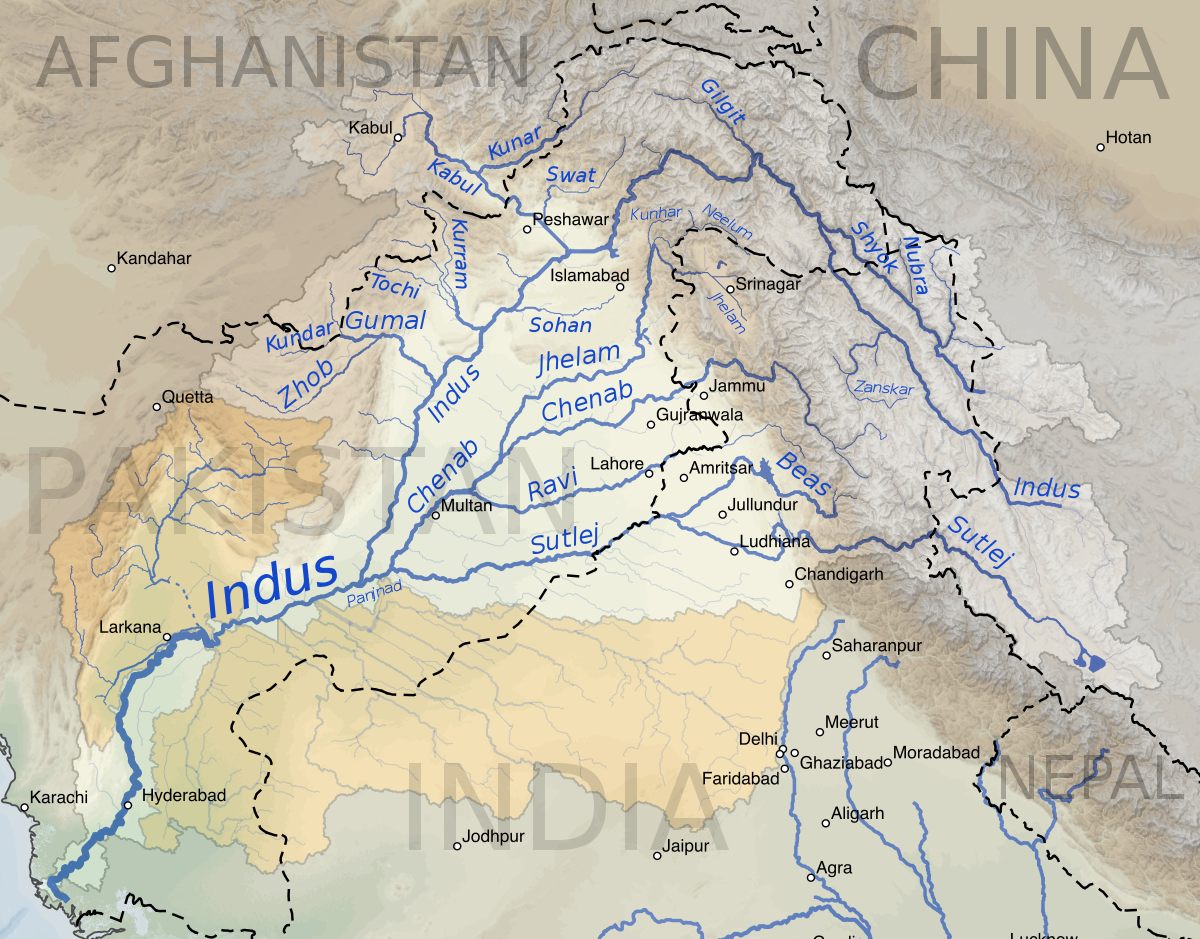
File:Indus River basin map.svg - Wikimedia Commons

*SOURCE: SOCIOLOGY IN A CHANGING WORLD, 6TH ED., 2003, WILLIAM KORNBLUM, PGS. 4-5*

end

Monday, May 11, 2020

Conclusion to Business Law (Part 66 - Grand Finale; The Final Showdown)


Occult Significance of the Number Sixty-Six


Number 66 is a powerful number of unconditional love, healing and faith and trust in
the Divine. ... Give any fears or anxieties about your monetary and material issues to
the angels for healing and transmutation, and trust that as you live your spiritual
truths all of your needs will be provided for
(http://sacredscribesangelnumbers.blogspot.com/2011/07/angel-number-66.html).

Make crime pay. Become a lawyer.

Wills, Inheritances, and Trusts
(part C)
 by
 Charles Lamson

 When Administration Is Unnecessary

 If an individual owns no property at the time of death, no need for administration exists. Also, all property jointly owned with someone else who acquires the interest by right of survivorship does not require administration.

Justice - Tarot arcane by ~Val-eithel on deviantART | Esoteric ...


Some states have special statutes allowing the administration procedures to be shortened for very small estates. In many states all the persons interested in the estate, relatives and creditors, can agree on the share each one is to receive and can divide the estate without formal court proceedings.

Title by Descent

When a person dies intestate (not having made a will before one dies), the property is distributed in accordance with the state law of descent. every state has such a law. Although these laws vary slightly, on the whole they provide as follows: The property of the intestate goes to any children subject to the rights of the surviving spouse. If no spouse, children, or grandchildren survive, the father and mother, as the next of kin, receive the property. If no parents survive, the brothers and sisters become the next of kin, followed by grandparents, aunts and uncles, and so on. Some statues permit any person related by blood to inherit when no nearer relative exists. Other statutes do not permit those beyond first cousins to inherit. In any case, if no proper person to inherit survives, the property passes on to the state. 

The administrator conveys title to real estate by means of an administrator's deed. When approved by the court, the grantee obtains good title to the property.

Per Capita and Per Stirpes Distribution

The lineal descendants of a descendant include the children and grandchildren. If all the children were living at the time of an intestate death, and the spouse was dead, the property would be distributed per capita, meaning per head, or equally to the children (see Illustration 1). If one child predeceased the intestate and left two surviving children, then the property would be divided into equal parts on the basis of the number of children the intestate had. The dead child's part would then be divided into two equal parts with one of these parts going to each of the grandchildren. This divides the property per stirpes (see illustration 2.) If the child left no children or other lineal descendants, then the surviving Children of the interstate with the deceased child share.

ILLUSTRATION 1 Per Capita Distribution

ILLUSTRATION 2 Per Stirpes Distribution

Justice Tarot card, Fyodor Pavlov (With images) | Tarot tattoo ...

Administrators

For the most part the duties and responsibilities of administrators resemble those of executors, with two significant differences. First, in the appointment all of an administrator, some states have a clear order of priority. The surviving spouse has first priority, followed by children, grandchildren, parents, and brothers or sisters. Second, an administrator must in all cases execute a bond guaranteeing the faithful performance of the duties.

The prime duty of administrators is the same as that of executors---to preserve the estate and distribute it to the rightful parties. Administrators must act in good faith, with prudence, and within the powers conferred on them by law. If any part of the estate is a going business, with only a few exceptions the business must be liquidated. However, the administrator may obtain leave of court to continue the business for either a limited time or an indefinite time, depending largely upon the wishes of those entitled to receive the estate. Third parties dealing with administrators, as well as executors, must know of limitations upon their authority. 

Trusts

A trust is a form of contract by which one person or entity agrees to hold property for the benefit of another. In an earlier post where we discussed the nature of real property, we examined one way in which ownership of property may be divided between two owners. That post discussed the difference between a life estate, or income interest, and remainder interest in property. This division in ownership separates the total ownership, or the fee simple estate, over time. The life tenant is the first owner, and the holder of the reversion or remainder is the second after the death of the life tenant.
Ownership of property in trust can be described as a division at the same time of two ownership interests---the legal ownership and the beneficial ownership. The legal owner of trust property is the person or entity who holds title to the property and who has the authority to control, or administer, the way in which the property is used. The legal owner of trust property is usually referred to as the trustee. If no trustee is specified, a court will appoint a trustee because there must be a person with title to the property.

Tarot Card Justice Icons PNG - Free PNG and Icons Downloads

The beneficial owner of trust property is entitled to the income, enjoyment, or benefits of the trust property. The beneficial owner is usually referred to as the trust beneficiary. The benefits of the property usually include income generated by property and the right to inhabit or use the property. In older documents, you might encounter the Latin words cestui que trust, meaning beneficiary. Both the trustee and the beneficiary have ownership interests in the property at the same time.
Creation of a Trust 

Because a trust is a specific form of contract, the law of contracts generally applies to trusts. Since a contract may be oral or written, a trust may also be oral or written, subject to the Statute of Frauds. Of course, the more valuable the property subject to the trust contract, the more important it is that the trust be written. It is easier both to remember and to enforce the terms of a written trust than those of an oral trust.

The person who creates a trust is known as the grantor. Other words used to describe the grantor include settlor and trustor. A grantor must have the legal capacity to enter into a contract in order to create a trust. Normally, the grand tour gives the trust property to the trustee and instructs the trustee how the property is to be used to benefit the beneficiary.

It is not necessary that the grantor, trustee, and beneficiary all be different persons or entities. However, they cannot all be the same person. That is, property may be given to the grantor, as trustee, to hold for another beneficiary. Or a grantor may give property to another, as trustee, to hold for the benefit of the grantor. The legal and beneficial ownership must be separate; therefore, the trustee and beneficiary must be separate and distinct entities. Otherwise, the grantor has simply given the property to the trustee/beneficiary in fee simple (a permanent and absolute tenure of an estate in land with freedom to dispose of it at will, especially in full fee simple absolute a freehold tenure, which is the main type of land ownership).

Exhibitions - Woodland Pattern

Because the trust is a creature of the law of contracts, the grantor has almost limitless ability to place restrictions on or grant options to the trustee and beneficiary as to the use of the trust property. Nonetheless, the trustee must have some identifiable purpose for administering the trust. 

Specific Types of Trusts

Several types of trusts are frequently used. These include:
  1. Express trust
  2. Resulting trust
  3. Constructive trust
  4. Blind trust
  5. Testamentary trust 
Express Trust
A trust that is created by a grantor clearly establishing a trust, whether oral or written, is sometimes referred to as as an express trust. This designation helps distinguish express trusts from other types of trusts, some of which may be implied. However, no specific words are required to create an express trust. It must just be clear that the grantor intended to create a trust.

Resulting Trust

A resulting trust occurs when one person supplies the purchase price for property, but has title issued in another person's name. This is sometimes called a purchase money trust. The theory of this type of trust is that unless the purchaser intended to make a gift, the one who pays for property should be the one to enjoy it and receive the benefits from it. 

Constructive Trust

A constructive trust arises by operation of law when one acquires title to property to which he or she cannot in good conscience retain the beneficial interest. A constructive trust is most often declared by a court in cases of fraud, but also arises in cases of bad faith, duress, coercion, undue influence, mistake, wrongdoing, or any other form of unconscionable conduct. Under these circumstances, a court will declare a constructive trust to prevent a wrongdoer from continuing to take advantage of the other party.

Blind Trust

A blind trust is most commonly used when the grantor, for some reason, does not want to know exactly what is in the trust, but wants to retain the benefit of the property. An example is when a government official with authority to regulate a certain industry gives management of property to a trustee, so that there will be no conflict between the official's personal financial interest and official government duties. Wealthy members of Congress frequently use blind trusts so they will not know exactly what securities they own. Then when they vote on legislation they cannot know whether their vote helps the companies in which they have a personal financial interest. 

Testamentary Trust

A testamentary trust is a special form of express trust created by the will of a testator. Even though the trust will not actually be created until the death of the testator, it will become a valid trust at that time. The trustee may, but need not, be the same person or entity as the executor of the will. A trust created by a will is subject to the same rules as other trusts.

Consider, as an example, the will of Heinrich Heine, the famous 19th century German poet. His will included the following provisions for his wife: "I leave all my estate to my wife on the express condition that she remarry. I want at least one person to sincerely grieve my death." Does this language have the effect of placing the entire estate into a trust? Heine died in France, but if his will still had been probated in the present day United States, it is highly unlikely a court would enforce this provision because of the requirement that Heine's widow remarry. Instead, the property would most likely be distributed directly to Heine's widow, outright and free from trust. 

Justice - Tarot Cards - Major Arcana" Metal Print by ...

*SOURCE: LAW FOR BUSINESS, 15TH ED., 2005, JANET E. ASHCROFT, J.D., PGS. 55-555, 558*

end

Saturday, May 9, 2020

Business Law (part 65)


A successful lawsuit is the one worn by a policeman.

Wills, Inheritances, and Trusts
(part B)
by
 Charles Lamson

The Wording of a Will

When writing a will, any words that convey the intention of the testator (a person who has made a will or given a legacy) suffice. No matter how rough and ungrammatical the language may be, if the intention of the testator can be ascertained, the court will order that the provisions of the will be carried out. Since the court will order the terms of a will to be carried out exactly, the wording of the will should express the exact wishes of the testator.

Libra 2011: Money. Steve Jobs' Transition. Corporations. Values ...

Revocation

A will may be revoked at any time prior to the death of the testator. The revocation may take any one of several forms.

Codicils

A codicil is a separate writing that modifies a will. Except for the part modified, the original will remains the same. A codicil must be executed with all the formalities of the original will.

Destruction or Alteration

If the testator deliberately destroys a will, this constitutes a revocation. If the testator merely alters the will, this may or may not revoke it, depending upon the nature and the extent of the alteration. If the testator merely obliterates a part of the will, in most states this does not revoke the will. 

Marriage and Divorce

If a single person makes a will and later marries, the marriage may revoke the will in whole or in part, or the will may be presumed to be revoked unless made in contemplation of the marriage or unless it made provision for a future spouse. In some states a marriage will not revoke a will completely, but only if so that the spouse will get the estate that would have been received in the absence of a will. A divorce automatically revokes a will to the extent of the property left to the divorced spouse if the court orders a division of property; otherwise, a divorce usually in no way affects the will. 

Execution of a Later Will

The execution of a later will automatically revokes a prior will if the terms of the second conflict with the first will. If the second will merely changes a few provisions in the first will and leaves the bulk of it intact, then a second revokes the first will only to the extent of such inconsistency.

Stargazer in Blue ~ An Astrology Science & Esoteric Writing Blog ...

After-Born Child

A child may be born or adopted after a person makes a will. If the original will does not provide for subsequent children or the testator makes no codicil to provide for the child, this revokes or partially revokes the will.

Abatement and Ademption

A legatee in the law of wills is any individual or organization bequeathed any portion of a testator's estate. An abatement occurs when a testator makes bequests of money in the will and the estate does not have enough money to pay the bequests. The legatees will receive a proportionate share of the bequests.

An ademption occurs when a testator makes a bequest of specific property and the estate does not have the property at death. In this case, the legatee gets nothing.

If a testator leaves $20,000 to his son John, $10,000 to his sister Mary, and a painting to his brother Adam, there could be both an abatement and an ademption. If the estate has only $15,000 in cash left after paying all debts, the cash gifts to John and Mary will abate. Each will receive a proportionate share, in this case 50%, or $10,000 and $5,000, respectively. If the testator had sold the painting, given it away, or someone had stolen, destroyed, or lost the painting before the death of the testator, Adam would get nothing. The bequest to him is adeemed since the property was not in the estate at the testator's death. He has no right to his cash value or any other substitute item of property. 

New Moon in Libra October 2018 – The Esoteric Nashvillian

Probate of a Will

When a testator dies leaving a will, the will must be probated. Probate is the court procedure that determines the validity of a will. The will normally names an executor to preserve and handle the estate during probate and distribute it to the rightful individuals. An executor has liability to legatees, creditors, and to the rightful individuals. An executor has liability to legatees, creditors, and heirs for loss to the estate as a result of a negligent, bad faith, or breach of trust and must comply with any instructions in the will. A will may expressly direct the executor to continue a business owned by the deceased. If the will does not so provide, an executor frequently can obtain permission of the appropriate court to continue the business. With but few exceptions, anyone may be appointed executor. The testator may excuse the executor from furnishing a bond that would be an expense to the estate. If the will does not name an executor, then upon petition of one of the beneficiaries the court will appoint an administrator.

If a person contests the will, the court must hear the contest to determine the validity of the will. A contest of the will differs from litigation over the meaning or interpretation to be given the will. If the contest alleges and proves fraud, undue influence, improper witnessing, mental incapacity of the testator, revocation of the will, or any other infirmity in the will affecting its legality, the court will find the will nullified. It will then distribute the property of the testator according to the law of descent described in the next post and conclusion of this discussion on business law (part 66). Until then, stay tuned...

Libra 2019: Saturn. Karma. Rákóczi. Brexit. Judicial Mind. Hong ...

*SOURCE: LAW FOR BUSINESS, 15TH ED., 2005, JANET E. ASHCROFT, J.D., PGS. 546-549*

end

Rosary from Lourdes - 02/12/2025