Mission Statement

The Rant's mission is to offer information that is useful in business administration, economics, finance, accounting, and everyday life. The mission of the People of God is to be salt of the earth and light of the world. This people is "a most sure seed of unity, hope, and salvation for the whole human race." Its destiny "is the Kingdom of God which has been begun by God himself on earth and which must be further extended until it has been brought to perfection by him at the end of time."

Thursday, February 20, 2020

Business Law (part 26)


Employer and Employee Relations
(part A)
 by
 Charles Lamson

 Over a period of many decades, the common law developed rules governing the relationship between an employer and employees. These rules have been greatly modified by statute. However, in every state remnants of the common law still apply. Many of the common law rules dealing with safe working conditions and other aspects of the employment contract have been retained in labor legislation. These laws do not cover all employees. In every state a small number of employees still have their rights and duties determined largely by common law rules. The next couple posts deal with the common law and statutory modifications of it as they relate to employers and employees. However, the law regarding employers and employees varies significantly from state to state.
Image result for themis

Creation of Employer and Employee Relationship

The relationship of employer and employee arises only from a contract of employment, either express or implied. The common law allowed employers the right to hire whom they please and employees the right to freely choose their employers. The relationship of employer and employee could not be imposed upon either the purported employer or employee without consent. One who voluntarily performs the duties of an employee cannot by that act subject the employer to the liability of an employer. But the relationship may be implied by conduct that demonstrates that the parties agree that one is the employer and the other the employee. 

Length of Contract

An employee discharged without cause may recover wages due up to the end of the contract period from the employer. However, when creating an employer-employee relationship, seldom does either party mention the length of the contract period. in some jurisdictions, the terms of compensation determine the contract period. In such jurisdictions, the length of time used in specifying the compensation constitutes the employment period. And an employee may be discharged at the end of that time without further liability. For example, an employee paid by the hour may be discharged without liability at the end of any hour. An employee paid by the week or by the month because, as are many office employees, has a term of employment of one week or one month, as the case may be. For monthly paid employees, the term of employment may depend upon the way the employer specifies the compensation. A stated salary of $27,500 a year gives a one-year term of employment, even though the employer pays once a month. In other jurisdictions, employment at a set amount per week, month, or year does not constitute employment for any definite period but amounts to an indefinite hiring.

Many employer-employee situations have an indefinite length for the contract, and either the employer or the employee may terminate the employment for any reason or for no reason at any time. This situation is called employment at will. 
Image result for themis

However, as a result of labor legislation, union or other employment contracts, employee handbooks, or other exceptions that have developed to employment at will, many employees have significant job security. They may not be discharged except for good cause. As in the case of an employee discharged without cause who is employed for a specified period, such an employee may sue the employer for money damages. In some cases the employee may also sue to be restored to the job. 

Determination of Contract Terms

Employer-employee contracts frequently do not state terms other than the compensation. Terms are determined by law, custom, employee handbooks, and possibly by union contracts. If the employer publishes a handbook stating contract terms, the employer will usually be bound by those terms as long as the employee had a reasonable opportunity to learn them. In some cases, courts have held that statements in the employer's written policy manual constitute terms of employer-employee contract.

Union Contracts

Formerly the employer contracted individually with each employee. However, as the union movement developed and collective bargaining became commonplace, employers began agreeing with unions to provisions of the employment that apply to large numbers of employees. The signed contract between them embodied this agreement between the employer and the union. As an agent of the employees, the union speaks and contracts for all the employees collectively. As a general rule, the employer still makes a contract individually with each employee, but the union contract binds the employer to recognize certain scales of union wages, hours of work, job classifications, and related matters.


Duties and Liabilities of the Employer

Under the common law the employer had five well defined duties:

  1. Duty to exercise care
  2. Duty to provide a reasonably safe place to work
  3. Duty to provide safe tools and appliances
  4. Duty to provide competent and sufficient employees for the task
  5. Duty to instruct employees with reference to the dangerous nature of employment
Duty to Exercise Care

This rule imposes liability on employers if their negligence causes harm to an employee. Employers have exercised proper care when they have done what a reasonable person would have done under the circumstances to avoid harm.

Duty to Provide a Reasonably Safe Place to Work

The employer must furnish every employee with a reasonably safe place to work. What constitutes a safe place depends upon the nature of the work. Most states have statutes modifying the common law for hazardous industries. 

Duty to Provide Safe Tools and Appliances

The tools an employer furnishes employees must be safe. This rule also applies to machinery and appliances.

Duty to Provide Competent and Sufficient Employees for the Task

Both the number of employees and their skill and expertise experience affect the hazardous nature of many jobs. The employer has liability for all injuries to employees directly caused by either an insufficient number of workers or the lack of skill of some of the workers.


Duty to Instruct Employees

In all positions that use machinery, chemicals, electric appliances, and other production instruments, there are many hazards. The law requires the employer to give that degree of instruction to a new employee that a reasonable person would give under the circumstances to avoid reasonably foreseeable harm that could result from a failure to give such instructions. 

*SOURCE: LAW FOR BUSINESS, 15TH ED., 2005, JANET E. ASHCROFT, J.D., PGS. 331-336*

end

Sunday, February 16, 2020

Business Law (part 25)


Negotiation and Discharge
 by
 Charles Lamson

 Negotiation involves the transfer of a negotiable instrument in such a way that the transferee (a person who receives property being transferred - see Figure 1) becomes the holder of the instrument. Their instruments may be negotiated by delivery. Delivery effectively vests ownership in the transferee. Thus the transferee becomes the holder.

Image result for transferee meaning

FIGURE 1 Transferor and Transferee

Image result for themis

An instrument payable to "order" can be negotiated only by authorized indorsement and delivery. An indorsement is a signature on the back of an instrument (usually the holder's) along with any directions or limitations regarding use of or liability for the instrument. indorsing or transferring a negotiable instrument create certain liabilities, depending upon the nature of the endorsement or transfer.

Although an indorsement is not required for negotiation of bearer paper (a negotiable instrument such as a bond which is payable to whoever has possession (the bearer)), a transferee may require it because this adds the liability of the new indorser to the paper and thus makes it a better credit risk. It also preserves a written chronological record of all negotiations.

Place of Indorsement

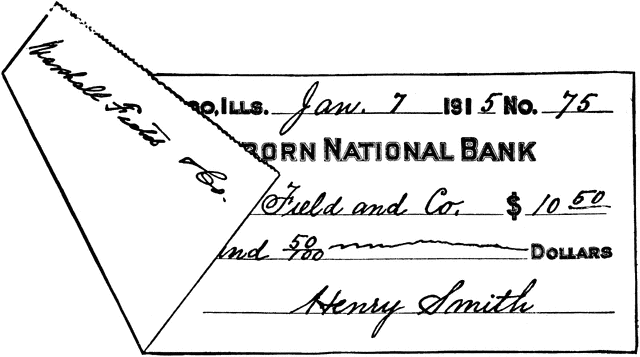
Banks require that an endorsement on a check be on the back and within 1.5 inches of the trailing edge. The trailing edge is the left side of the check when looking at it from the front (see Illustration 1). If the indorser's signature appears elsewhere and it cannot be determined in what capacity the signature was made, it will be considered an indorsement. In any event, the indorsement must be on the instrument or on a paper attached to it. An allonge is a paper securely attached to an instrument. For example, a paper stapled to an instrument is securely affixed. The Uniform Commercial Code (UCC) states that such a paper is part of the instrument. If a party does not wish to be liable as an indorser, the instrument can be assigned by a written assignment on a separate piece of paper.

ILLUSTRATION 1 Indorsed Check Folded to Show the Position of the Endorsement

Image result for indorsed check

Occasionally, the name of the payee or endorsee of an instrument is misspelled. If a paycheck intended for, and delivered to, Janice F. Smith is made out to "Janice K. Smith" through clerical error, "Janice F. Smith" may ask her employer for a new check properly made out to her or she may keep the check and indorse in any of the following ways:
  1. Janice K. Smith
  2. Janice F. Smith
  3. Janice K. Smith, Janice F. Smith

Image result for themis

If she intends to receive value for the check, the person to whom it is negotiated may require her to sign both names.

However, if Janice F. Smith obtains a check made payable to, and intended for, Janice K. Smith, it would be illegal for Janice F. to endorse it and receive payment for it. Only when the check is actually intended for Janice F. Smith may she make a corrective endorsement.

It is not always necessary to correct an irregularity in the name of a party to an instrument. An irregularity does not destroy negotiability. Only if it is shown that different people were actually identified by the different names, as opposed to the different names standing for one person, must the irregularity be considered. It has been held that a note was correctly negotiated when indorsed "Greenlaw & Sons by George M. Greenlaw," although it was payable to "Greenlaw & Sons Roofing & Siding Company" nothing indicates that the two enterprises were not the same firm.

Multiple Payees

Frequently, negotiable instruments are made payable to more than one person. Whether the instrument must be endorsed by more than one of them depends on the exact language use and naming them on the instrument.

If the parties are named using the word and between their names, then it is payable jointly and all of them must endorse the instrument in order to negotiate it. For example, if the instrument reads, "Pay to the order of Mary and John Doe," then both Mary and John must Indorse the instrument. Neither can negotiate the instrument alone.

If the word or is used between the names of the parties, then the instrument is payable in the alternative and only one needs to indorse the instrument in order to negotiate it. When an instrument reads, "Pay to the order of Hank or Nancy Florio," either Hank or Nancy can endorse and negotiate the instrument.

Image result for themis

Normally, if the instrument is not clear as to whether it is payable jointly or alternatively, it will be construed to be payable in the alternative.

Kinds of Indorsements

Four types of endorsements include:
  1. Blank indorsements
  2. Special indorsements
  3. Qualified indorsements
  4. Restrictive endorsements
Blank Indorsements

As the name indicates, a blank indorsement is one of having no words other than the name of the indorser (see Illustration 2). If the endorsement is bearer paper (a negotiable instrument which is payable to whoever has possession (the bearer)), it remains bearer paper when a blank endorsement is made. Thus, the new holder may pass good title to another holder without indorsing the instrument. The one primarily liable on the instrument is bound to pay the person who presents it for payment on the date due, even if the person is a thief or other unauthorized party.

ILLUSTRATION 2 Blank Indorsement and Special Indorsement


If the instrument is order paper (a negotiable instrument that is payable to a specified person or its assignee), a blank endorsement converts it to bearer paper; if thereafter indorsed to someone's order, it becomes order paper again. Converting the instrument to order paper can minimize risks involved in handling instruments originally payable to bearer or indorsed in blank.

Special Indorsements

A special endorsement designates the particular person to whom payment should be made (see Illustration 2). After making such an endorsement, the paper is order paper, whether or not it was originally so payable or was originally payable to bearer. The holder must endorse it before it can be further negotiated. Of course, the holder may endorse the instrument in blank, which makes it bearer paper. Each holder has the power to decide to make either a blank or a special endorsement.

An indorsee by a blank indorsement may convert it to a special endorsement by writing the words "pay to the order of [indorsee]" above the endorser's signature. Such an instrument cannot now be negotiated except by indorsement and delivery. This in no way alters the contract between the indorser and the indorsee.


Qualified Indorsements

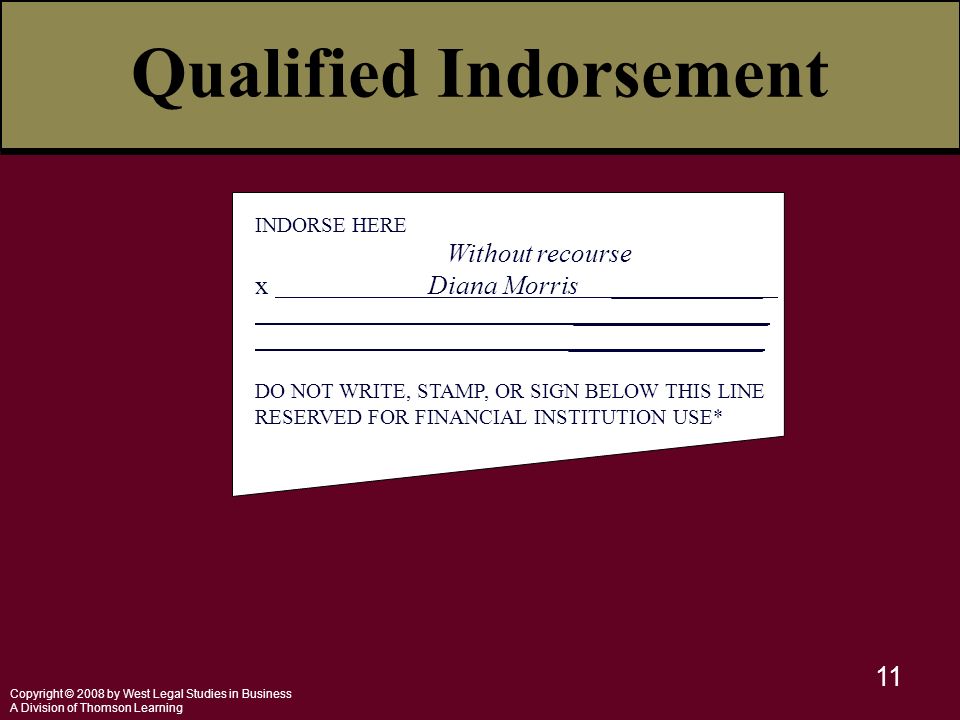
A qualified indorsement has the effect of qualifying, thus limiting, the liability of the indorser. This type of indorsement is usually used when the payee of an instrument is merely collecting the funds for another. For example, if an agent receives checks in payment of the principal's claims but the checks are made payable to the agent personally, the agent can and should elect to use a qualified indorsement to protect from liability. There is no reason for the agent to risk personal liability when the checks are the principal's. The agent does this merely by adding to either a blank or special type of indorsement the words "without recourse" immediately before the signature (see Illustration 3). This releases the agent from liability for payment if the instrument remains unpaid because of insolvency or mere refusal to pay.


ILLUSTRATION 3
Image result for qualified indorsement

A qualified indorser still warrants that the signatures on the instrument are genuine, that the endorser has good title to the instrument, that the instrument has not been altered, that no defenses are good against the indorser, and that the indorser has no knowledge of insolvency proceedings with respect to the maker, acceptor, or drawer. An endorser may avoid these warranties as well by indorsing the instrument without recourse or warranties.

Restrictive Indorsement

A restrictive indorsement is an indorsement that attempts to prevent the use of the instrument for anything except the stated use (see Illustration 4). The endorsement May state that the end or sea holds the paper for a special purpose or as an agent or trustee for another or it may impose a condition that must occur before payment. Such an endorsement does not prohibit further negotiation of the instrument.
ILLUSTRATION 4

Conditional endorsements are ineffective with respect to anyone other than the endorser and indorsee. As against a holder in due course, it is immaterial whether the indorsee has in fact recognized the restrictions. A bank receiving a check for deposit with a restrictive endorsement, such as "for deposit" or "for collection," must honor the restriction. 

Liability of Indorser

By endorsing a negotiable instrument, a person can become secondarily liable for payment of the face amount and responsible for certain warranties.


Image result for themis

Liabilities for Payment of Instrument

By making an indorsement, and indorser, with the exception of a qualified indorsement, agrees to pay any subsequent holder the face amount of the instrument if the holder presents the instrument to the primary party when due and the primary party refuses to pay. The holder must then give the endorser in question notice of such default. This notice may be given orally or it may be given by any other means, but it must be given before midnight of the third full business day after the day on which the default occurs.

Warranties of the Indorser

The warranties of all transferors differ from liability for the face of the paper in that they are not subject to the requirements of presentment and notice. The distinction is also important for purposes of limiting liability; an endorsement "without recourse" destroys only the liability of the indorser for the face of the instrument. It does not affect warranties. Thus the warranty liability of a qualified indorser is the same as that of an unqualified endorsement. An endorsement "without warranties" or a combined "without recourse or warranties" is required to exclude warranty liability.

Obligation of Negotiator of Bearer Paper

Bear paper need not be indorsed when negotiated. Mere delivery passes title. One who negotiates a bearer instrument by delivery alone does not guarantee payment, but is liable to the intermediate transferee as a warrantor of the genuineness of the instrument, of title to it, of the capacity of prior parties, and of its validity. These warranties are the same as those made by an unqualified indorser, except that the warranties of the unqualified indorser extend to all subsequent holders, not just the immediate purchaser. But since negotiable instruments are not legal tender, no one is under any obligation to accept bearer paper without any indorsement. By requiring an endorsement even though it is not necessary to pass title, the holder is gaining protection by requiring the one who wishes to negotiate it to assume all the obligations of an indorser.

Discharge of the Obligation

Negotiable instruments may be discharged by payment, by cancellation, or by renunciation. Payment at or after the date of the maturity of the instrument by the party primarily liable constitutes proper payment. Cancellation consists of any act that indicates the intention to destroy the validity of the instrument. A cancellation made unintentionally, without authorization, or by mistake is not effective. A holder of several negotiable instruments might intend to cancel one upon its payment and inadvertently cancel an unpaid one. This does not discharge the unpaid instrument. Renunciation is a unilateral act of a holder of an instrument, usually without consideration, whereby the holder gives up rights on the instrument or against one or more parties to the instrument.

Image result for themis

The obligations of the parties may be discharged in other ways, just as in the case of the simple contract. For example, parties will no longer be held liable on instruments if their deaths have been discharged in bankruptcy or if there has been the necessary lapse of time provided by a statute of limitations.

A negotiable instrument may be lost or accidentally destroyed. This does not discharge the obligation. A party obligated to pay an instrument has a right to demand its return if possible. If this cannot be done, then the payor has a right to demand security from the holder adequate to protect the payor from having to pay the instrument a second time. The holder usually posts an indemnity bond. This is an agreement by a bonding company to assume the risk of the payor's having to pay a second time. 

*SOURCE: LAW FOR BUSINESS, 15TH ED., 2005, JANET E. ASHCROFT, J.D., PGS. 272-278*

end


Friday, February 14, 2020

Business Law (part 24)


Promissory Notes and Drafts (part C)
 by
 Charles Lamson

Checks

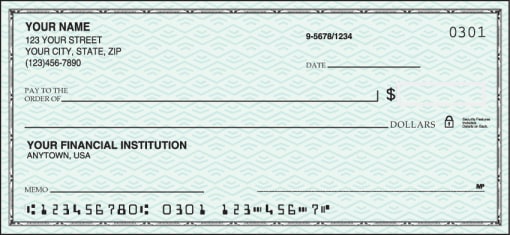
A check is a type of draft. To be a check, the draft must be drawn on a bank and payable on demand. It is a type of sight draft with the drawee, a bank, and the drawer, a depositor---a person who has funds deposited with a bank. Just like other drafts, the check is an order by the drawer, upon the drawee, to pay a sum of money to the order of another person, the payee.

Image result for themis


The numbers at the bottom of a check (see Illustration 1) are printed in magnetic ink. The numbers identify the specific account and the bank that holds the account. Since the numbers are printed in magnetic ink, the check may be sorted by electronic data processing equipment. The Federal Reserve System requires that all checks passing through its clearinghouses be imprinted with search identifying magnetic ink. In most cases, however, the drawee bank will accept checks that do not carry the magnetic ink coating. In fact, the material upon which a check is written does not affect the validity of a check.

ILLUSTRATION 1 Check

Image result for check


Special Kinds of Checks


Five special types of checks include:


  1. Certified checks
  2. Cashier's checks
  3. Bank drafts
  4. Voucher checks
  5. Traveler's checks


Certified Checks. A certified check is an ordinary check accepted by an official of the drawee bank. The official accepts it by writing across the face of the check the word certified, or some similar word, and signing it. Either the drawer or the holder may have a check certified. The certification of the check by the bank has the same effect as an acceptance. It makes the bank liable for the payment of the check and binds it by the warranties made by an acceptor. A certification obtained by a holder releases the drawer from liability.


The drawer of a draft accepted by a bank is relieved of liability on the instrument. It does not matter when or by whom acceptance was obtained. 


Cashier's Checks. A check that a bank draws on its own funds and that the cashier or some other responsible official of the bank signs is called a cashier's check. It is accepted for payment when issued and delivered. A bank in paying its own obligations may use such a check, or it may be used by anyone else who wishes to remit money in some form other than cash or personal check.


Bank Drafts. A bank draft or teller's check is a check drawn by one bank on another bank. Banks customarily keep a portion of their funds on deposit with other banks. A bank, then, may draw a check on these funds as freely as any corporation may draw checks. People purchase teller's checks because they rely on the banks credit, not an individual's. Also, a purchaser of a teller's check has no right to insist that the issuing bank stop payment on a teller's check that is not payable to the purchaser. Thus, teller's checks are more readily accepted by payees than are personal checks. 

Image result for themis


Voucher Checks. A voucher check is a check with a voucher attached. The voucher lists the items of an invoice for which the check is the means of payment. In business the drawer of the check customarily writes on the check such words as "In full of account, For invoice No. 1622," or similar notations. These notations make the checks excellent receipts when returned to the drawer. Check on which additional space is provided for the drawer to make a notation for which the check is issued is sometimes referred to as a voucher check. A payee who endorses a check on which a notation has been made agrees to the terms of the check, which include the terms written in the notation by the drawer.


Traveler's Checks. A traveler's check is an instrument much like a cashier's check of the issuer except that it requires signature and countersignature by its purchaser. Traveler's checks, sold by banks and express companies, are payable on demand. The purchaser of travelers checks signs each check once at the time of purchase and then countersigns it and fills in the name of the payee when the check is to be used.


Postdated Checks


A check drawn prior to the time it is dated is a postdated check. If it is drawn on June 21st but dated July 1st it is in effect, a 10-day draft. There is nothing unlawful about a postdated check as long as it was not postdated for an illegal or fraudulent purpose. A bank on which the check is drawn may pay it before it's date without liability unless the customer/drawer has properly notified the bank of the post dated check. 


Bad Checks


If a check is drawn with intent to defraud the payee, the drawer is civilly liable, as well as subject to criminal prosecution in Most states under so-called bad check laws. A bad check is a check that the holder sends to the drawee bank and the bank refuses to pay, normally for insufficient funds. Usually these statutes state that if the check is not made good within a specific period, such as 10 days, a presumption arises that the drawer originally issued the check with the intent to defraud.


Duties of the Bank


The bank owes several duties to its customer, the depositor-drawer. It must maintain secrecy regarding information acquired by it in connection with the depositor-bank relationship.


The bank also has the duty of comparing the signature on the depositor's check with the signature of the depositor in the bank's files to make certain the signatures on the checks are valid. If the bank pays a check that does not have the drawer's signature, it is liable to the drawer for the loss.

Image result for themis


Refusal of Bank to Pay. The bank is under a general contractural duty to its depositors to pay on demand all of their checks to the extent of the funds deposited to their credit. When the bank breaches this contract, it is liable to the drawer for damages. The bank must also pay checks that exceed the amount on deposit if there is an agreement that the bank will pay overdrafts. In the case of a draft other than a check, there is ordinarily no duty on the drawee to accept the draft or to make payment if it has not been accepted. Therefore, the drawee is not liable to the drawer when an unaccepted draft is not paid.


Even if the normal printed form supplied by the bank is not used, the bank must pay a proper order by a depositor. The bank must honor any written document that contains the substance of a normal printed check.


A divorced man making his last alimony payment wrote a check on a T-shirt to send a message to his ex-wife that she was "taking the shirt off his back." She did not care for the technique, but the T-shirt check was valid.


Liability of the drawee bank for improperly refusing to pay a check only runs in favor of the drawer. Even if the holder of the check or the payee may be harmed when the bank refuses to pay the check, a holder or payee has no right to sue the bank. However, the holder has the right of action against the person from whom the check was received. This right of action is based on the original application, which was not discharged because the check was not paid.


A check that is presented more than six months after its date is commonly called a stale check. A bank that acts in good faith may pay it. However, unless the check is certified, the bank is not required to pay it.


Stopping Payment. Drawers have the power of stopping payment of checks. After a check is issued, a drawer can notify the drawee bank not to pay it when presented for payment. This is a useful procedure when a check is lost or mislaid. A duplicate check can be written, and to make sure that the payee does not receive payment twice or that an improper person does not receive payment on the first check, payment on the first check can be stopped. Likewise, if payment is made by check and the payee defaults on the contract, payment on the check can be stopped, assuming that the payee has not cashed it.


A stop-payment order may be written or oral. The bank is bound by an oral stop payment order only for 14 calendar days unless confirmed in writing within that time. A written order is effective for no more than 6 months unless renewed in writing.

Unless a valid limitation exists on its liability, the bank is liable for the loss the depositor sustains when the bank makes payment on a check after receiving proper notice to stop payment. However, the depositor has the burden of proving the loss sustained.

Image result for themis


A depositor who stops payment without a valid reason may be liable to the payee. Also, the depositor is liable to stopping payment with respect to any holder in due course or other party having the rights of the holder in due course unless payment is stopped for a reason that may be asserted against such a holder as a defense. The fact that the bank refuses to make payment because of the drawer's instruction does not make the case any different from any other instance in which the drawee refuses to pay, and the legal consequences of imposing liability upon the drawer are the same. 


When the depositor makes use of a means of communication such as the telegraph to give a stop payment notice, the bank is not liable if the notice is delayed in reaching the bank and the bank makes payment before receiving the notice. The depositor can, however, sue the telegraph company if negligence on its part can be shown.


A payee who wants to avoid the potential of payment being stopped may require a certified check of the buyer or a cashier's check from the buyer's bank because neither the buyer nor the buyer's bank can stop payment to the payee on such checks.


Payment After Depositors Death. Usually a check is ineffective after the drawer dies. However, until the bank knows of the death and has had a reasonable opportunity to act, the bank's agency is not revoked. A bank may even continue to pay or certify a depositor's checks for 10 days unless a person claiming an interest in the estate orders it to stop.


Bank Customers Responsibility 


While the bank has several duties to its customers, customers also have some important responsibilities. They must examine monthly bank statements and notify the bank with reasonable promptness of any forged signatures. If a customer fails to do this and the bank suffers loss as a result, the customer will be liable for the loss. Reasonable promptness is not defined, but the UCC provides that a customer who does not report an unauthorized signature or alteration within one year may not assert them against the bank. If there is a series of forgeries by the same person, the customer must discover and report the first forged check to the bank within the time prescribed by agreement between the customer and bank. If no such time is prescribed, it must be within 30 days of receiving the bank statement.

INTERNET RESOURCES FOR BUSINESS LAW
Name
Resources
Web Address
Uniform Commercial Code (UCC) Article 3, Negotiable Instruments
The Legal Information Institute (LII), maintained by Cornell Law School, provides a hypertext and searchable version of UCC Article 3, Negotiable Instruments. LII also maintains links to Article 3 as adopted by particular states and two proposed revisions.
Uniform Commercial Code 3-104
LII provides a hypertext and searchable version of UCC 3-104, Negotiable Instrument.
Legal Information Institute---Negotiable Instrument Law Materials
LII provides an overview of negotiable instruments law, federal and state statutes and regulations, and federal and state court decisions.

*SOURCE: LAW FOR BUSINESS, 15TH ED., 2005, JANET E. ASHCROFT, J.D., PGS. 263-271*


end

Rosary from Lourdes - 02/12/2025